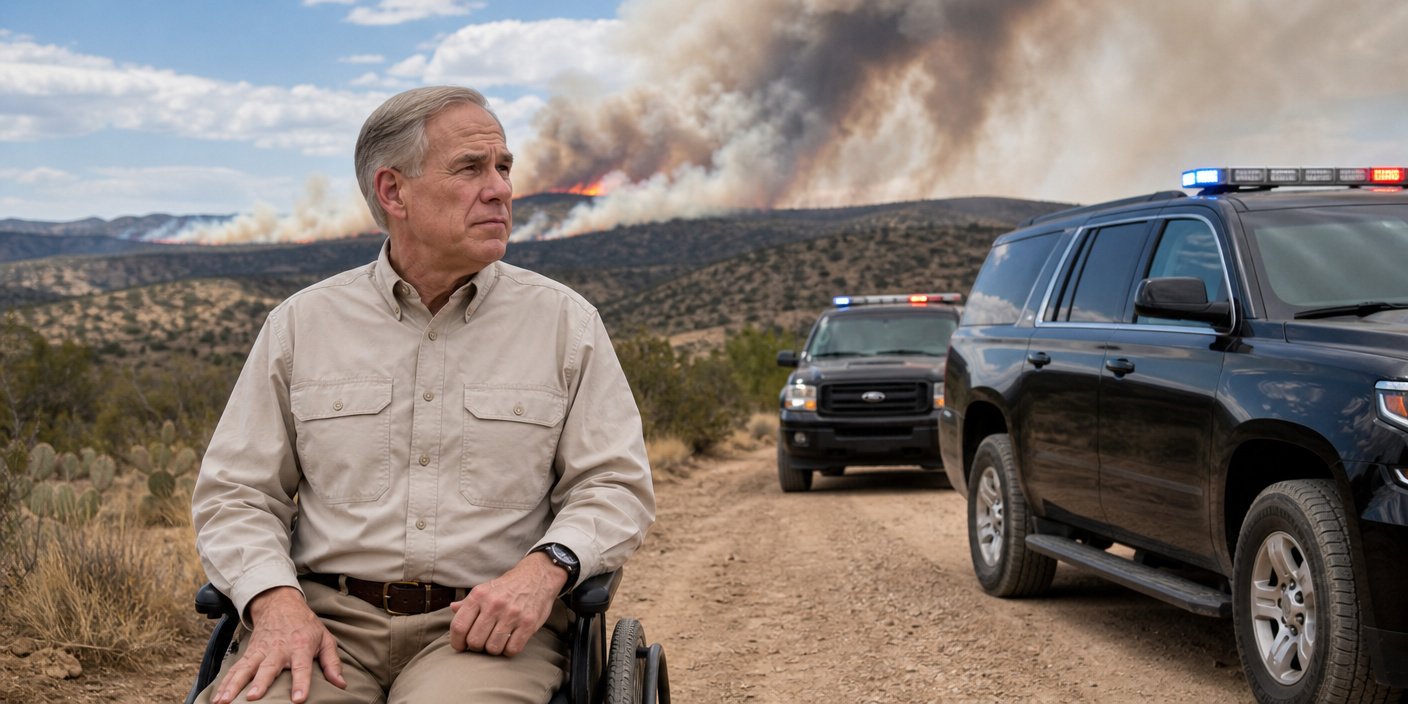
Local officials have delivered a sobering update on the Ross Fire, projecting that the blaze will remain active for at least another two weeks as arid conditions and rugged terrain continue to challenge containment efforts. Governor Greg Abbott has arrived on-site to personally assess the scale of the destruction and coordinate state-level support for the communities grappling with the ongoing emergency.
Key Highlights
- Extended Timeline: Fire authorities have officially projected that the Ross Fire will remain an active incident for approximately two weeks.
- Executive Assessment: Governor Greg Abbott has visited the fire site to review damage and streamline state resource allocation.
- Resource Mobilization: State agencies, including the Texas A&M Forest Service, are coordinating a multi-agency response to manage the containment lines.
- Public Safety Priority: Local officials continue to emphasize the importance of evacuation compliance and following designated emergency routes as the situation evolves.
The Strategic Outlook for Containment
The announcement that the Ross Fire could continue to burn for another 14 days is not merely a timeline; it is a tactical reality defined by the interplay of climate, fuel loads, and topography. Fire management experts note that when a blaze of this magnitude enters a multi-week operational phase, the strategy shifts from immediate suppression to long-term containment and defensive positioning.
The Operational Reality
Operating over a two-week horizon requires a sophisticated rotation of personnel. Firefighters often work in grueling, high-temperature environments, requiring mandatory rest cycles to prevent exhaustion-related accidents. The Ross Fire’s projected duration suggests that incident commanders are preparing for a sustained battle that accounts for expected wind shifts and potential dry lightning events. By establishing a two-week operational window, officials can better secure supply chains for water, retardant, and heavy machinery, ensuring that the frontline crews remain adequately supported through the extended fight.
Executive Response and Resource Deployment
Governor Greg Abbott’s visit underscores the severity of the incident. In disaster management, the physical presence of the state’s executive leadership often serves as a catalyst for cutting through bureaucratic red tape, allowing for the rapid deployment of the National Guard or additional heavy-lift aerial resources. The assessment is likely focused on two critical pillars: mitigating immediate threats to human life and protecting local critical infrastructure, such as power grids and transportation arteries. Abbott’s presence indicates that the state is prepared to leverage every available asset to accelerate the containment timeline, even if the meteorological forecast remains unfavorable.
Secondary Angles: A Comprehensive Impact Analysis
To fully understand the gravity of the Ross Fire, one must look beyond the immediate flames to the secondary and tertiary impacts that such a disaster incurs on the region.
1. Economic Ripple Effects on Ranching and Agriculture
Beyond the immediate threat to structures, the Ross Fire poses a significant, long-term threat to the regional economy. The area surrounding the fire line is primarily composed of ranching and agricultural land. A two-week fire event significantly disrupts grazing patterns and feed storage. For local producers, this means potential loss of livestock and the long-term degradation of soil quality. The economic impact extends to the supply chain; if local producers are forced to liquidate herds early, it creates a supply shock that can temporarily inflate meat prices and disrupt the local agricultural market for the upcoming fiscal quarter.
2. Environmental Degradation and Wildlife Corridors
From an ecological standpoint, a fire duration of two weeks suggests a high potential for severe landscape scarring. Unlike fast-moving grass fires, extended events often reach high temperatures that sterilize the soil, killing the seed bank and paving the way for invasive species in the recovery phase. Wildlife corridors in the path of the Ross Fire are being disrupted, forcing local fauna into human-populated areas, which creates an additional layer of complexity for emergency managers—managing both the fire and human-animal conflicts.
3. The Future of Wildfire Preparedness
This event acts as a microcosm for the broader conversation regarding wildfire preparedness in an era of climate volatility. The reliance on two-week containment cycles is becoming increasingly common, prompting a push for more advanced fire-fighting technologies. Experts are now advocating for the permanent integration of AI-driven predictive modeling in state response plans. These systems could potentially analyze real-time wind data and moisture levels to provide more granular, localized forecasts than traditional methods, potentially shaving days off containment timelines in future crises.
FAQ: People Also Ask
Q: What is the primary reason the fire will burn for two weeks?
A: The estimate is based on the current weather patterns, high fuel loads in the area, and the difficult, remote terrain which limits the ability of heavy equipment to access the fire perimeter.
Q: How does Governor Abbott’s visit affect the firefighting efforts?
A: The Governor’s presence typically signals the authorization of additional state resources, including funding for extra personnel, equipment, and coordinated support from the National Guard.
Q: Are residents currently at risk?
A: Officials have established evacuation zones. Residents are urged to monitor local emergency alerts via the Texas A&M Forest Service or local county sheriff websites for real-time updates on containment lines.
Q: What should property owners in the vicinity do?
A: Experts recommend creating defensible space around homes by clearing flammable vegetation, keeping a “go-bag” ready, and staying connected to emergency communication channels as the wind and fire behavior can change rapidly.