
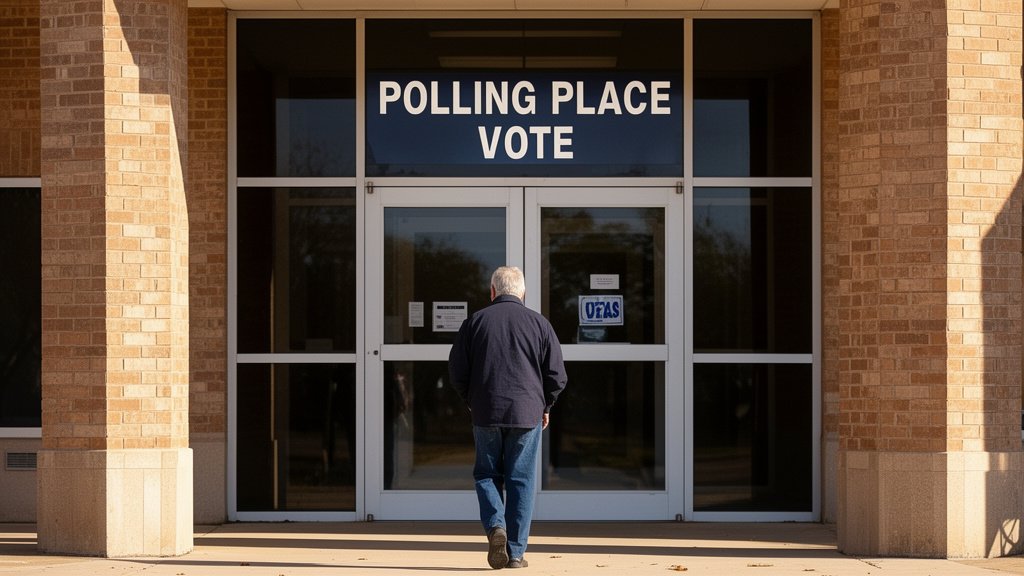
Early voting for the November 2026 midterm elections officially kicked off across Texas today, October 19, and will continue through October 30. As the state moves toward the definitive November 3 Election Day, the window for casting a ballot before the final deadline is now open. Voters are strongly encouraged to verify their local county polling locations and review sample ballots in advance to ensure a smooth, efficient voting experience, particularly as turnout is expected to be high for these high-stakes legislative and executive races.
Key Highlights
- Early Voting Period: October 19 through October 30, 2026.
- Election Day: November 3, 2026.
- Preparation: Visit your specific county’s election department website to find polling locations, which may differ from your Election Day precinct.
- ID Requirements: Ensure you bring one of the seven acceptable forms of photo identification as mandated by Texas election law.
- Sample Ballots: Review your specific ballot online before arriving at the polling station to reduce time in the voting booth.
Mastering the Texas Midterm Voting Process
The 2026 midterm elections represent a pivotal moment for Texas governance, encompassing critical races for the State House, state executive offices, and federal congressional seats. While the media often fixates on presidential cycles, the midterm elections are arguably where the most tangible impact on local infrastructure, school policy, and state taxation occurs. Because early voting is a preferred method for millions of Texans—offering flexibility that the single-day Election Day does not—understanding the nuances of this two-week window is essential.
The Logistics of Early Voting in Texas
Unlike voting on Election Day, when residents are generally required to vote at their specific assigned precinct, early voting in Texas allows registered voters to cast their ballot at any open polling location within their county of residence. This is a massive advantage for working professionals, parents, and students whose daily routines may not align with their neighborhood precinct.
However, this convenience comes with a caveat: polling locations, dates, and times can vary by county. A voter in Harris County may face different operating hours than one in Travis or Dallas County. The Texas Secretary of State advises all residents to utilize the ‘Vote Texas’ online portal or their specific county election office’s website to confirm exact hours of operation. Many counties offer extended hours during the final days of the early voting period to accommodate last-minute voters, but relying on standard 8:00 AM to 5:00 PM assumptions is a recipe for arriving at a locked door.
Valid Identification and Security Measures
Texas maintains strict voter identification laws. To vote in person, you must present one of the seven acceptable forms of photo ID. These include:
1. A Texas driver’s license issued by the Department of Public Safety (DPS).
2. A Texas election identification certificate (EIC).
3. A Texas personal identification card.
4. A Texas license to carry a handgun.
5. A United States military identification card containing the person’s photograph.
6. A United States citizenship certificate containing the person’s photograph.
7. A United States passport.
If you do not possess one of these and cannot reasonably obtain one, you may be eligible to sign a Reasonable Impediment Declaration and provide a supporting form of identification, such as a voter registration certificate, a certified domestic birth certificate, or a current utility bill. Understanding these requirements before you enter the polling place saves significant time and frustration. Election officials are strictly bound by the Texas Election Code, and they have no discretion to waive these ID requirements.
Why Midterm Participation Matters in 2026
Beyond the civic duty of voting, the 2026 midterms carry unique weight. Historically, midterms see lower turnout than presidential elections, which means individual votes carry more ‘weight’ in determining the outcome. In Texas, these elections serve as the primary mechanism for holding state-level representatives accountable for legislative actions taken in the previous sessions.
Economic impacts, including property tax adjustments, infrastructure development funding, and education funding formulas, are all decided at the state level. When voters engage in early voting, they are not just participating in a procedural formality; they are actively shaping the state’s legislative agenda for the next two years. By voting early, you also bypass the potential long lines and unforeseen technical hurdles that can occasionally plague high-turnout Election Days, effectively ‘banking’ your vote and ensuring it is counted without the stress of the November 3 deadline.
Utilizing the Sample Ballot
One of the most underutilized tools in the voter’s arsenal is the sample ballot. Most Texas county election departments provide a digital replica of your specific ballot, tailored to your registered address. This is not just for convenience; it is a tactical necessity. Down-ballot races—including local school board members, judges, and proposition measures—often lack the media coverage of top-tier executive races. By reviewing these candidates and measures at home, you can research their platforms and prepare your choices, ensuring that your vote for the smaller, yet highly impactful, local offices is as informed as your vote for the governor or senator.
FAQ: People Also Ask
Q: Can I vote early in a county different from where I am registered?
A: No. You must vote in the county where you are registered. If you are registered in one county but find yourself in another on election day or during early voting, you generally cannot cast a ballot in the second county.
Q: What if my photo ID has expired?
A: For voters aged 18-69, the acceptable form of photo ID may have expired for no more than four years. Voters aged 70 or older may use an acceptable form of photo ID that has expired for any length of time, provided it is otherwise valid.
Q: How do I know if my early vote has been counted?
A: Texas law dictates that early votes are tabulated and counted starting after the polls close on Election Day. You cannot ‘track’ your in-person early vote in real-time like a mail-in ballot, but you can confirm your registration status and participation history through the Texas Secretary of State’s portal after the election results are certified.
Q: Are there special accommodations for voters with disabilities?
A: Yes. Texas law mandates that all polling locations be accessible. If you need assistance due to a physical disability or an inability to read or write, you may be assisted by a person of your choice (with some specific exclusions) or by an election officer.