
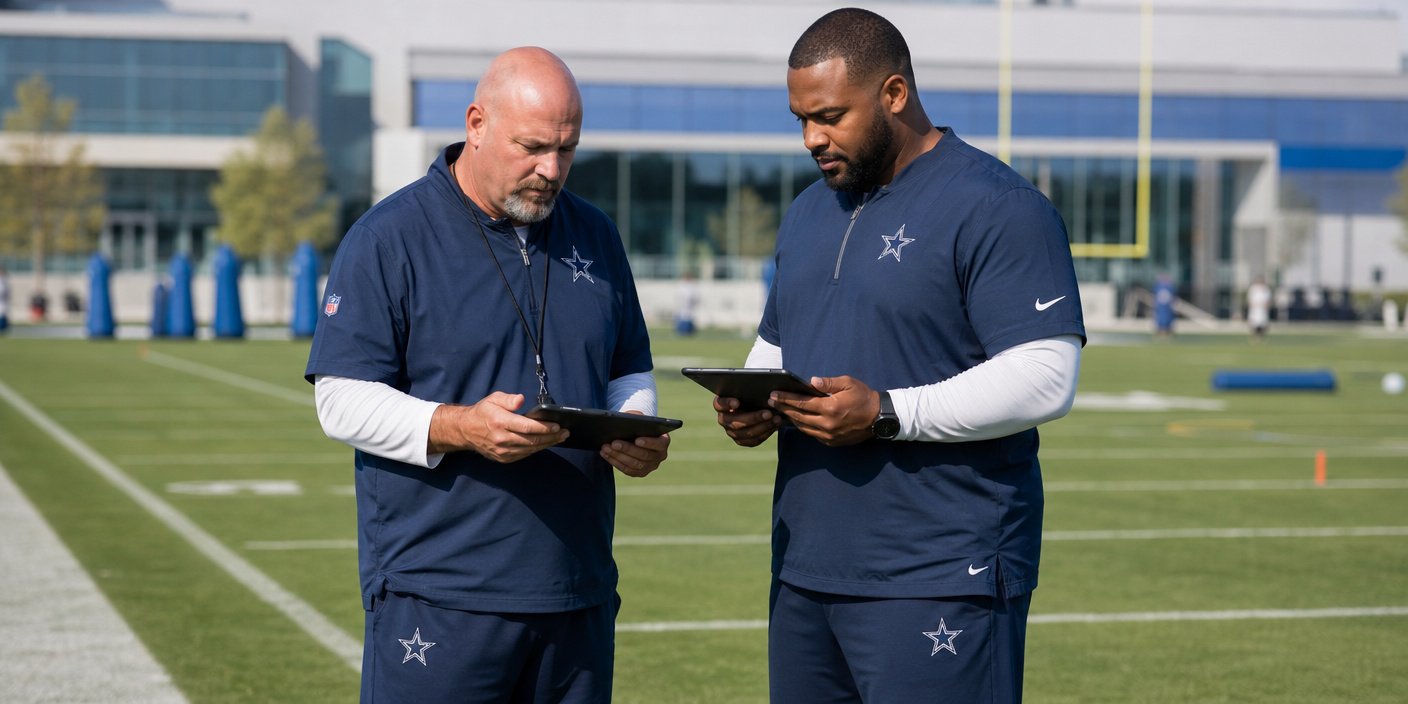
In a significant operational realignment aimed at optimizing the Dallas Cowboys’ defensive performance, the organization has announced that senior defensive assistant Mike Pettine will take over primary defensive play-calling duties. Christian Parker, who has been instrumental in the team’s defensive operations, will remain with the team as defensive coordinator but will step back from the primary responsibility of calling plays on game days. This strategic shift signals a pivot within the Cowboys’ coaching staff, prioritizing veteran expertise to navigate the high-stakes demands of the upcoming NFL season.
Key Highlights
- Role Reassignment: Mike Pettine assumes the role of primary defensive play-caller, moving from his previous position as a senior defensive assistant.
- Continuity Maintained: Christian Parker retains the official title of defensive coordinator, ensuring consistency in the defensive room’s daily operations and player development.
- Strategic Pivot: The move is widely interpreted as a tactical shift, leveraging Pettine’s extensive, decades-long NFL experience to stabilize and direct the defense during critical game-time situations.
The Strategic Logic Behind the Shift
The separation of the defensive coordinator title from the play-calling duties is a practice that has become increasingly common in the modern NFL, yet it remains a critical decision that defines the team’s weekly approach. By installing Mike Pettine as the primary play-caller, the Dallas Cowboys are looking to capitalize on a vast reservoir of tactical experience. Pettine, a well-traveled veteran who has served as a defensive coordinator for multiple franchises, brings a specific brand of aggression and adaptability that the Cowboys’ front office clearly views as an upgrade for the current defensive roster.
This decision is not merely a change in personnel; it is a structural adjustment. Christian Parker, while stepping back from play-calling, remains a vital cog in the defensive machine. His role as defensive coordinator encompasses a wide array of duties—ranging from player development and scheme implementation during the week to game planning and personnel grouping. By keeping Parker in the DC role, the Cowboys retain the continuity and rapport he has built with the players, while offloading the high-pressure, split-second decision-making of play-calling to Pettine’s seasoned hands.
The Pettine Factor: Experience in the Trenches
Mike Pettine’s career has been defined by his ability to construct aggressive, pressure-heavy defensive schemes. Having held coordinator roles with the New York Jets and Buffalo Bills, and a head coaching stint with the Cleveland Browns, Pettine understands the cadence of an NFL game intimately. His philosophy often relies on disguised coverages and creative blitz packages, designed to confuse opposing quarterbacks and force turnovers. For a Cowboys defense that has been known for its explosive potential, Pettine’s tactical oversight may provide the necessary discipline to translate that potential into consistent, championship-caliber production.
The transition of play-calling duties is also a reflection of the evolving nature of the NFL coaching staff. As offenses become more complex and RPO-heavy (Run-Pass Option), the defensive play-caller’s role has never been more taxing. It requires the ability to adjust to personnel groupings, personnel fatigue, and situational football in real-time. By utilizing Pettine, the Cowboys are betting on his veteran poise to act as a stabilizer when the game enters high-leverage situations in the fourth quarter.
The Role of Christian Parker: Coordination vs. Calling
It is essential to clarify what this change means for Christian Parker. In many circles, the title of “Defensive Coordinator” implies that the individual is calling the plays. However, this is a misconception of the modern NFL hierarchy. The defensive coordinator is often the architect of the weekly game plan, the primary voice in the meeting room, and the coach responsible for the overall philosophy of the defense. Parker’s continued presence in this role ensures that the defensive identity he has helped cultivate remains intact.
Parker remains responsible for the “thematic” side of the defense—the “what” and the “why” of the scheme. Pettine, conversely, will handle the “when”—the tactical execution. This symbiosis is designed to maximize the strengths of both coaches. Parker, known for his strong communication with the secondary and his analytical approach to personnel matchups, can focus on the granular details of player execution, while Pettine provides the experienced lens needed to make immediate adjustments from the sideline.
Implications for the Dallas Defensive Identity
What should fans and analysts expect on the field? A change in play-calling almost invariably leads to a shift in defensive temperament. If Pettine’s history is any indicator, the Dallas Cowboys may lean toward a more aggressive, front-seven-driven attack. This entails higher blitz rates and a greater emphasis on creating negative plays behind the line of scrimmage.
Furthermore, the timing of this decision is critical. By making the shift during the offseason or early preparation phase, the coaching staff has the necessary runway to integrate this new dynamic before the regular season intensity takes hold. It allows for a trial-and-error period in practice where the communication flow between the sideline, the headset, and the defensive huddle can be refined. The collaboration between Parker’s schematic foundation and Pettine’s aggressive play-calling execution will be the defining narrative of the Cowboys’ defense this year. If successful, this dual-leadership structure could serve as a model for how teams effectively manage the increasingly complex demands placed on defensive staffs.
FAQ: People Also Ask
1. Does this mean Christian Parker has been demoted?
No. While there is a change in his game-day responsibilities, retaining the title of Defensive Coordinator confirms that Parker remains a central figure in the team’s defensive operations. It is a redistribution of duties rather than a demotion, allowing the team to benefit from both coaches’ unique strengths.
2. Why do teams separate the ‘Defensive Coordinator’ and ‘Play-Caller’ roles?
The role of an NFL defensive coordinator is incredibly broad. It includes everything from scouting reports to position coaching and administrative team management. Separating the roles allows the coordinator to focus on the “big picture” strategy and game planning, while a dedicated play-caller can focus entirely on the tactical, split-second decisions required during the game.
3. What is Mike Pettine’s coaching style?
Mike Pettine is widely recognized for his aggressive defensive philosophy. His schemes typically emphasize bringing pressure, utilizing complex blitzes, and mixing coverages to keep opposing quarterbacks off-balance. His veteran experience allows him to read offensive adjustments quickly and counter them effectively.
4. Will the Cowboys’ defensive scheme change drastically?
While the core identity and personnel grouping will likely remain consistent with the defensive foundation already built, fans should expect subtle changes in how those schemes are deployed. Pettine’s influence will likely be seen in increased aggressiveness and variations in blitz timing, aiming to maximize the turnover potential of the roster.