
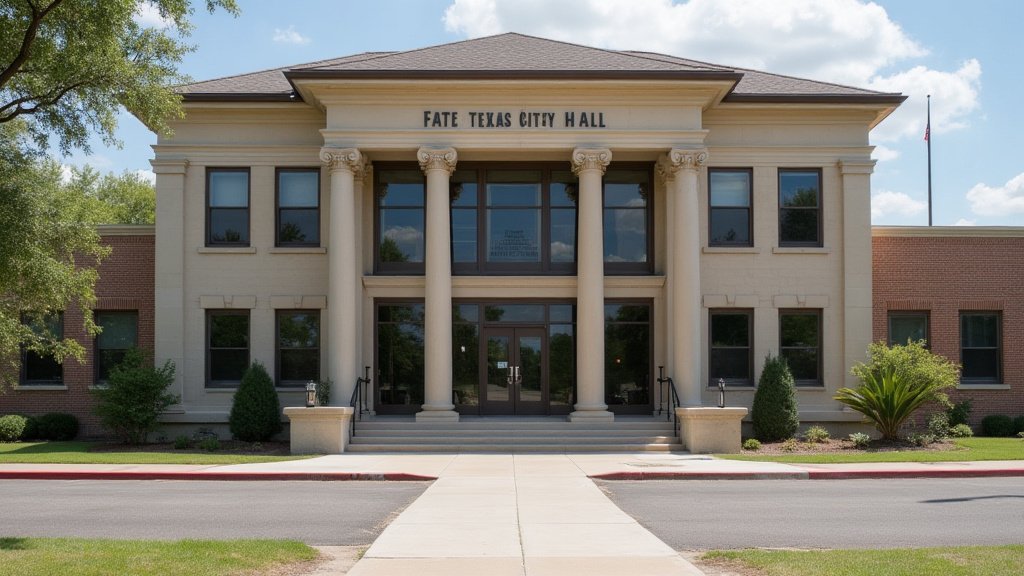
Voters in the North Texas city of Fate have effectively dismantled the current municipal leadership, triggering a political crisis that leaves the city without a fully operational governing body. The recall of multiple council members in the recent election has created an unprecedented void, stalling critical decision-making and leaving residents questioning the future of their local governance.
Key Highlights
- Fate voters approved the recall of City Council members Allen Brawner and John Hamilton during the May 4, 2024, election.
- The departure of these officials leaves the council with significant vacancies, complicating the ability to reach a quorum for legislative action.
- Municipal operations are currently facing uncertainty as the city navigates the legal and logistical hurdles of holding a special election to refill the seats.
The Power Vacuum: A City at a Standstill
The sudden shift in the political landscape of Fate, Texas, has sent shockwaves through the rapidly growing North Texas suburb. Following the May 4, 2024, election, where the electorate voted decisively to recall Council members Allen Brawner and John Hamilton, the city finds itself in a precarious situation. A governing body designed to balance the needs of a booming population has been stripped of key personnel, effectively freezing legislative progress at a time when administrative oversight is paramount.
The Mechanics of the Recall
For many residents in Fate, the recall movement was the culmination of mounting frustration regarding transparency, zoning decisions, and the overall trajectory of the city’s rapid expansion. The process of recalling an elected official in Texas is rigorous, requiring strict adherence to the Texas Local Government Code. The movement garnered sufficient signatures to force a special election, which eventually led to the termination of the council members’ terms. This mechanism of direct democracy, while powerful, has immediate and tangible consequences for the city’s operational efficiency. Without a full complement of council members, the body lacks the numbers required to conduct official business in certain capacities, effectively turning the City Council chambers into a place of procedural ambiguity rather than policy advancement.
Operational Stagnation and Municipal Hurdles
The immediate impact of the recall is the paralysis of the City Council. In municipal government, a quorum—a majority of the total members—is strictly required to vote on budgets, ordinances, and development agreements. With two seats vacated, the city is forced into a defensive posture. Administrative staff, who usually rely on council guidance, are left in a holding pattern. Essential projects, including infrastructure maintenance, budget planning for the upcoming fiscal year, and critical zoning approvals, face indefinite delays.
This delay is particularly acute in Fate, which has seen its population swell as families and businesses migrate north from Dallas. The infrastructure demands of a growing community are constant; when the oversight mechanism is broken, the risk of bureaucratic inertia increases exponentially. City management must now navigate a complex path to maintain continuity of services—such as water, sewage, and public safety—while operating under a truncated legislative structure that lacks the mandate to engage in long-term strategic planning.
Navigating the Legal Path to Resolution
What happens when a city council cannot form a quorum? The process for filling vacancies is dictated by the city charter and state law, which typically mandates that a special election must be called to fill the empty seats. However, this is not an instantaneous fix. The city must now allocate time and financial resources to organize and hold another election—adding an additional layer of expense and public fatigue to the process.
Moreover, there is the question of voter sentiment. Having just participated in a recall, the electorate is now tasked with vetting new candidates who will need to earn trust quickly. The political atmosphere in Fate is currently highly charged, and the upcoming election cycle promises to be as contentious as the recall itself. The challenge for the city is not just filling the empty chairs, but restoring the function of the government so that it can return to the primary mission: managing the growth and prosperity of the city.
Secondary Angles: Future Implications
1. The Growth Trap: Fate is a microcosm of the ‘North Texas Growth Trap,’ where rapid development often outpaces the development of local political consensus. This recall serves as a warning to other developing suburbs about the necessity of maintaining alignment between residents and elected officials.
2. The Cost of Activism: The financial burden of the recall—legal fees, election administration, and the potential for stalled economic projects—will eventually be felt by the taxpayer. The fiscal impact of this paralysis will be a central theme in the next budget cycle.
3. Civic Engagement vs. Stability: This event highlights the tension between the power of the ballot box and the need for institutional stability. While citizens exercised their right to demand accountability, the city must now reconcile that decision with the practical, often slow reality of governance.
FAQ: People Also Ask
Why was the Fate City Council recalled?
The recall was driven by voter dissatisfaction regarding specific council decisions, including zoning, policy transparency, and the perceived direction of city governance during a period of rapid residential expansion in Rockwall County.
Can the city still operate without a full council?
The city continues to provide essential services through its administrative staff, but the council’s legislative power is severely limited. Without a quorum, the council cannot pass new ordinances, finalize certain budgets, or enact major policy changes.
How will the vacant seats be filled?
The vacant seats will be filled via a special election, the timing of which will be determined by the city in accordance with the municipal charter and Texas state election laws.
What does this mean for current construction projects in Fate?
While ongoing, already-approved construction projects may proceed under existing permits, any new projects or extensions requiring council-level approval or zoning changes will likely face significant delays until the council is fully reconstituted.