
On November 13, 2026, the Federal Aviation Administration (FAA) issued a catastrophic nationwide ground stop, effectively bringing civil aviation to a standstill across the United States. The order, which remained in effect for several hours, was triggered by a systemic communication failure affecting 22 regional air traffic control centers. The disruption immediately cascaded through the national airspace system, grounding commercial flights, private charters, and logistics operations. While the FAA technical teams scrambled to isolate the root cause of the data synchronization error between the regional hubs, the broader impact was felt acutely in the world of collegiate athletics. Several major Texas college football teams, scheduled for away games, found themselves trapped on the tarmac or in airport terminals, their carefully choreographed logistical schedules dismantled by a glitch in the nation’s aging aviation infrastructure.
The Anatomy of an Aviation System Meltdown
The crisis began in the early hours of November 13, 2026, when administrators at the Federal Aviation Administration (FAA) detected a significant anomaly in the data exchange protocols connecting 22 critical regional air traffic control centers. These centers are the backbone of the National Airspace System (NAS), responsible for managing high-altitude en-route traffic and ensuring the safe separation of aircraft. According to preliminary reports, a corruption in the synchronization software caused a breakdown in communication, rendering controllers unable to transmit vital flight data packages.
Unlike localized weather events that typically force airports to halt operations, this was a systemic failure of the communication backbone itself. Because air traffic control depends on continuous, real-time data flow, the FAA had no option but to issue a total nationwide ground stop. This order prohibited all aircraft—domestic and international, commercial and general aviation—from taking off, as the risk of operating without integrated radar and flight path data was deemed unacceptable by safety protocols. The Department of Transportation (DOT) has since launched an exhaustive inquiry to determine whether the failure was caused by a software update error, a hardware malfunction in the regional servers, or, as some speculate, a sophisticated cyber-intrusion attempt.
Athletics in Limbo: The Texas Sports Crisis
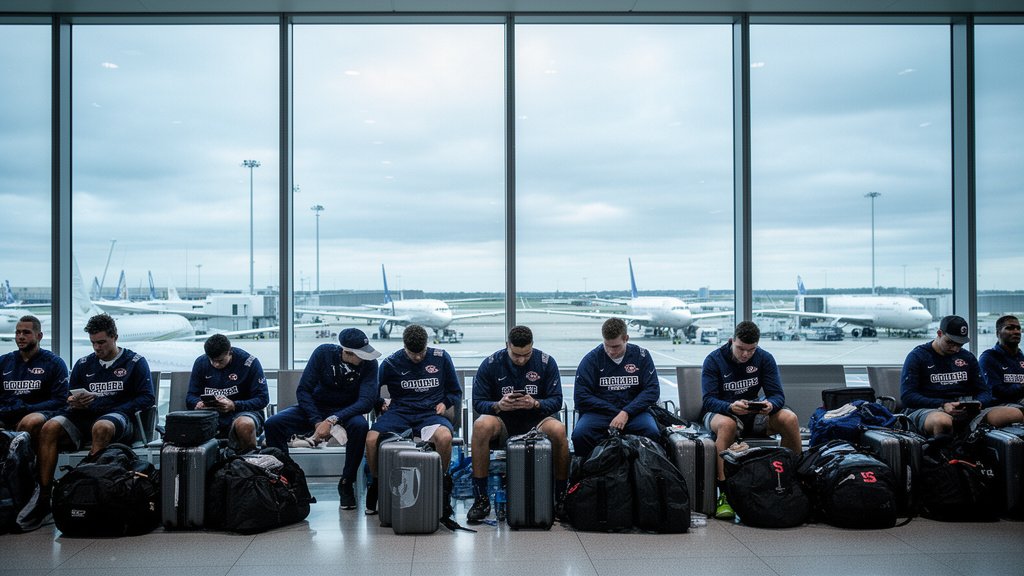
While the commercial impact of the ground stop was immediate and widespread, the human and logistical story of the day centered on the chaos facing Texas college football teams. Several high-profile programs, many of whom were scheduled to play pivotal away games just hours after the stoppage began, were left stranded in various hubs across the state.
For major university athletic programs, the logistics of away games are managed with military-grade precision. Teams typically travel via chartered aircraft, utilizing private airport terminals to bypass the congestion of commercial flight hubs. However, the FAA ground stop is a federal order that applies to all air traffic, regardless of status. By mid-morning, coaching staffs were seen coordinating frantic contingency plans via telephone and satellite, attempting to secure buses for ground travel as it became increasingly apparent that flight windows would remain closed. The stranded teams, representing some of the most influential programs in the state, faced a nightmare scenario: if they could not reach their host cities by early Saturday, the games—valued at millions in television revenue and athletic program funding—faced potential cancellation or forfeiture. The logistical ripple effect of this delay extends beyond the field, impacting hotel reservations, broadcast production trucks, and thousands of fans who were also caught in the travel standstill.
Economic and Operational Ripples
Beyond the frustration of sports programs, the economic implications of the November 13 event are staggering. A nationwide ground stop carries a multi-million dollar price tag, calculated through fuel costs, hotel vouchers for displaced passengers, crew scheduling disruptions, and the long-tail economic impact of lost productivity. The reliance on legacy systems within the aviation sector has been a point of contention for years, and this incident serves as a stark reminder of the vulnerability inherent in centralized infrastructure.
Experts within the Aviation Safety Reporting System suggest that while the redundancy protocols performed as intended by stopping traffic, the fragility of the communication network between the 22 regional centers highlights a desperate need for modernization. As the FAA works to restore normal operations, the focus will shift from the immediate containment of the incident to a long-term assessment of the technological debt carried by the nation’s air traffic control centers. Airlines, already operating on thin margins, will likely demand answers and accountability from the DOT, potentially sparking a new congressional debate over funding for aviation infrastructure upgrades.
FAQ: People Also Ask
What caused the FAA ground stop on November 13, 2026?
The ground stop was caused by a systemic communication failure affecting 22 regional air traffic control centers. This failure prevented the reliable exchange of essential flight data, forcing the FAA to ground all flights for safety reasons.
How does a ground stop differ from a flight delay?
A ground delay typically restricts the number of planes landing at a specific airport due to weather or congestion. A ground stop is a mandatory, usually nationwide, order that prevents any aircraft from departing, creating a total halt to the flow of air traffic.
Will the affected Texas football games be cancelled?
While contingency plans were activated—including emergency bus charters—the final status of games depends on whether the ground stop lifted in time for teams to travel and recover. Universities are working directly with athletic conferences to manage scheduling adjustments.
Is the airspace system safe now?
The FAA is currently conducting a comprehensive audit of the systems that failed. The agency has stated that all necessary safety checks are being performed before the phased resumption of normal air traffic schedules.