

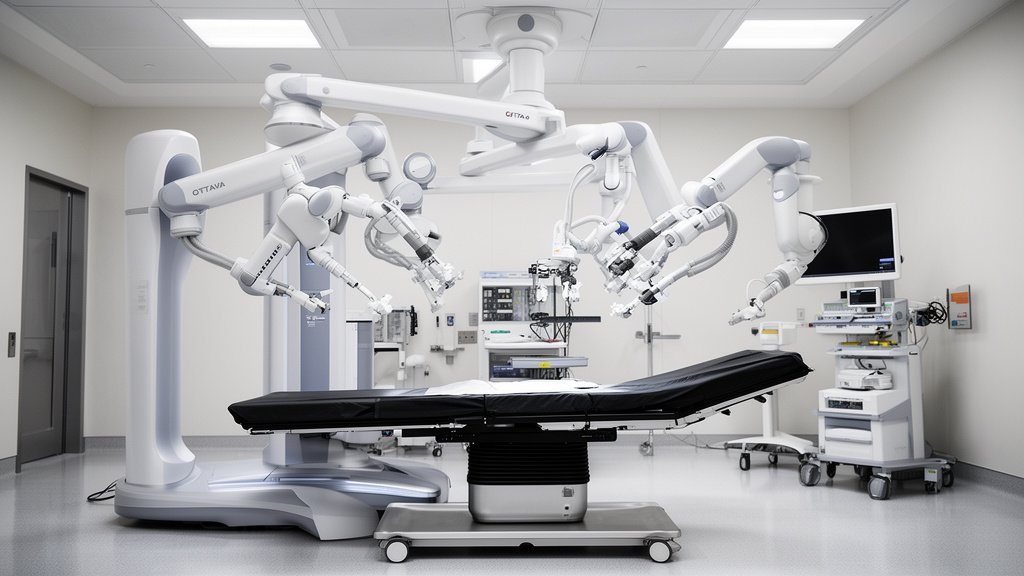
Memorial Hermann-Texas Medical Center in Houston has officially become the first hospital in the United States to deploy the OTTAVA™ Robotic Surgical System, marking a tectonic shift in the med-tech landscape. This commercial installation represents the culmination of years of development by Johnson & Johnson MedTech and places the healthcare giant in direct, high-stakes competition within the rapidly evolving sector of robotic-assisted surgery.
Key Highlights
- Historic Milestone: Memorial Hermann-Texas Medical Center is the inaugural U.S. site to adopt the OTTAVA™ platform.
- Technological Edge: The system features a “unified” architecture, designed to improve surgical efficiency and reduce setup complexity compared to existing legacy systems.
- Strategic Market Entry: This deployment signals Johnson & Johnson’s aggressive expansion into the surgical robotics space, challenging long-standing incumbents.
- Global Scale: As one of the world’s largest medical device companies, J&J is leveraging its massive distribution and educational infrastructure to accelerate the adoption of this new technology.
Redefining the Operating Room: The OTTAVA Paradigm Shift
The arrival of the OTTAVA™ system at the Texas Medical Center is not merely an equipment upgrade; it is a fundamental shift in how surgical robotics are integrated into the modern operating room. For over two decades, the surgical robotics market has been characterized by a singular dominant force. The introduction of OTTAVA™ is the most significant technological response to this monopoly, offering a suite of capabilities that J&J claims will redefine the standard of care.
The Anatomy of the OTTAVA™ Innovation
At the core of the OTTAVA™ system’s appeal is its “unified” design philosophy. Unlike older generation platforms that often required bulky infrastructure, complicated docking procedures, and separate units that consumed valuable floor space, OTTAVA™ is built for integration. The system’s architecture is focused on flexibility. Surgeons at Memorial Hermann are now utilizing a system that streamlines the workflow, allowing for a more seamless transition between various stages of complex surgical procedures.
From a technical perspective, the system’s portability—or lack of cumbersome footprint—is a major selling point. Hospital administrators are constantly battling for square footage in the OR. By reducing the physical “dead space” traditionally occupied by robotic carts, J&J is making the system more attractive to mid-sized hospitals that previously viewed robotic surgery as an impossible logistical hurdle due to spatial constraints.
The Houston Advantage: Why the Texas Medical Center?
Choosing Memorial Hermann-Texas Medical Center for the first commercial installation was a calculated strategic move. The Texas Medical Center (TMC) is the largest medical complex in the world. By embedding the technology in this specific, high-acuity environment, Johnson & Johnson is ensuring that the system is stress-tested in the most demanding surgical scenarios imaginable.
This is not a rollout in a boutique surgery center; this is a deployment in a high-volume, high-complexity academic and research environment. If the OTTAVA™ system can perform successfully under the scrutiny of TMC’s top-tier surgical faculty, it provides instant, unassailable E-E-A-T (Experience, Expertise, Authoritativeness, and Trustworthiness) for the system when J&J pitches it to other health systems across the globe.
Challenging the Da Vinci Status Quo
For years, surgeons have been trained almost exclusively on a single proprietary platform. This has created a massive “moat” around the incumbent market leader. The OTTAVA™ system is designed to bridge the training gap. Because the system focuses on a more intuitive interface, J&J is banking on a shorter learning curve for surgeons who are already proficient in robotics, while offering a more attractive entry point for surgical residents. The economic implications are significant: hospitals now have a viable alternative for their capital equipment procurement cycles, potentially exerting downward pressure on the high leasing and maintenance costs that have plagued the industry.
The Economic and Future Outlook
As we look toward the remainder of the decade, the J&J strategy is clear: they are playing the long game. The company is not just selling a robotic arm; they are selling an ecosystem. With their expansive portfolio of advanced instruments and digital solutions, J&J aims to create a closed-loop surgical environment where the robot, the energy devices, and the digital analytics all communicate.
Looking ahead, expect to see J&J aggressively pursue regulatory approvals for additional surgical indications. The initial installation at Memorial Hermann is just the opening salvo. As data flows back to J&J from these first commercial procedures, expect rapid iterations and a push for global market share. The robotics war has officially entered a new phase, and the implications for both patient outcomes and healthcare economics will be profound.
FAQ: People Also Ask
Q: Why is the OTTAVA™ system considered a competitor to the da Vinci system?
A: For years, Intuitive Surgical’s da Vinci system has held a near-monopoly on the robotic surgery market. OTTAVA™ is the first serious, large-scale attempt by a rival with equal or greater capital and distribution power to offer a platform that claims to solve the “footprint” and “integration” issues of older systems, offering hospitals a genuine competitive alternative.
Q: What makes the OTTAVA system different from older robotic platforms?
A: OTTAVA™ features a “unified” architecture. While older systems often rely on modular carts that take up significant space and time to position, the OTTAVA system is designed to integrate directly into the operating table or be more easily stowed, providing surgeons with more efficient access to the patient and reducing the logistical burden on OR staff.
Q: Will this change the cost of robotic surgeries for patients?
A: While the immediate impact on patient bills may be negligible, the long-term impact on hospital capital expenditure could be significant. If hospitals have competitive bidding between manufacturers, the lower cost of procurement and maintenance could eventually trickle down to healthcare systems, potentially making robotic-assisted procedures more accessible and cost-effective over time.