
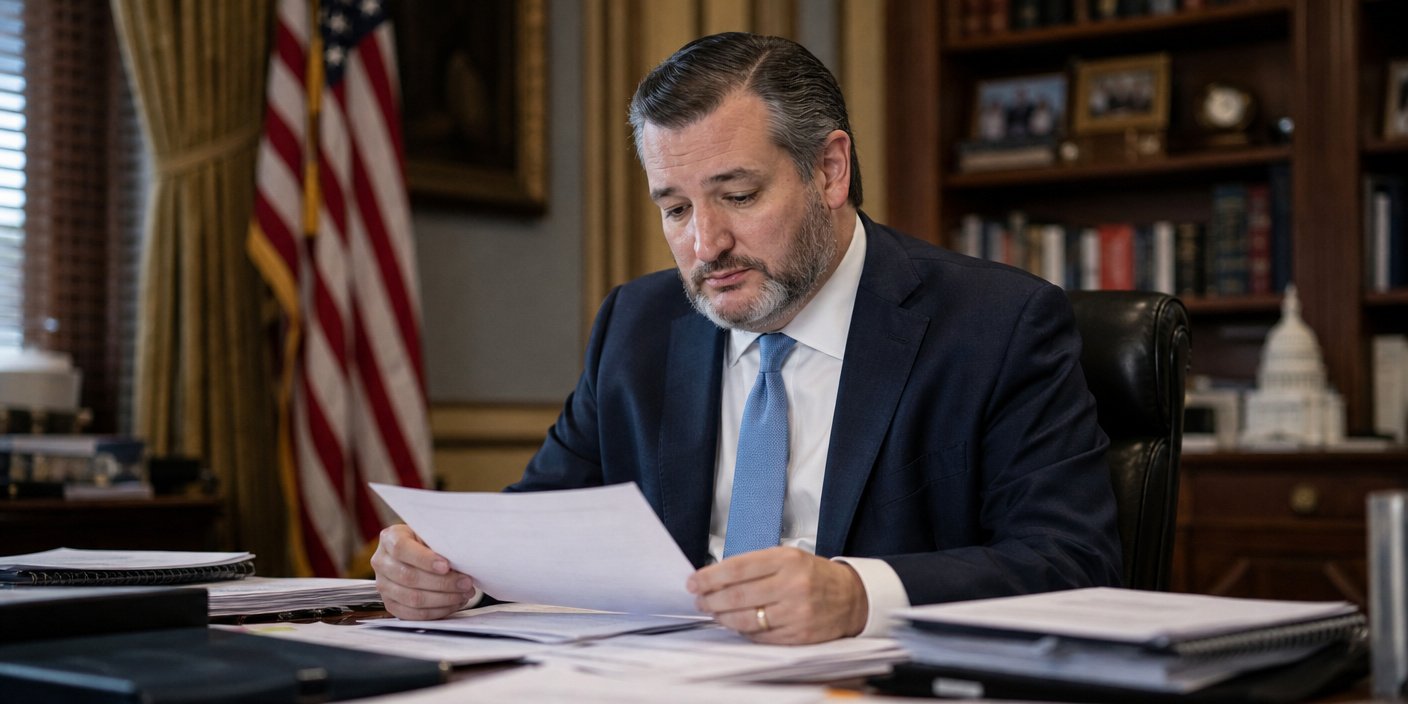
As Senator Ted Cruz prepares to relinquish his influential position as the ranking member of the Senate Committee on Commerce, Science, and Transportation, he is channeling his remaining legislative capital into the passage of a critical bipartisan aviation safety bill. The legislation, which addresses the intensifying urgency for modernized collision-avoidance technology on U.S. aircraft, represents a focal point of his final policy push in this leadership role, aiming to cement a legacy of tangible infrastructure and safety improvement before the committee chairmanship undergoes its scheduled transition.
Key Highlights
- Legislative Sprint: Senator Cruz is aggressively negotiating the final terms of a bipartisan FAA reauthorization package, prioritizing aviation safety technology before stepping down from his ranking member role.
- Collision-Avoidance Focus: The core of the proposed legislation mandates the deployment of advanced surface collision-avoidance systems across commercial aircraft, addressing rising concerns regarding near-miss runway incidents.
- Bipartisan Cooperation: Despite a polarized political climate, the bill has garnered broad support from both sides of the aisle, underscoring the universal priority placed on national airspace safety.
- Technical Mandates: The bill focuses on ‘NextGen’ integration, requiring specific software and hardware upgrades to improve situational awareness for pilots and air traffic controllers alike.
Securing the Skies: The Final Legislative Push
The aviation industry in the United States currently stands at a critical juncture, characterized by unprecedented passenger volume and aging infrastructure that requires significant technological intervention. For Senator Ted Cruz, this aviation safety bill serves not merely as a policy initiative, but as a calculated final act in his tenure on the Senate Committee on Commerce, Science, and Transportation. While the broader debate surrounding the Federal Aviation Administration (FAA) is often mired in partisan squabbling over funding mechanisms and administrative oversight, the safety provisions contained within this latest proposal have emerged as a rare area of consensus.
The Technological Imperative
At the heart of the legislation is a stringent mandate for advanced collision-avoidance technology. In recent years, the industry has seen a troubling spike in runway incursions—incidents where aircraft, vehicles, or pedestrians interfere with an active runway. The proposed legislation seeks to mandate the installation of Runway Status Lights (RWSL) and more sophisticated Surface Awareness and Management Systems (SAMS) across all major commercial airports. These systems are designed to provide both pilots and ground controllers with a real-time, visual, and audible warning if a collision risk is detected. By codifying these requirements into law, Cruz is effectively forcing the hand of commercial carriers and airport authorities to prioritize long-term safety over short-term capital expenditure.
Technological experts within the aviation sector have long argued that the existing ground radar systems are insufficient for the complexity of modern, high-density traffic at hubs like Chicago O’Hare, Los Angeles International, and Hartsfield-Jackson Atlanta. By pushing for this legislation, Cruz is leveraging his chairmanship to ensure that federal mandates catch up to the technical capabilities that have already been proven effective in controlled pilot programs.
Navigating the Bipartisan Aisle
Achieving a legislative victory in the current Senate environment is a Herculean task, often requiring the harmonization of diametrically opposed fiscal philosophies. Senator Cruz’s approach to this bill has been characterized by a willingness to isolate safety mandates from more contentious regulatory debates. This ‘decoupling’ strategy—separating technical infrastructure safety from broader, more controversial FAA policies—has been essential in keeping the bill moving forward.
By focusing on the objective metric of safety, Cruz has been able to maintain the support of Democratic colleagues who might otherwise oppose his legislative agenda. This pragmatic approach highlights a significant evolution in his legislative methodology: identifying ‘must-pass’ infrastructure goals and wrapping them in bipartisan support to ensure passage before the clock runs out on his chairmanship.
The Future of the Commerce Committee
As Cruz transitions away from his ranking member position, the legacy of his aviation work will likely be judged by the implementation speed of these safety upgrades. Aviation legislation is notoriously slow, often taking years to move from the introduction of a bill to the deployment of physical hardware. However, proponents of the bill argue that Cruz’s direct oversight has shaved months off the typical committee review process.
Furthermore, this move serves as a strategic marker for his future influence in the Senate. By securing a high-profile win in a sector that directly impacts the daily lives of millions of Americans—the traveling public—Cruz maintains his relevance as a formidable legislator capable of delivering ‘bread and butter’ results, even amidst the backdrop of high-stakes political maneuvering. The bipartisan nature of this success also provides him with political capital, demonstrating his ability to operate effectively within the institution of the Senate, a narrative that is increasingly important for senior legislators aiming to maintain influence as committee leadership roles shift.
FAQ: People Also Ask
Q: What is the primary goal of the aviation safety bill Senator Cruz is supporting?
A: The primary goal is to mandate the integration of advanced surface collision-avoidance technology across commercial aircraft and major airport infrastructure to significantly reduce the risk of runway incursions.
Q: Why is Senator Cruz prioritizing this specific bill before stepping down?
A: He aims to secure a tangible legislative victory on a non-partisan issue that directly impacts public safety, effectively cementing his legacy within the Senate Commerce Committee before his leadership role ends.
Q: Is there bipartisan support for this legislation?
A: Yes. Aviation safety is widely viewed as a common-sense necessity, and the bill has successfully garnered support from both Republican and Democratic lawmakers, allowing it to bypass some of the gridlock typical of the Senate.
Q: How will this bill affect the average airline passenger?
A: While passengers may not see the legislation directly, the implementation of these systems aims to drastically reduce the frequency of near-miss events on airport runways, thereby increasing overall flight safety and reliability.