
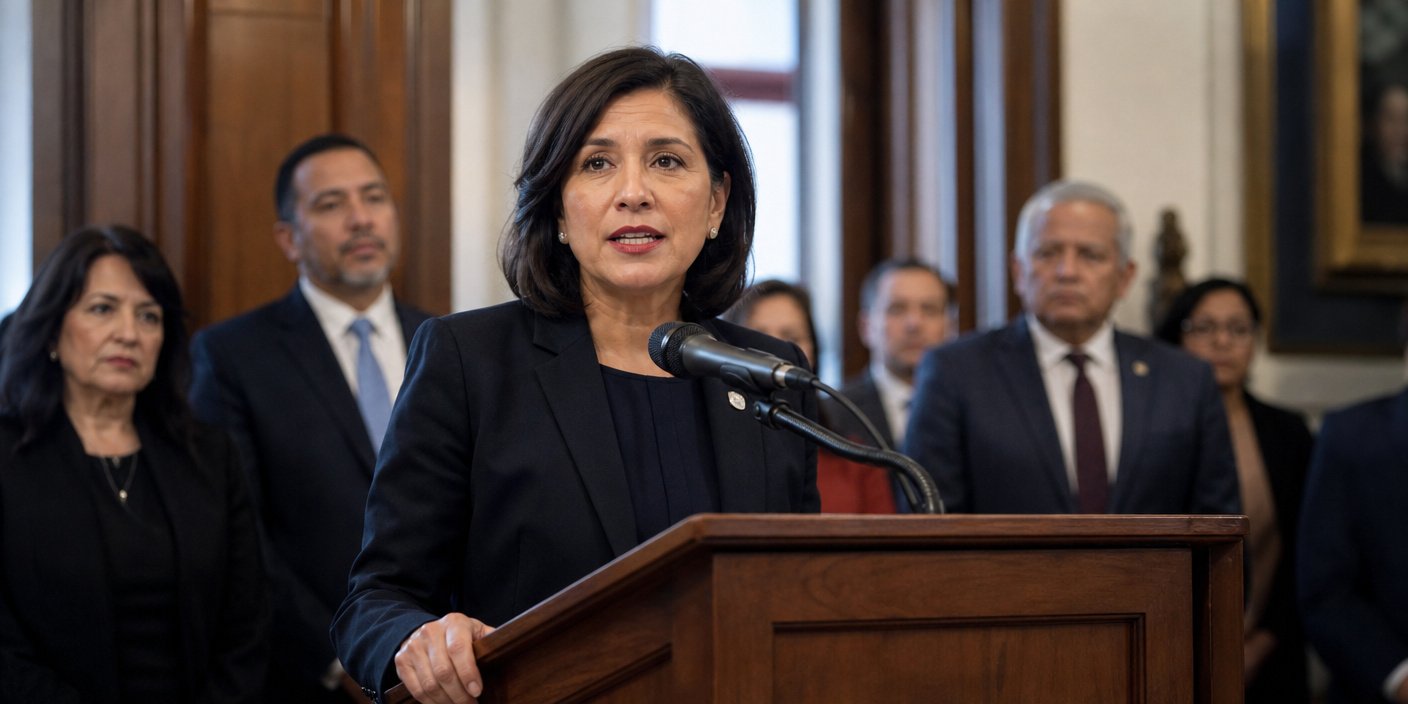
Texas Governor-Elect Gina Hinojosa has officially signaled a major policy reversal regarding the state’s human capital strategy, pledging to rescind the executive order that imposed a strict H-1B hiring freeze across public universities and state agencies. The move, characterized by the Governor-Elect as a vital step toward restoring Texas’s competitive edge in global research and public service, aims to dismantle the barriers that have prevented state institutions from recruiting high-skilled international professionals. This pledge marks a significant departure from the outgoing administration’s restrictive immigration stance regarding state employment, positioning Hinojosa to reshape the staffing landscape of Texas’s expansive public university systems.
Key Highlights
- Governor-Elect Gina Hinojosa has confirmed her administration will rescind the executive order prohibiting public agencies and universities from hiring H-1B visa holders.
- The policy reversal seeks to address recruitment challenges in STEM fields, where international talent is frequently concentrated.
- Supporters of the change argue that the previous restrictions hindered the state’s ability to compete with private sector entities and other states for top-tier academic researchers.
- The repeal is expected to be one of the first official actions taken following the administration’s inauguration, signaling an immediate focus on workforce liberalization.
Re-Opening the Door: A New Direction for Texas Talent
The decision to rescind the hiring freeze is not merely an administrative correction; it represents a fundamental shift in how the state views its public sector workforce requirements. For years, the H-1B hiring freeze served as a point of contention among academic leaders, researchers, and public agency heads who argued that the restriction artificially limited the applicant pool for highly specialized roles. By signaling this reversal, Governor-Elect Hinojosa is moving to align state hiring practices with the realities of a globalized knowledge economy.
The Academic Impact: STEM and Faculty Recruitment
The primary beneficiaries of this policy change are expected to be the public university systems, including flagship institutions that rely heavily on international doctoral graduates and post-doctoral researchers. In the hyper-competitive world of scientific innovation, tenure-track positions and research laboratories are often populated by the best and brightest minds globally. Previous restrictions created a “brain drain” risk, where top talent—often educated at Texas institutions—found themselves unable to transition into faculty roles due to the prohibitive hiring status.
Industry analysts suggest that the reversal will likely bolster Texas’s standing in emerging technologies, ranging from semiconductor manufacturing research to bioinformatics. When university departments are authorized to recruit without the specific constraints of the previous executive order, they can again bid for scholars who would otherwise migrate to states with more flexible labor policies. This is not just about filling vacancies; it is about securing the intellectual capital necessary to sustain the state’s rapid economic growth.
Economic Implications and Workforce Development
Beyond academia, the rescinding of the freeze will impact various state agencies that require niche technical expertise. From civil engineering departments managing large-scale infrastructure projects to healthcare analytics teams within public hospitals, the ability to utilize H-1B professionals allows for a broader spectrum of skills to be tapped. Critics of the previous order frequently cited the administrative burden and loss of productivity as significant hidden costs.
By normalizing the hiring process, the Governor-Elect is effectively reducing the bureaucratic friction that has long plagued the state’s recruitment pipeline. Economists observing the Texas market suggest this move will help the state maintain its attractiveness to multinational corporations, who frequently partner with state universities on research and development. When the public sector creates an environment conducive to international collaboration, it creates a multiplier effect that benefits the entire regional economy.
Addressing the Political and Public Sentiment
The pledge to end the freeze has been met with broad support from business chambers and university administrators, though it remains a topic of nuance within the broader political discourse. Governor-Elect Hinojosa has framed the decision through a lens of economic pragmatism and institutional strength, rather than a departure from broader immigration policy. By separating the function of state-sponsored employment from the national debates surrounding H-1B visa caps and federal legislative reform, the administration hopes to insulate its workforce strategy from partisan gridlock, focusing instead on the tangible outcomes of excellence in public service and education.
FAQ: People Also Ask
What was the H-1B hiring freeze in Texas?
The freeze was an executive-level directive that prohibited state agencies and public universities from hiring individuals on H-1B visas. This order limited the ability of these institutions to sponsor or employ international workers, even for highly specialized positions.
Why is Governor-Elect Hinojosa rescinding it?
The incoming administration has stated that the restriction created unnecessary hurdles for academic and professional recruitment, particularly in STEM fields where the state needs to compete globally for the best talent.
When will this change take effect?
Governor-Elect Hinojosa has pledged to rescind the order upon taking office, though the exact timeline for implementation in individual state agencies will depend on the administrative procedures required for each department.
Will this affect the number of jobs available for US citizens?
Proponents of the repeal argue that the move is about filling specialized, high-skill roles that often remain vacant due to the lack of available domestic applicants with the same specific technical background, thereby preventing the loss of research grants and institutional productivity.