
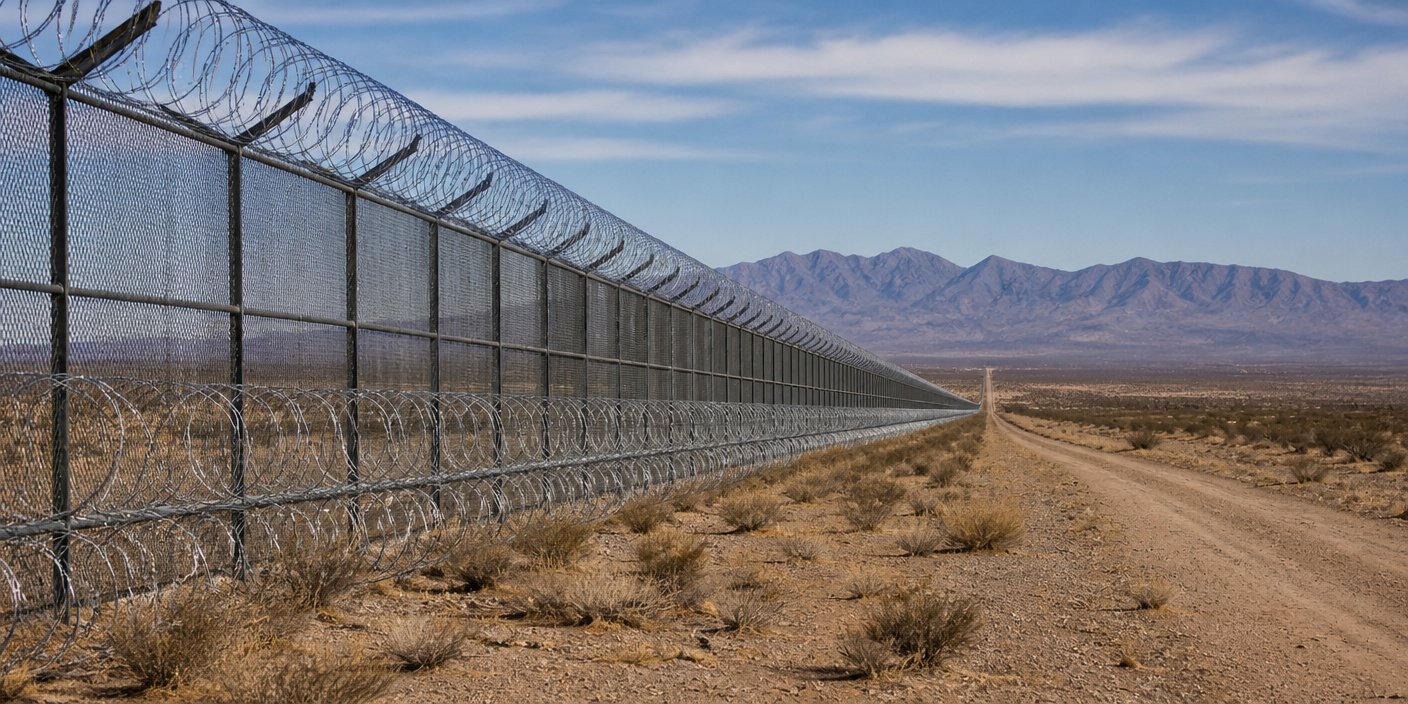
In a decisive resolution to one of the most contentious legal battles of the decade, Texas Attorney General Ken Paxton and federal authorities have reached a settlement agreement to maintain the existing razor wire barrier along the Texas-Mexico border for the next 30 years. The agreement marks a definitive end to the high-stakes litigation that escalated throughout 2024, effectively codifying the presence of the barrier into a long-term infrastructure fixture. This landmark deal concludes years of jurisdictional friction and provides a concrete framework for the physical security measures at the state’s southern edge, signaling a new era of federal-state operational coordination regarding border management.
Key Highlights
- 30-Year Permanence: The settlement mandates that the current razor wire deployment will remain in place, establishing a three-decade maintenance and operational window.
- Legal Resolution: The agreement effectively shutters the primary litigation involving Texas and federal agencies, preventing further immediate court challenges regarding the structure’s legality.
- Strategic Shift: The deal represents a significant departure from the reactive, month-to-month legal maneuvering that defined the dispute, moving toward a solidified, long-term security policy.
- Operational Oversight: Specific protocols for maintenance and potential future modifications have been outlined to ensure compliance with the newly established inter-agency standards.
A New Era of Border Infrastructure and Liability
The agreement between Texas Attorney General Ken Paxton and federal entities to preserve the razor wire at the Texas-Mexico border for 30 years is far more than a simple legal settlement; it is a profound realignment of how border infrastructure will be handled for a generation. By converting what was once a temporary, contested emergency measure into a long-standing installation, the parties have effectively bypassed the constant cycle of injunctions and appellate challenges that dominated the courts in 2024.
The Shift from Emergency to Infrastructure
For much of the past two years, the razor wire installed under Texas’ Operation Lone Star was the subject of fierce debate regarding sovereignty, constitutional authority, and the role of the Department of Homeland Security (DHS) versus state law enforcement. The federal government’s initial stance centered on the necessity of access for border patrol agents, while Texas maintained its right to deter illegal crossings. The new 30-year pact shifts the focus from ‘if’ the wire should exist to ‘how’ it is managed.
This longevity implies that the wire will become a permanent, recognized feature of the landscape. It requires both Texas and federal authorities to commit to maintenance, structural integrity, and clear demarcation of responsibilities. This provides the predictability that border personnel have lacked since the escalation of the conflict. By setting this 30-year horizon, the agreement forces a level of cooperation that was previously hampered by litigation, effectively turning the border barrier into a shared institutional responsibility rather than a point of partisan friction.
Examining the Legal and Security Implications
The decision to maintain the wire for three decades is not without its critics, nor is it without significant legal ramifications. Attorneys involved in the case have noted that this settlement creates a specific precedent regarding state power in the federal domain. For the next 30 years, any attempt by the federal government or future administrations to unilaterally alter or remove this infrastructure could potentially face expedited legal scrutiny, as it is now explicitly part of an established settlement agreement.
From a security perspective, this provides a static baseline for Texas Department of Public Safety (DPS) operations. With a fixed timeframe, resources can be allocated more efficiently toward infrastructure upkeep and patrolling rather than reactive legal counsel. The operational reality at Eagle Pass and other key sectors will likely stabilize, allowing for more consistent enforcement strategies that remain in place regardless of short-term political shifts.
Broader Impact: The Political and Economic Horizon
The economic impact of a fixed 30-year border structure cannot be understated. Border communities have often felt the whipsaw effect of shifting policies, which creates uncertainty for cross-border commerce and local logistics. A 30-year commitment provides a level of ‘policy certainty’ that businesses in the region have been calling for since the early days of the dispute. While some civil rights groups have expressed concerns regarding the humanitarian impact of a permanent deterrent, the state and federal government appear focused on the macro-stability of the border zone.
Looking ahead, this agreement sets a standard that may be emulated elsewhere. The ‘Paxton-Feds’ model of a long-term administrative settlement might become the blueprint for how the U.S. government handles similar jurisdictional disputes in the future, favoring structured, long-term agreements over endless, costly, and disruptive litigation. Whether this leads to a safer border or merely a more entrenched one, the next 30 years of the Texas-Mexico border are now defined by this agreement.
FAQ: People Also Ask
Q: What does the 30-year settlement actually change?
A: It codifies the presence of the razor wire as a long-term fixture, creating a binding 30-year operational agreement that requires both Texas and federal authorities to maintain the structure, ending the immediate threat of its removal via litigation.
Q: Does this settle all ongoing lawsuits regarding the border barrier?
A: This agreement resolves the primary, high-profile legal dispute regarding the razor wire itself, providing a structured resolution that effectively pauses or resolves the litigation that began in 2024.
Q: How does this affect federal border patrol agents’ access?
A: The settlement outlines specific maintenance and operational protocols, ensuring that the barrier remains in place while also clarifying the processes for managing border patrol access and interaction with the wire over the 30-year duration.
Q: Will the wire be replaced or upgraded?
A: The agreement allows for maintenance and structural oversight, meaning that while the barrier is intended to remain, the specific technicalities of upgrades or maintenance will be managed under the new established framework between the state and the federal government.