
The Mexican administration, led by President Claudia Sheinbaum, has ignited a fierce debate among international trade experts and logistics operators with a sweeping proposal to overhaul the nation’s customs laws. The legislative push, aimed at granting authorities greater latitude to challenge import valuations and execute on-site shipment seizures, is being positioned by the government as a crucial measure to combat tax evasion and under-invoicing. However, for the freight and manufacturing sectors, the move represents a significant threat to the fluidity of the U.S.-Mexico supply chain, raising fears of bottlenecks that could impact billions of dollars in daily trade.
Key Highlights
- Enhanced Valuation Authority: The proposal grants the Servicio de Administración Tributaria (SAT) increased power to unilaterally reject declared import values, forcing immediate, intensive audits.
- Seizure Risks: New provisions lower the threshold for customs agents to seize cargo if discrepancies between the declared value and the “reference price” are flagged.
- Supply Chain Disruption: Logistics experts warn that the lack of standardized valuation methodologies will lead to significant processing delays at major land ports of entry.
- Economic Impact: With daily trade between the U.S. and Mexico exceeding $2 billion, any legislative friction risks destabilizing the “nearshoring” boom that has defined the bilateral economic relationship in recent years.
The Customs Crackdown: Analyzing the Economic Ripple Effect
The central tension of President Sheinbaum’s proposal lies in the government’s aggressive approach to “fiscal sovereignty.” For years, the Mexican tax authority, the SAT, has sought to capture more revenue by closing loopholes related to how goods are valued upon entry. The proposed law seeks to modernize this process, yet the industry reaction has been one of alarm, not for the intent, but for the methodology. By moving away from transaction-based valuation toward a more arbitrary, authority-driven “reference price” model, the government risks creating a climate of pervasive uncertainty.
The Valuation Battle
At the heart of the controversy is the methodology of customs valuation. Under international trade standards, the value of an import is generally determined by the transaction value—what the buyer actually paid. The proposed reforms, however, suggest that customs officials will have the authority to challenge these values if they appear inconsistent with “market reference prices” established by the government.
Critics argue this creates a subjective enforcement environment. If a shipment of automotive components or consumer electronics is flagged because its value deviates from an opaque internal government index, the goods could be held indefinitely. This “guilty until proven innocent” framework is causing anxiety among major exporters who rely on “just-in-time” manufacturing logistics, where delays of even a few hours can shut down assembly lines on both sides of the border.
Supply Chain Implications
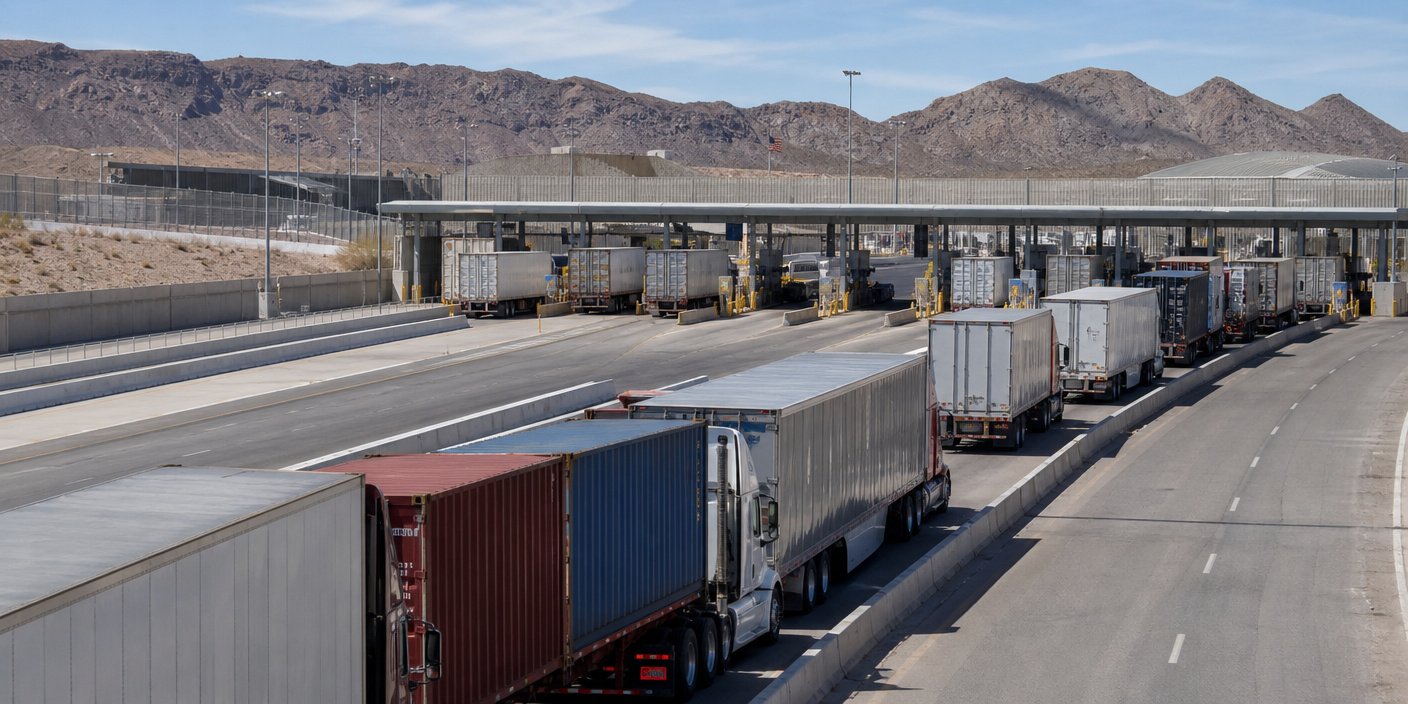
Customs brokers and freight forwarders are particularly concerned about the operational capacity of border ports of entry, such as Laredo, Texas, and Otay Mesa, California, which already operate at peak capacity. Adding a layer of intense administrative scrutiny to every shipment will inevitably slow down the clearance process.
Industry analysis suggests that if the law passes, companies may be forced to “pre-clear” goods more extensively, potentially leading to increased costs and longer wait times. Furthermore, the risk of cargo seizure acts as a chilling effect on investment. Companies operating under the United States-Mexico-Canada Agreement (USMCA) frameworks rely on predictable, transparent customs procedures. This proposal, some argue, undermines the spirit of frictionless trade that the USMCA was designed to foster.
The Nearshoring Paradox
There is a broader strategic contradiction at play. Mexico has positioned itself as the primary beneficiary of “nearshoring,” as global firms seek to move production closer to U.S. consumers to avoid the geopolitical risks of trans-Pacific shipping. While this policy aims to protect domestic revenue, it may inadvertently sabotage Mexico’s competitive advantage. Investors looking for stability may reconsider their footprint in Mexico if they perceive that their assets—and their supply chains—are vulnerable to arbitrary customs interventions.
As the legislation moves through the congressional process, the private sector is scrambling to negotiate carve-outs for verified, “trusted trader” companies. The outcome of these negotiations will determine whether this customs reform acts as a tool for fiscal discipline or a self-inflicted wound on one of the world’s most vital trade corridors.
FAQ: People Also Ask
Q: What is the primary goal of President Sheinbaum’s customs proposal?
A: The primary goal is to close loopholes related to tax evasion and under-invoicing. The government aims to ensure that import duties are calculated on accurate market values, thereby increasing tax revenue.
Q: How does this proposal differ from current customs procedures?
A: Currently, authorities have limited ability to reject transaction values without substantial proof of fraud. The new proposal would shift the burden of proof, allowing authorities to flag shipments based on discrepancies with government-set “reference prices” and hold them for verification.
Q: How will this affect US manufacturers in Mexico?
A: It creates significant “operational risk.” Manufacturers reliant on daily, just-in-time delivery of components could face unpredictable delays at the border, potentially leading to increased inventory costs or assembly line stoppages.
Q: Is this a violation of the USMCA trade agreement?
A: While the Mexican government maintains the right to enforce its internal tax laws, industry groups are actively reviewing the proposal to see if it violates the transparency and trade-facilitation clauses of the USMCA.