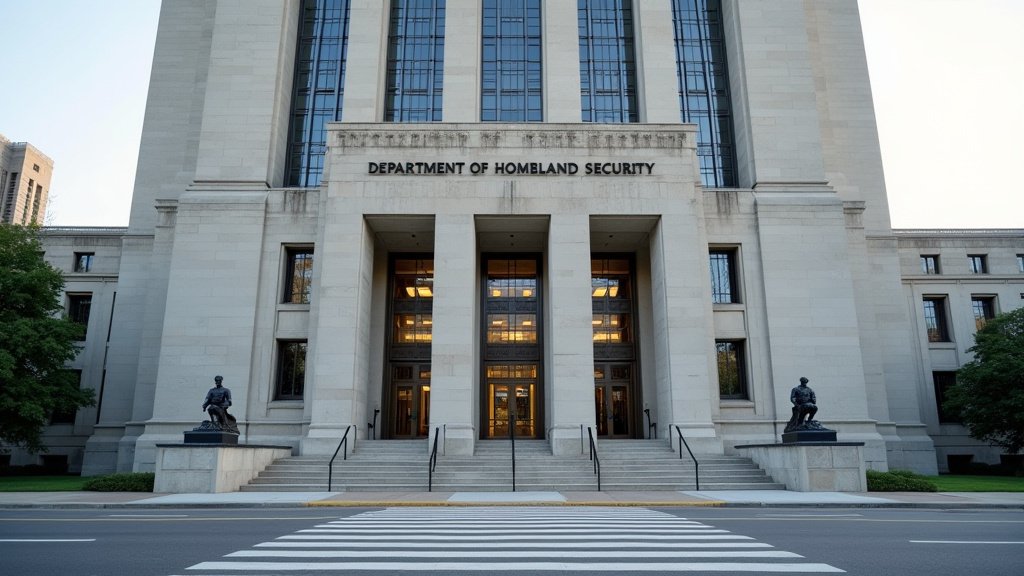
On September 24, 2026, the Department of Homeland Security (DHS) released a landmark statement that has sent shockwaves through the national immigration debate. The agency formally called upon what it termed “sanctuary politicians” to cease the dissemination of hateful and violent rhetoric directed at Immigration and Customs Enforcement (ICE) officials. This urgent appeal comes on the heels of a sobering statistical revelation: the agency has documented a staggering 1,649% increase in assaults against ICE agents compared to the baseline period of 2021–2022.
The Statistical Reality of Violence Against ICE
The DHS data paints a grim picture of the current operating environment for federal immigration agents. According to the agency’s official report, the 1,649% spike in physical assaults and targeted intimidation tactics against personnel marks an unprecedented shift in the security landscape. While specific incidents have fluctuated in prior years, the sustained, massive escalation noted in the 2026 update suggests that the risks associated with federal immigration enforcement have reached a critical tipping point. The agency’s leadership emphasized that these are not merely verbal altercations but involve direct physical confrontation, the use of weapons, and orchestrated efforts to interfere with authorized federal operations. By anchoring this figure against the 2021-2022 timeframe, the DHS is drawing a sharp contrast between previous operational norms and the current, more volatile reality, effectively sounding an alarm for both federal and local oversight bodies.
Defining the ‘Sanctuary’ Conflict
The core of the DHS grievance lies in the relationship between local “sanctuary” policies and the safety of federal agents. The agency alleges that political leaders in jurisdictions that restrict cooperation with federal immigration authorities have fostered a climate where violent rhetoric against ICE is normalized. This creates a dangerous feedback loop: public demonization of federal officers in political forums can, according to the DHS, embolden bad actors to take physical action in the field. The term “sanctuary politician” here acts as a signifier for municipal and state officials who prioritize non-cooperation agreements over federal enforcement mandates. The DHS argument is that by framing federal agents as adversarial rather than collaborative partners in law enforcement, these leaders are inadvertently, yet directly, contributing to the heightened physical danger faced by officers on the ground.
Policy vs. Rhetoric: The Impact on Field Agents
The secondary, and perhaps more nuanced, impact of this ongoing conflict is the degradation of operational safety. When agents operate in environments where local law enforcement and political leadership refuse to provide support, they become isolated. This isolation is further exacerbated when the surrounding environment is hostile. The DHS report suggests that the rise in assaults is a functional byproduct of this erosion of the social and political contract between federal and local entities. For agents in the field, this means that even routine administrative duties—such as executing an arrest warrant or conducting a site visit—are now fraught with the potential for sudden violence. The agency is now calling for a fundamental reassessment of how local political discourse impacts the safety of federal employees, arguing that political disagreement should not supersede the basic security of public servants tasked with executing federal law.
Historical Context and Future Implications
Looking back at the years leading up to the current surge, the transition from moderate tension to overt hostility is stark. In the 2021-2022 period, while friction existed, the level of physical violence remained within a range that the agency could mitigate through standard protective measures. The current, exponential increase suggests that the strategies used to manage risk in the early 2020s are no longer sufficient. Moving forward, the DHS is indicating that it may need to reallocate resources to bolster field security. This could involve increased use of protective equipment, enhanced situational awareness training, and potentially legal challenges against jurisdictions that are found to be actively obstructing federal operations or inciting hostility. The implications for the future are significant: a potential widening of the rift between federal agencies and local governments, and a shift toward more militarized enforcement postures to compensate for the lack of local community support.
FAQ: People Also Ask
What does the 1,649% figure represent?
This figure represents the percentage increase in recorded physical assaults against ICE officials during the current period, specifically when compared to the baseline data gathered between 2021 and 2022. It is a metric used by the DHS to illustrate the dramatic escalation in dangerous encounters.
Why is the DHS blaming ‘sanctuary politicians’?
The DHS argues that public figures in sanctuary jurisdictions who use incendiary or violent rhetoric against federal agents create a dangerous environment. They contend that this rhetoric dehumanizes officers and encourages individuals to physically confront or attack federal personnel in the line of duty.
What is a ‘sanctuary jurisdiction’ in this context?
In this context, a sanctuary jurisdiction refers to a city, county, or state that has implemented policies limiting the cooperation of local law enforcement with federal immigration authorities (ICE). The DHS contends these policies hinder federal law enforcement efficacy and, through associated political rhetoric, increase risks to agent safety.
What steps is the DHS asking politicians to take?
The DHS is explicitly calling on these politicians to moderate their public speech and cease using language that characterizes ICE agents as illegitimate or inherently antagonistic, citing the connection between such language and the rise in actual physical violence against field officers.