
A high-stakes clash over the Texas energy future is intensifying as state Democrats formally demand a special legislative session to address the unregulated expansion of energy-hungry AI data centers. Citing immediate threats to the reliability of the Electric Reliability Council of Texas (ERCOT) grid, lawmakers are challenging Governor Greg Abbott’s recent, unilateral pause on new data center projects, arguing that comprehensive, bipartisan legislation is required to protect ratepayers and prevent catastrophic blackouts.
Key Highlights
- Legislative Pressure: Texas Democratic lawmakers are mobilizing for a special session, asserting that the Governor’s administrative pause lacks the necessary statutory framework to address long-term grid stability.
- ERCOT Strain: Current projections from ERCOT suggest the grid will face massive demand surges, with AI-driven data centers identified as one of the primary drivers of future consumption.
- Infrastructure vs. Investment: The conflict centers on the tension between Texas’s status as a tech innovation hub and the physical limitations of its transmission infrastructure.
- Transparency Demands: Democrats are pushing for mandatory reporting requirements for large-load energy consumers to prevent system overloading.
The Energy Tug-of-War: Powering the AI Frontier
The rapid proliferation of high-performance computing facilities and AI data centers across Texas has placed the state at the epicenter of a global technological gold rush. While the economic benefits—including substantial tax revenue and the attraction of multi-billion dollar firms—are undeniable, the physical reality of the ERCOT grid is straining under the weight of this growth. Recent data indicates that new large-scale data center projects can consume anywhere from 100 megawatts to over 1 gigawatt of power, a volume previously reserved for entire mid-sized cities.
Governor Abbott’s recent directive to pause new interconnection applications for large data centers was an attempt to buy time for the Public Utility Commission of Texas (PUCT) to assess the grid’s load-carrying capacity. However, the opposition argues this administrative fiat is insufficient. Critics claim that without a legislative mandate, the pause is vulnerable to litigation and lobbying pressure, potentially leaving the state’s energy infrastructure exposed to the volatility of rapid, uncontrolled expansion.
The Legislative Crossroads: Seeking Bipartisan Solutions
The push for a special session is not merely political posturing; it represents a fundamental disagreement on the governance of the Texas grid. Democrats argue that the legislature must codify new standards for grid interconnection, specifically requiring data center operators to pay for the transmission upgrades necessary to support their energy load. Currently, the cost of these upgrades often falls on the rate-paying public, a dynamic that legislative proponents seek to rebalance.
By forcing a special session, Democrats aim to bring transparency to the interconnection process. They are advocating for legislation that would prioritize grid reliability metrics over expedited development timelines. The objective is to move from a reactive posture—where the grid is assessed only after a bottleneck occurs—to a proactive model of grid-integrated development.
The Infrastructure Paradox
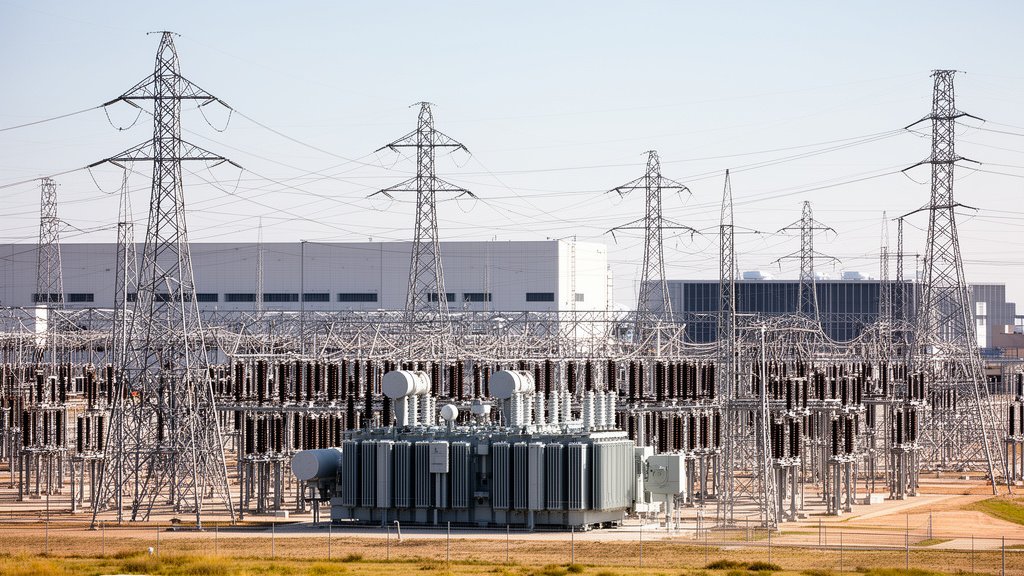
A critical component of this debate is the physical aging of the Texas transmission infrastructure. Unlike states with more robust regulatory integration, Texas operates on a largely isolated grid, limiting its ability to import power from external regions during peak demand. The surge in data center demand coincides with extreme weather events, which have become a defining feature of the Texas climate.
Industry analysts warn that the infrastructure required to transport energy from West Texas wind farms to the high-demand data hubs in North and Central Texas is currently insufficient. Data centers require consistent, 24/7 “baseload” power, which creates a complex technical mismatch with the intermittent nature of renewables that currently dominate much of the Texas energy portfolio. This mismatch is at the heart of the grid reliability concerns fueling the call for a special session.
Economics vs. Reliability: The Long-Term Forecast
Looking ahead, the state faces a difficult economic paradox. If Texas imposes too stringent regulations, it risks driving the next wave of AI investment to neighboring states like Oklahoma or New Mexico. Conversely, if it ignores the capacity warnings, the state faces the risk of rolling blackouts or, at minimum, significantly higher energy costs for residents and small businesses.
Future predictions suggest that the only viable path forward involves “grid-aware” development. This includes mandating that data centers utilize on-site microgrids, modular nuclear energy, or battery energy storage systems (BESS) to offset their grid draw. Whether the legislature is willing to impose these costs on tech developers during a special session remains the pivotal question.
FAQ: People Also Ask
Q: Why are data centers putting so much strain on the Texas power grid?
A: Data centers, particularly those optimized for AI and machine learning, require massive amounts of continuous power for servers and cooling systems. As dozens of these facilities cluster in Texas, their collective demand can spike the load on the ERCOT grid to levels that exceed existing transmission capacity.
Q: What exactly did Governor Abbott’s pause accomplish?
A: The pause temporarily halted the approval process for new, high-demand data center projects to allow regulators at the PUCT to review current grid capacity and develop new standards for how these facilities connect to the grid, aiming to prevent instability.
Q: What do Texas Democrats hope to achieve in a special session?
A: Democrats are seeking to create binding, transparent legislation that mandates financial contributions from large-scale tech companies for grid upgrades, ensuring that private development does not compromise the energy reliability for the average Texas resident.
Q: How does the Texas grid differ from other states?
A: Texas operates its own independent power grid, ERCOT, which is largely disconnected from the national interconnections. This means Texas has limited capacity to import emergency power from other states, making local grid management and resource planning significantly more critical.