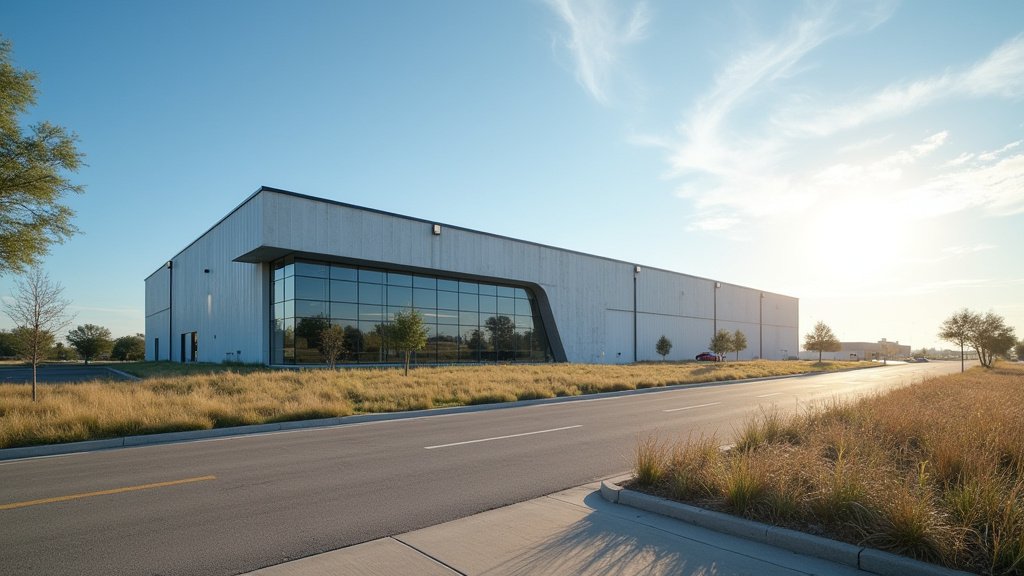

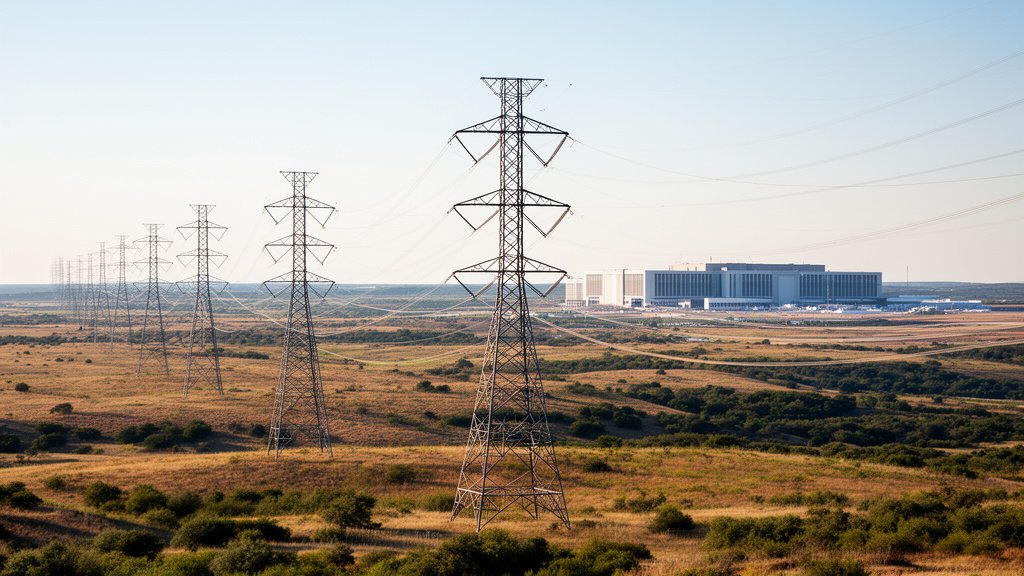
Texas is currently locked in a precarious energy struggle that pits the state’s rapid economic expansion against the physical limits of its power grid. As data centers, AI computing facilities, and cryptocurrency mining operations continue to flock to the Lone Star State, the Electric Reliability Council of Texas (ERCOT) is facing an unprecedented surge in demand. However, the transmission infrastructure required to deliver this power is increasingly stalled. Due to escalating backlash from local residents—often citing property values and aesthetic impacts—major transmission line projects are facing significant delays. Energy regulators and industry experts are now sounding the alarm: if these critical upgrades are not completed, the state could face not only stunted economic growth but a renewed threat of rolling blackouts, reversing years of efforts to secure the Texas power grid.
Key Highlights
- The Transmission Bottleneck: Proposed transmission line projects, essential for transporting power from generation sources to high-demand data centers, are being delayed by local municipal and resident opposition.
- Grid Stability Risks: Regulators warn that the inability to expand the grid in lockstep with the massive power demands of AI and data center development creates a direct path to potential rolling blackouts.
- Economic Consequences: Industry experts argue that failing to provide the infrastructure for high-growth tech sectors could drive billions in potential investment out of Texas, stalling the state’s economic momentum.
- Regulatory Friction: There is a growing tension between state-level energy planning (PUCT) and local zoning control, leading to a fragmented approach to critical infrastructure deployment.
The Gridiron Clash: Powering Texas’ Digital Future
Texas has long marketed itself as an energy-rich haven for industry, characterized by its independent grid and deregulated market. This narrative successfully lured a massive influx of tech giants, which now require gigawatts of power. However, the reality of physics is clashing with local politics. A data center, unlike a standard manufacturing facility, operates on a 24/7, high-density power load. Delivering this power requires a robust transmission network that is often non-existent in the rural or suburban areas where these centers are being built.
The Anatomy of the Transmission Delay
Transmission lines are the superhighways of the electrical grid. When a utility proposes a new line to connect a high-voltage substation to a data center, it must undergo a rigorous routing process. Traditionally, this was a technical and logistical challenge. Today, it is a legal and social one. In various Texas counties, residents have mobilized, forming activist groups to oppose the construction of these lines, claiming they disrupt rural character and diminish property values.
These delays are not merely bureaucratic inconveniences; they are structural threats. ERCOT’s long-term planning models rely on the timely commissioning of these lines. When a project is delayed by 18 to 24 months due to litigation or local council obstruction, the grid balance is thrown off. The power is available, but the bridge to get it to the consumer is blocked. This leaves utilities in a state of ‘load uncertainty,’ where they are forced to operate the grid with less flexibility than designed.
AI and the Escalating Demand Curve
The acceleration of Artificial Intelligence (AI) and Machine Learning (ML) has fundamentally shifted the demand profile for the Texas grid. Modern AI clusters consume significantly more electricity than the data centers of five years ago. This creates a compounding effect: the state needs more transmission capacity to handle the increased baseload power requirements of these advanced computing facilities.
If the state fails to upgrade its infrastructure, the grid faces a ‘reliability gap.’ During extreme weather events—which Texas has become unfortunately familiar with—the system has very little margin for error. If data centers are drawing massive, constant loads without the supporting transmission capacity to move that energy efficiently, the grid is more susceptible to frequency instability. Experts from the Public Utility Commission of Texas (PUCT) have hinted that without the expedited construction of these lines, the reliability that businesses moved to Texas to enjoy could become a liability.
The Economic Paradox: Growth vs. Grid
There is a profound economic irony in the current situation. The data centers and AI hubs are primary drivers of tax revenue and high-skill job creation for the state. By blocking the transmission lines necessary to power these facilities, local communities may effectively be killing the golden goose.
Conversely, the energy industry must acknowledge the validity of local concerns. Simply ‘running over’ local communities is no longer a politically viable path. The challenge for the next legislative session will be finding a middle ground: perhaps through underground transmission technologies, which are significantly more expensive but less intrusive, or through updated compensation structures for landowners that go beyond standard market values for easements. Without a compromise that accelerates these projects, Texas risks a two-tiered future: one where the power grid is either unreliable or incapable of supporting the high-tech economy that is meant to sustain the state’s future.
FAQ: People Also Ask
1. Why can’t Texas just generate more power to avoid blackouts?
It is not just a matter of generation (power plants); it is a matter of transmission (moving the power). Even if Texas builds new generation, if the transmission lines cannot move that power to the data centers and load centers, the grid remains unstable.
2. What is the role of the PUCT in this conflict?
The Public Utility Commission of Texas (PUCT) is the regulatory body that oversees the grid. They hold the authority to approve transmission routes. The current conflict arises when their mandate for grid reliability clashes with local municipal zoning or resident opposition.
3. Will data centers actually cause blackouts?
Data centers themselves do not cause blackouts, but they increase the ‘baseload’ or constant demand on the grid. If the infrastructure is not upgraded to handle this constant demand alongside residential needs, the margin for error during high-demand periods (like extreme summer heat) shrinks, increasing the risk of grid failure.
4. Is there a technological solution to these delays?
Yes, technologies like high-voltage direct current (HVDC) lines, underground transmission, and advanced ‘grid-enhancing technologies’ (GETs) can improve efficiency. However, these are expensive and often require significant upfront capital, which is currently the subject of intense regulatory debate.