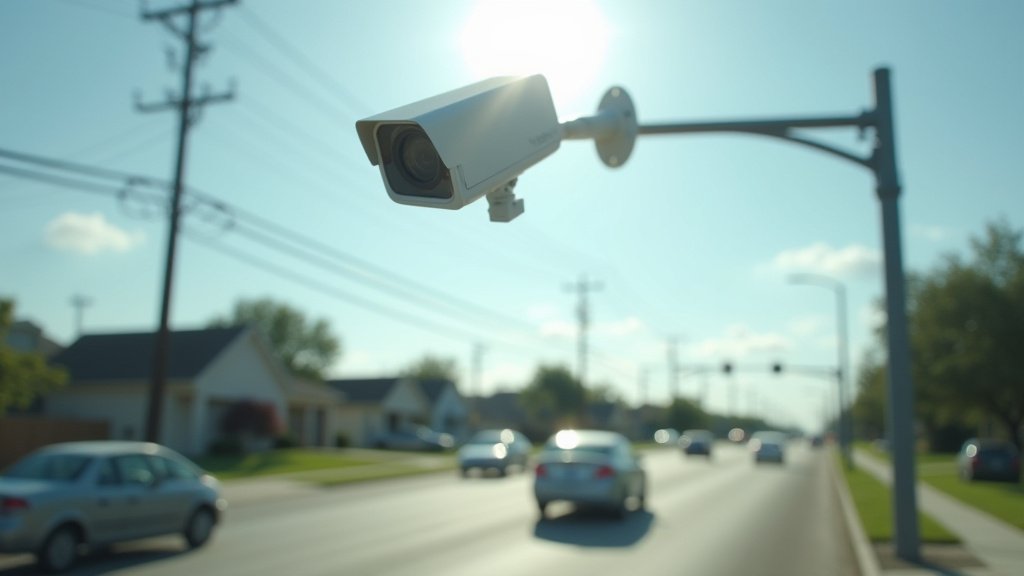
As Automated License Plate Reader (ALPR) technology proliferates across the Lone Star State, a burgeoning resistance movement is taking hold in Harris County and beyond. Residents and local activists are raising alarms over the rapid expansion of Flock Safety camera networks, citing significant concerns regarding individual privacy, data retention policies, and the lack of transparent public oversight. However, for many municipal governments and law enforcement agencies, the path to removing these devices is proving to be a bureaucratic and financial minehole.
Key Highlights
- The Surveillance Expansion: Flock Safety has become a dominant force in Texas law enforcement, with thousands of AI-powered cameras tracking vehicle movements to assist in criminal investigations.
- Privacy Concerns: Critics argue that the passive nature of the surveillance—gathering data 24/7—creates a ‘dragnet’ effect that disproportionately impacts residents’ expectations of privacy under the Fourth Amendment.
- The Contractual Bind: Many Texas agencies entered into ‘Surveillance-as-a-Service’ multi-year agreements, which often include automated renewal clauses and heavy financial penalties for early termination.
- Inter-Agency Complexity: Because data is often shared across multiple departments and law enforcement jurisdictions, unilateral termination by one county or city can disrupt a larger, integrated surveillance ecosystem.
The Surveillance Contract Bind: Why ‘Off’ Is So Hard to Switch
The central tension in the growing controversy surrounding Flock Safety technology is not merely the debate over privacy versus security, but the structural difficulty of exiting the systems once they are embedded. Across Texas, the implementation of these cameras has evolved into a ‘Surveillance-as-a-Service’ model, where agencies do not own the hardware but instead pay subscription fees for the software and data analytics. This model has effectively transformed law enforcement surveillance into a recurring operational expense, rather than a one-time capital investment.
The Anatomy of the ‘Trap’
In Harris County, where public pushback has reached a boiling point, local officials have discovered that the agreements signed with surveillance providers are often ironclad. These contracts frequently feature staggered renewal dates, restrictive termination clauses, and integration dependencies. Because Flock systems are designed to share data seamlessly between local, regional, and sometimes state-level law enforcement databases, removing a camera in one jurisdiction can theoretically degrade the efficacy of a regional intelligence network. This creates a powerful ‘network effect’ incentive for local officials to maintain their subscriptions, even when faced with significant public dissent.
Furthermore, the financial barriers to exit are substantial. Many local government contracts include early termination fees designed to recoup the cost of hardware installation and network infrastructure development. For budget-conscious suburban councils or school districts that have integrated these systems into their daily operations, the fiscal impact of ending a contract prematurely is often viewed as fiscally irresponsible, pitting the elected officials against their constituents.
The Fourth Amendment and the ‘Dragnet’ Debate
At the heart of the resident-led backlash is the concern over the scope of the surveillance. Flock Safety cameras utilize advanced image recognition to capture more than just license plates; they are increasingly capable of identifying vehicle makes, models, colors, and unique aftermarket modifications. Privacy advocates, including legal teams from various civil rights organizations in Texas, argue that the constant, automated nature of this surveillance violates the spirit, if not the letter, of the Fourth Amendment protections against unreasonable searches.
While law enforcement agencies contend that the technology is a crucial ‘force multiplier’—pointing to statistics where ALPR data has been used to recover stolen vehicles or assist in violent crime investigations—critics argue that the cost of this utility is the erosion of public anonymity. The primary concern is not just the collection, but the long-term retention and potential secondary use of this location data by third-party agencies or private data brokers. The lack of standardized, state-wide legislation regarding how long this data can be held, and who can access it, has left a vacuum filled by local policies that vary wildly from one county to the next.
The Future of Public Oversight
As the debate continues to heat up in Texas, the focus is shifting from simple opposition to the demand for better governance. Proposals are circulating in various chambers for increased transparency, such as mandatory public audits of surveillance contracts and the creation of civilian oversight boards to review data sharing agreements. Without clear legislative intervention at the state level to standardize termination rights and data privacy protections, communities across Texas are likely to remain locked in this complex struggle between the desire for modern security tools and the fundamental right to public privacy.
FAQ: People Also Ask
1. What exactly does a Flock Safety camera record?
Flock Safety cameras are Automated License Plate Readers (ALPRs) that use machine learning to capture vehicle information, including license plates, make, model, color, and unique vehicle features, as well as timestamps and GPS locations of sightings.
2. Why are these contracts hard to cancel?
They are often structured as multi-year subscription-based services with auto-renewal clauses. Additionally, because the systems are integrated into regional law enforcement networks, officials cite operational dependencies that make single-entity withdrawal difficult.
3. Do residents have any legal recourse to remove them?
Residents are primarily utilizing the political process—lobbying city councils and county commissioners—to force policy changes or budget cuts. Legal challenges based on Fourth Amendment rights are also being explored, though they face high evidentiary hurdles.
4. Is the data collected shared with other agencies?
Yes, a key selling point of the Flock system is the ability to share data across different agencies (e.g., city police sharing with county sheriffs or state law enforcement), which is part of what makes the networks so persistent and difficult to partially dismantle.