

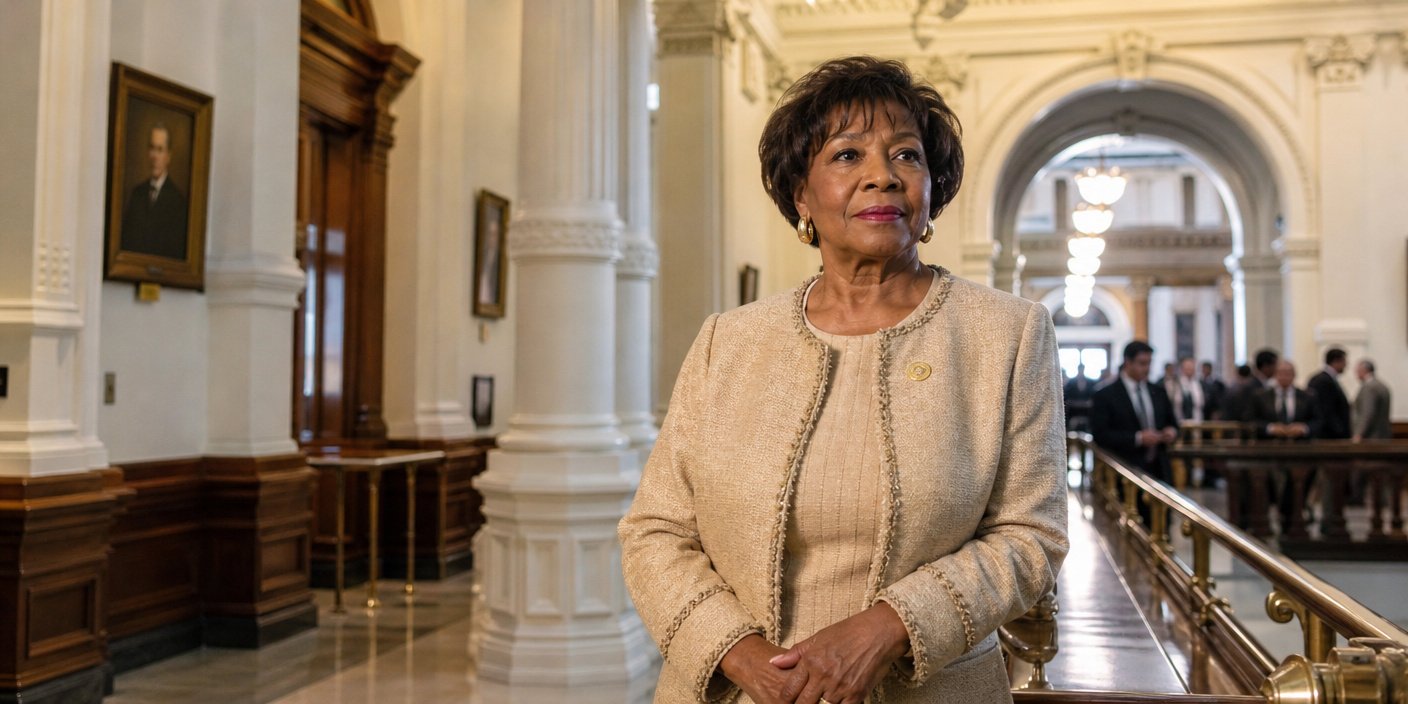
The campaign for the Texas House Speakership has taken a significant turn, positioning Houston’s own Senfronia Thompson as a pivotal figure in the fight to restore local governance. The editorial premise suggesting that her ascent could usher in a new era of respect for Texas cities is not merely symbolic; it represents a fundamental challenge to the legislative antagonism that has defined the relationship between the Texas State Capitol and the state’s urban centers in recent years. By challenging the status quo, Thompson’s potential speakership signals a possible end to the legislative climate that allowed for sweeping preemption measures, most notably the controversial “Death Star” legislation.
The Clash Between Austin and Texas Cities
Dismantling the ‘Death Star’ Precedents
At the heart of the current urban-state tension is House Bill 2127, widely known as the “Death Star” bill, which passed during the 2023 legislative session. This legislation fundamentally altered the balance of power by preventing cities and counties from enacting regulations that exceed or contradict state law in areas spanning labor, agriculture, and natural resources. For municipal leaders in cities like Houston, Dallas, and Austin, this was not just a policy shift; it was viewed as a direct assault on local authority. The bill effectively neutralized local ordinances regarding mandatory water breaks for construction workers, fair chance hiring, and various business regulations. Proponents of the bill argued that it was necessary to create a uniform regulatory “floor” for businesses across Texas, preventing a patchwork of conflicting rules. However, critics, including municipal advocacy groups and the Texas Municipal League, viewed it as a gross overreach of state authority, stripping local councils of their ability to address the specific needs of their constituents.
The Erosion of Local Control
The antagonism went beyond HB 2127. In recent cycles, the Texas Legislature has aggressively pursued measures to cap property tax revenue increases and restrict the ability of cities to reallocate funds from police budgets. This legislative environment has left urban centers feeling besieged, with city councils frequently forced to litigate to protect their ability to govern. The editorial suggestion that Senfronia Thompson could change this dynamic is rooted in the idea of institutional respect. A speaker who understands the complexities and demographic diversity of a city like Houston—the state’s most populous municipality—would theoretically be less inclined to view local ordinances as threats to the state’s economic sovereignty and more as necessary responses to localized challenges.
The ‘Ms. T’ Factor: Political Clout and Legislative History
A Legacy of Service
Senfronia Thompson is not a newcomer to the political arena; she is a titan of it. Serving in the Texas House of Representatives since 1973, she holds the distinction of being the longest-serving woman in the history of the Texas Legislature. Her longevity is not just a function of time but of influence. Thompson has navigated decades of shifting partisan tides, establishing a reputation for pragmatic, coalition-based governance. Her supporters argue that her deep knowledge of legislative procedure, combined with her decades of bipartisan relationship building, gives her a unique advantage in managing the often-volatile Texas House floor.
The Speaker Equation
The Speakership of the Texas House is a powerful position, controlling the flow of legislation, committee assignments, and the overall agenda. For Thompson to ascend to this position, she would need to navigate a Republican-majority chamber, a feat that would require building a broad coalition that transcends strict party lines. While the editorial highlights the hope for a reset, the mathematical reality of the Texas House remains a significant hurdle. However, the prospect of her speakership is a rallying cry for those who believe the “urban-rural” divide in Texas has become too toxic and that a leader from Houston—a hub of economic activity and diversity—is essential to bridge that gap.
Future Implications for Urban Autonomy
Reimagining State-Local Partnerships
If Thompson were to ascend to the Speakership, the immediate impact would likely be a softening of the rhetoric regarding city authority. This does not necessarily mean an immediate repeal of all preemption laws, but it could signal a shift toward “cooperative federalism” within the state. Legislative sessions could move away from punitive measures toward collaborative problem-solving, where the state acts as a partner rather than an adversary to municipalities. This change in tone alone would be a significant victory for local governments that have spent the last several sessions in defensive posture.
The Economic Argument for City Respect
Beyond the political maneuvering, there is a strong economic argument for ending the antagonism against cities. Texas’s economic engine is driven by its major metropolitan areas. When the state undermines the ability of these cities to regulate their own environments—whether through labor standards or zoning—it creates uncertainty for the businesses and workers who drive the state’s GDP. A shift toward respecting local ordinances could stabilize the regulatory environment, providing the clarity that major employers and investors seek. Thompson’s long career has often centered on issues of economic justice and equity, and her supporters believe she would view municipal stability as a key pillar of Texas’s overall economic health. Ultimately, the potential for a “Ms. T” speakership is about restoring the belief that Austin can govern without crushing the innovation and autonomy that define the state’s greatest cities.