
Apple has officially inaugurated its new Advanced Manufacturing Center in Houston, a facility meticulously designed to serve as a hub for innovation, workforce development, and technical resource sharing. By positioning this center directly alongside its existing facility—already known for critical AI server assembly and Mac mini production—Apple is establishing a cohesive ecosystem that bridges the gap between massive-scale technology output and local business scalability. This move is not merely an expansion of floor space; it is a strategic investment in the technical capabilities of small- and medium-sized businesses (SMBs), providing them with access to the same caliber of advanced tools that drive some of the world’s most sophisticated supply chains.
The Strategic Value of Shared Knowledge
At the core of the Houston center’s mission is the democratization of high-end manufacturing technology. Historically, small- and medium-sized enterprises often struggle to access industrial-grade manufacturing tools due to the exorbitant cost of equipment and the steep learning curve required to master complex production workflows. Apple’s new center addresses this by offering free training sessions and interactive laboratory spaces where local entrepreneurs can experiment with advanced manufacturing protocols.
By lowering these barriers, Apple is effectively fostering a local talent pool that is comfortable working within the high-precision environment that Apple requires. This “co-location” strategy—placing educational resources directly next to active assembly lines for AI servers and Mac minis—creates a unique feedback loop. Local businesses gain the mentorship of Apple engineers, while Apple benefits from a more robust, skilled, and technologically adept regional supply network. It is a symbiotic relationship designed to future-proof the regional economy against the volatility of global supply chain disruptions.
Industrial Synergy and the AI Connection
The juxtaposition of the new center with the existing AI server and Mac mini assembly facility is particularly notable. As the demand for AI hardware skyrockets, the infrastructure required to support server assembly has become increasingly specialized. By creating a physical space in Houston that mirrors, in miniature, the technical sophistication of their production facilities, Apple is signaling a shift toward localized, vertical integration.
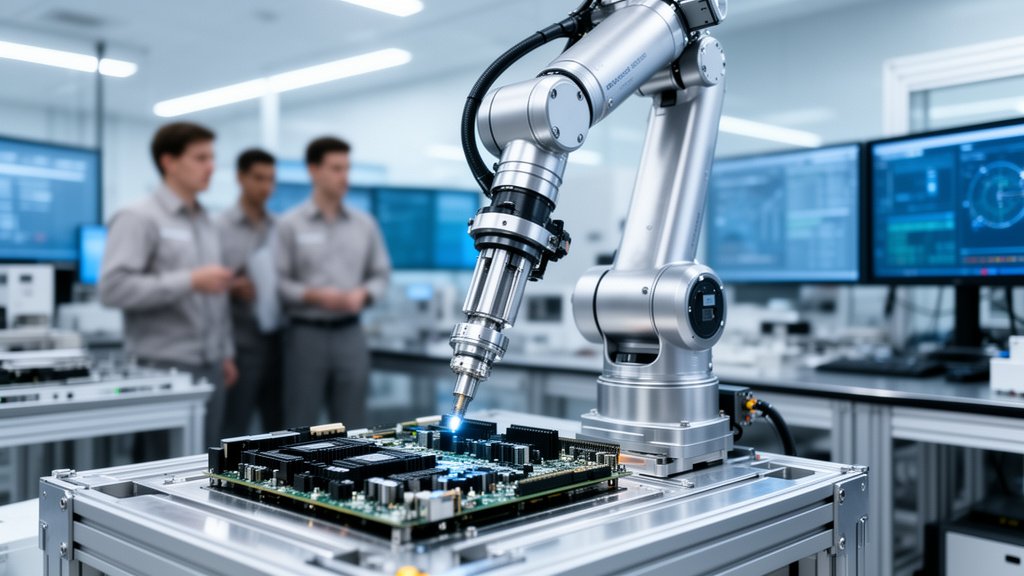
This center does not just teach general skills; it provides a sandbox for the integration of automation, robotics, and high-precision quality control—the very pillars of modern hardware assembly. The facility acts as an incubator where the hardware requirements for next-generation AI servers can be understood, prototyped, and refined. When small businesses utilize these labs, they are essentially training on the “language” of Apple’s production standards, which makes them far more viable candidates for future vendor partnerships.
Building a Resilient Domestic Framework
The decision to anchor this project in Houston, rather than more traditional tech hubs like Cupertino, speaks to the broader trend of “onshoring” critical manufacturing capabilities. Houston, with its deep roots in engineering, energy, and logistics, offers a distinct advantage for hardware-heavy operations. Apple’s investment here reinforces the notion that American manufacturing is evolving; it is no longer just about heavy assembly, but about the intelligent application of design, software, and precision engineering.
From a secondary analytical perspective, three key trends are visible in this development:
1. Supply Chain Resilience: By cultivating a localized ecosystem of vendors and partners in Houston, Apple is insulating its primary assembly lines from the risks associated with overseas logistics. Having a network of SMBs capable of precision work just miles away from the main assembly site reduces lead times and improves quality control significantly.
2. The Workforce Upskilling Initiative: This facility acts as a vocational bridge. Many local workers are transitioning from traditional manufacturing roles to high-tech, AI-adjacent assembly tasks. This initiative provides the necessary training to make that transition viable, turning a regional labor force into a competitive, specialized talent pool.
3. The Hardware-Software Integration Model: The center highlights how Apple is treating hardware manufacturing as a continuous R&D process. By having a space where training meets production, the company can quickly prototype tool adjustments for the Mac mini or AI server lines, test them with local partners, and scale successful processes rapidly.
As this center scales, the long-term impact on the Houston manufacturing scene will likely be profound. It transforms the city from a place where products are simply assembled to a place where the methods of assembly are pioneered and taught, solidifying Apple’s commitment to growing its operational footprint on domestic soil.
FAQ: People Also Ask
1. What services are available at Apple’s new Houston Advanced Manufacturing Center?
The facility provides free training, access to advanced manufacturing tools, and interactive labs. These resources are aimed at helping small- and medium-sized businesses (SMBs) refine their production processes and technical skills.
2. Is the Houston facility open to the public?
The center is primarily geared toward small- and medium-sized businesses and local partners. It serves as an incubator for professional growth, training, and supply-chain integration rather than a public retail or general-access space.
3. How does this center relate to Apple’s AI and Mac mini production?
The new center is located alongside Apple’s existing facility responsible for AI server assembly and Mac mini production. This proximity creates a synergy where educational and manufacturing resources are in close geographic and operational alignment.
4. Why did Apple choose Houston for this initiative?
Apple leveraged Houston’s existing industrial infrastructure and strong engineering heritage. The site complements their existing operations in the area, allowing for efficient logistics and the development of a localized, highly skilled support network for their primary assembly facilities.