
Texas has solidified its reputation as the premier economic engine of the United States, officially outpacing the national job growth average by a notable 0.8 percentage points. According to the latest labor market data, the state added 154,300 nonfarm jobs over the past 12 months, resulting in an annualized growth rate of 1.1%. This expansion underscores a broader trend of industrial and commercial vitality in the region, even as the national economy navigates the complexities of fluctuating interest rates and cooling hiring cycles. The resilience of the Texas labor market is increasingly becoming the benchmark for U.S. economic performance.
Key Highlights
- Texas recorded an annual job growth rate of 1.1%, significantly outpacing the national average.
- The state added 154,300 nonfarm jobs over the last 12-month reporting period.
- The manufacturing sector proved to be a critical driver, contributing 4,700 new jobs in the most recent monthly cycle.
- The gap between Texas’s performance and the national average highlights a 0.8 percentage point lead.
The Texas Industrial Expansion: A Statistical Deep Dive
The resilience of the Texas economy is not merely a result of population influx, but rather a reflection of a diversified industrial base that continues to attract major capital investment. As data from the Bureau of Labor Statistics (BLS) indicates, the 1.1% growth rate is anchored by a persistent demand for skilled labor across multiple sectors. While professional and business services, as well as the energy sector, have historically buoyed the Texas economy, the recent data highlights a significant resurgence in the manufacturing sector.
Manufacturing: The Silent Powerhouse
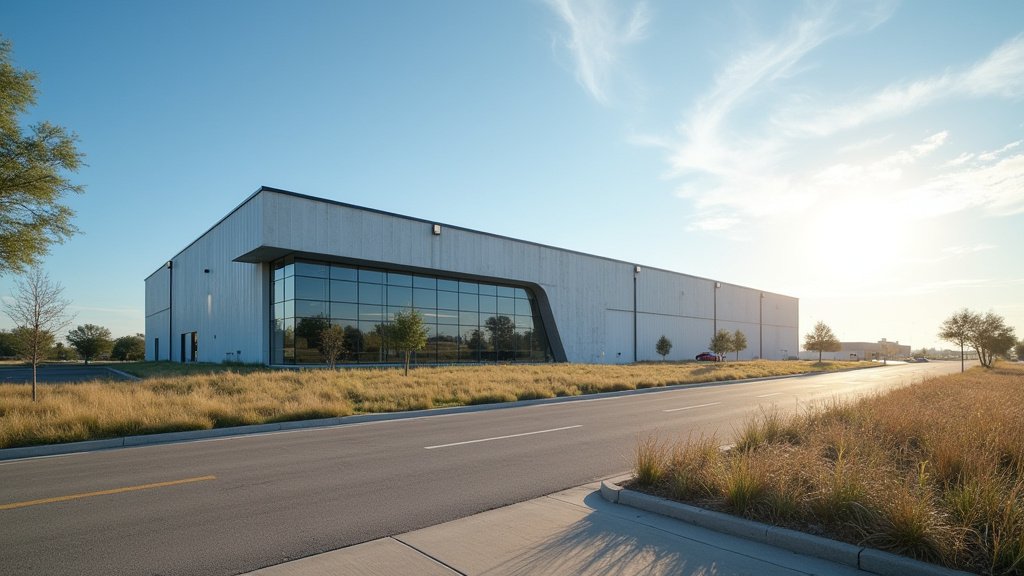
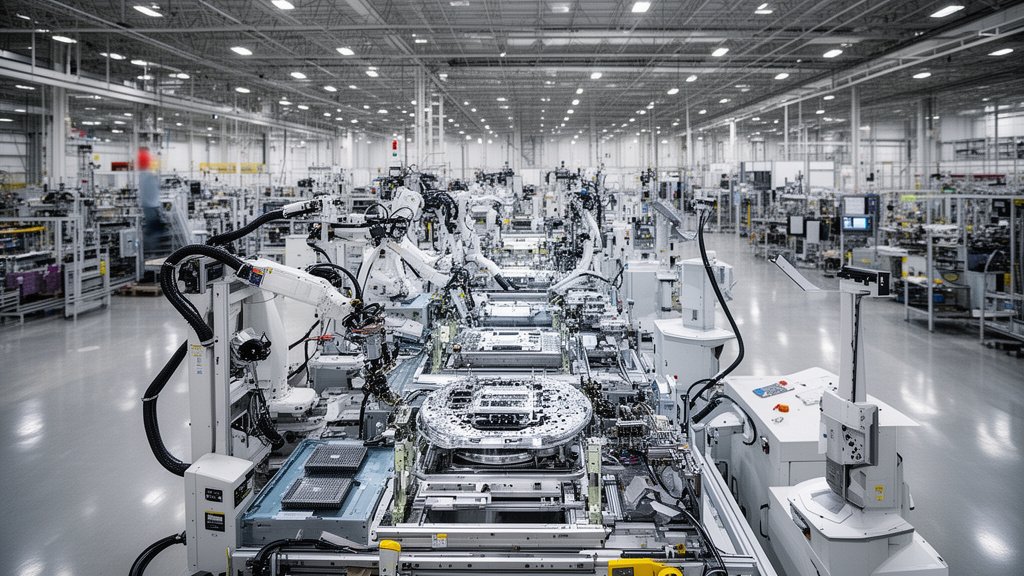
Often overlooked in the broader discussion of the ‘service economy,’ manufacturing has emerged as a primary engine of growth within the state. The addition of 4,700 jobs in the manufacturing sector in the most recent month is particularly telling. This growth suggests that the ‘reshoring’ movement—where corporations move supply chains back to the United States—is finding a natural home in Texas. With access to robust energy infrastructure, available land, and a relatively streamlined regulatory environment, Texas is capturing a significant share of heavy industrial investment. This manufacturing bump is not confined to one niche; it spans aerospace, semiconductor fabrication, and traditional energy machinery, providing a stable foundation for long-term wage growth.
Comparing the Texas Model to the National Landscape
When examining the 0.8 percentage point lead over the national rate, economists point to the ‘Texas Model’ of economic development. This approach, characterized by a lack of state corporate income tax and a focused effort on infrastructure spending, appears to be insulating the state from some of the headwinds facing the Northeast and Midwest regions. While national trends show a deceleration in hiring due to caution surrounding federal monetary policy, Texas businesses have continued to expand, signaling a high level of confidence in the regional market.
Secondary Angles: Exploring Future Economic Trajectories
To understand the sustainability of this growth, one must look at the ripple effects of the current expansion. First, the infrastructure challenge remains paramount; as thousands of new jobs are created, the demand for housing, transportation, and grid capacity increases. The state’s ability to scale these services will dictate whether this job growth continues or faces a bottleneck.
Second, the demographic dividend is essential. Texas remains a primary destination for internal migration, which provides a constant stream of both talent and consumer demand. This constant supply of labor keeps wage inflation in check relative to the production capacity, a dynamic that is increasingly rare in other major economic hubs.
Third, the diversification of the state’s economy is a safeguard. As the state moves away from its traditional reliance on upstream oil and gas toward advanced manufacturing and technology, it becomes more resilient to commodity price shocks. This shift is clearly reflected in the employment numbers, as companies increasingly treat Texas as a headquarters-friendly, logistics-ready powerhouse.
FAQ: People Also Ask
Q: What is the primary driver behind Texas’s consistent job growth?
A: The primary driver is a combination of a business-friendly regulatory environment, a steady influx of skilled labor moving to the state, and a robust energy infrastructure that attracts manufacturing and industrial investment.
Q: Is the manufacturing growth in Texas sustainable?
A: Most economists believe it is, provided that infrastructure development, such as grid reliability and housing supply, keeps pace with the influx of new employees. The trend toward domestic supply chain reshoring remains a tailwind for the state.
Q: How does the 1.1% growth rate in Texas compare to other states?
A: While the specific 1.1% rate is Texas-focused, the fact that it outperforms the national average by 0.8 percentage points places it in the top tier of state-level economic performance nationwide, particularly when compared to aging economies in the Northeast.