
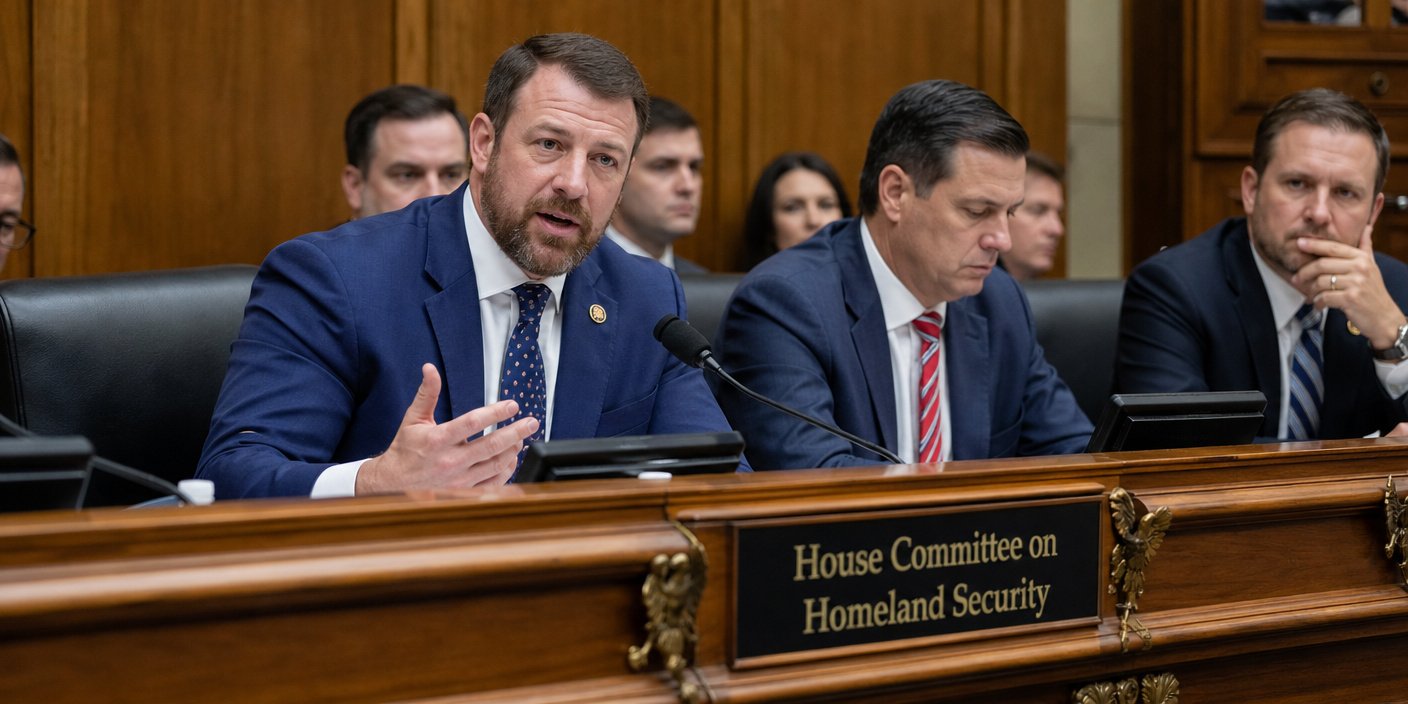
In a significant demonstration of legislative oversight, Senator Markwayne Mullin provided critical testimony before the House Committee on Homeland Security. The session, which drew intense scrutiny from lawmakers and national security experts alike, focused on the evolving threat landscape facing the United States, with a specific, sharpened emphasis on the efficacy of current border security protocols and the administration’s broader immigration enforcement strategies.
Senator Mullin’s testimony did not mince words regarding the challenges currently plaguing the Department of Homeland Security (DHS). His remarks centered on the necessity for a more robust, technology-driven approach to border management, arguing that current methods are insufficient to address the complexities of modern transnational threats. The hearing served as a high-stakes arena for debating the future of American border policy, highlighting the growing rift between legislative oversight and executive branch execution.
The Legislative Oversight Gap
At the core of Senator Mullin’s appearance was the call for greater accountability and transparency within the executive agency. The testimony delved deep into the mechanics of how the DHS tracks unauthorized entries and the subsequent processing of migrants. Mullin posited that without rigorous, quantifiable metrics, the department cannot claim success in its mission. He urged the committee to exert its full power of oversight to force the department to provide granular data on the status of immigration enforcement across various sectors of the southern border.
This legislative tension is a hallmark of the current administration’s relationship with the legislative branch. By appearing before the House committee, Mullin underscored that the responsibility for national security is a shared burden, one that requires consistent, open dialogue between those who formulate the law and those who implement it on the ground.
Border Security Dynamics: A Multi-Front Challenge
Senator Mullin’s testimony illuminated the multi-faceted nature of the threats facing the homeland. He explicitly linked border security to broader national security, citing concerns regarding drug interdiction, specifically the influx of synthetic opioids, and the potential for transnational criminal organizations to exploit existing gaps in enforcement. He emphasized that the border is not merely an immigration issue; it is a critical vulnerability point for the entire nation.
Key to his analysis was the argument that immigration enforcement must be modernized. He advocated for a shift from reactive measures to a predictive, intelligence-led framework. This involves not only physical infrastructure but also an increased utilization of surveillance technology, AI-driven monitoring, and expedited processing systems that could alleviate the strain on current, overwhelmed personnel. The testimony suggested that current DHS priorities may be misaligned with the urgency of the threats on the ground, creating a need for a strategic pivot in departmental resources.
The Path Forward: Policy and Enforcement
Looking ahead, the testimony opened the door for potential legislative action. Senator Mullin’s input is expected to influence upcoming appropriation bills and policy reforms aimed at strengthening the DHS mandate. The Committee on Homeland Security now faces the task of synthesizing these insights into actionable policy. Whether this testimony leads to a structural overhaul or incremental policy adjustments, it has successfully forced a candid discussion about the realities of modern border management.
Ultimately, the appearance highlighted the disconnect between current operational outcomes and the security requirements desired by the legislature. As the committee moves forward, the pressure on the DHS to align its activities with the concerns raised by Mullin and his colleagues will likely increase, setting the stage for a contentious and high-stakes legislative cycle regarding the future of the nation’s homeland security infrastructure.
FAQ: People Also Ask
Why was the House Committee on Homeland Security hearing so critical?
This hearing served as a primary mechanism for Congressional oversight. It provided a venue for legislators to directly question the strategy and performance of the DHS, ensuring that executive branch policies align with the security mandates established by the House.
What were the primary concerns raised by Senator Mullin regarding immigration?
Senator Mullin emphasized the need for a more intelligence-led approach to enforcement, citing significant concerns regarding the efficacy of current processing methods, the interdiction of illicit narcotics like fentanyl, and the need for better data transparency from the Department of Homeland Security.
How does this testimony impact future DHS funding?
Testimony from high-level officials and experienced legislators often shapes the priorities for the upcoming fiscal year. By identifying gaps in enforcement and technology, Mullin’s testimony provides a foundation for the Committee to demand specific budget allocations or restrictions to address those identified weaknesses.
What is the relationship between border security and national security in this context?
In this hearing, the border was presented as the primary point of entry for threats ranging from unauthorized migration to organized crime and drug trafficking. Senator Mullin argued that the integrity of the border is an indivisible component of the nation’s broader safety and sovereignty.