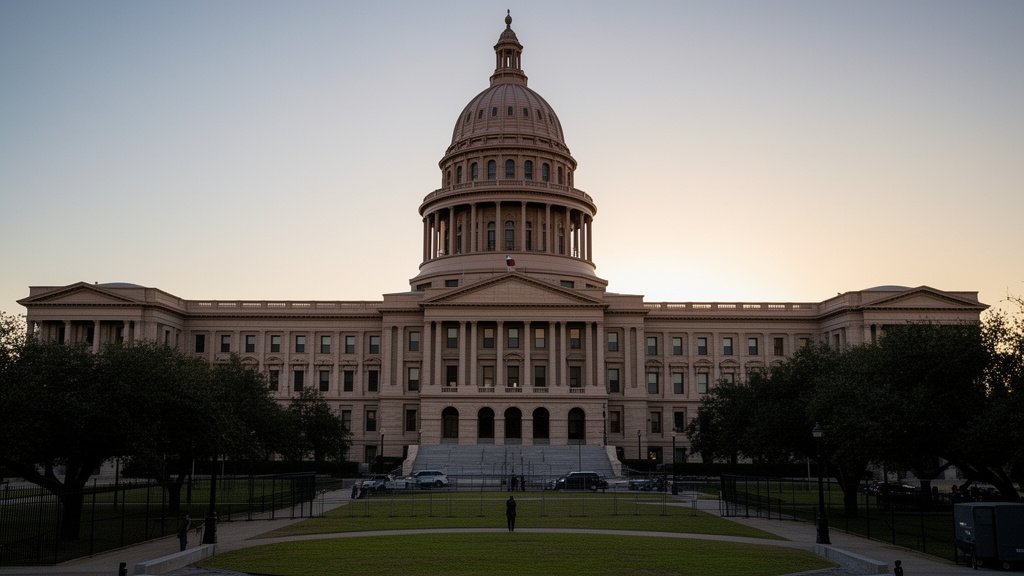
In a decisive display of interagency cooperation, law enforcement authorities have successfully neutralized an imminent threat against the Texas State Capitol. Early Wednesday morning, agents from the Texas Department of Public Safety (DPS) and the Federal Bureau of Investigation (FBI) executed an arrest of a resident from Converse, Texas, who was allegedly in the advanced stages of planning a violent attack on the state government seat, targeted for October 1, 2026.
The Anatomy of the Arrest
The operation, which concluded in the pre-dawn hours of Wednesday, was the result of a coordinated intelligence-gathering effort that identified the suspect as a credible threat to the security of the Capitol complex in Austin. According to officials, the suspect, a resident of the Converse area, had been under surveillance as investigators pieced together a timeline of intent and capability. The collaborative nature of this operation underscores the robust intelligence-sharing protocols between state law enforcement and federal counter-terrorism units, which are designed specifically to detect and disrupt potential acts of domestic violence before they manifest into physical action.
Following the arrest, the suspect was taken into custody without incident. The swift resolution of the situation prevented what authorities described as a potentially catastrophic event. While specific details regarding the suspect’s methods, arsenal, or ideological motivations remain largely shielded under the active investigation, sources have confirmed that the investigation into the specific logistics of the planned October 1, 2026, attack is ongoing. The arrest serves as a stern reminder of the persistent vigilance maintained by the Joint Terrorism Task Force (JTTF) and other tactical units tasked with protecting critical infrastructure.
The Security Infrastructure of the Texas State Capitol
The Texas State Capitol is more than just an architectural landmark; it is a high-security nerve center of democratic function. Protecting the site requires a multi-layered approach, involving physical barriers, advanced surveillance, and rapid-response teams. The threat of an attack against such a symbol of government often brings into focus the delicate balance between maintaining public access to elected representatives and ensuring the safety of those who work within the halls of power.
Historically, the security protocols at the Capitol have evolved in response to changing geopolitical climates and domestic threats. Since the rise of digital intelligence tracking, the DPS has shifted its strategy from purely reactive measures—such as increased patrols—to proactive, data-driven pre-emption. This incident marks a significant test of that modern, intelligence-centric security posture. The ability for authorities to pinpoint a target, identify a specific date of action, and move in to arrest the suspect before the deadline serves as a validation of the current investment in threat-detection technology.
Interagency Cooperation and Intelligence Sharing
A critical, yet often overlooked, aspect of this operation is the partnership between the Texas DPS and the FBI. The seamless integration of state-level resources and federal investigative capabilities is essential for modern threat management. Federal agencies bring deep data analysis and surveillance resources that, when combined with the localized, on-the-ground knowledge of state troopers and local investigators, create a formidable defense network.
This case demonstrates how the JTTF serves as a bridge, allowing for rapid communication and tactical alignment. When threats are identified, the lag time between an initial tip and an tactical intervention must be near zero. In this instance, the collaboration appears to have been perfectly calibrated, preventing the need for an emergency response by intercepting the suspect well before the scheduled attack date. Legal experts anticipate that this arrest will likely be followed by a comprehensive federal and state prosecution, reflecting the gravity of the charges associated with planning an attack on a government institution.
The Path Forward: Public Safety and Community Vigilance
While the immediate danger has been neutralized, the community in Converse and the broader Austin area remain in a state of high awareness. Public safety officials consistently urge citizens to maintain the “see something, say something” philosophy that remains the bedrock of grassroots security. The discovery of this plot highlights the reality that threats do not always emanate from distant entities but can arise from within the local community itself.
Moving forward, the Texas State Capitol will likely see a reassessment of its security perimeter as a precautionary measure, even though the specific threat has been removed. Legislative sessions and day-to-day operations will continue, but the specter of this plot will likely influence discussions on security funding and the legislative priorities for upcoming sessions. The arrest stands as a definitive message to those who seek to use violence against the state: the network of monitoring and investigation is comprehensive, rapid, and effectively focused on maintaining the integrity of our democratic institutions.
FAQ: People Also Ask
1. What was the specific target of the planned attack?
Authorities identified the Texas State Capitol in Austin as the specific target of the planned violence.
2. Which agencies were involved in the arrest?
the arrest was a joint operation conducted by the Texas Department of Public Safety (DPS) and the Federal Bureau of Investigation (FBI).
3. When was the attack supposed to take place?
The suspect allegedly planned for the violent incident to occur on October 1, 2026.
4. Is there an ongoing threat to the Capitol?
Law enforcement officials have stated that the suspect is in custody and the immediate threat has been neutralized, though security protocols remain under review.