

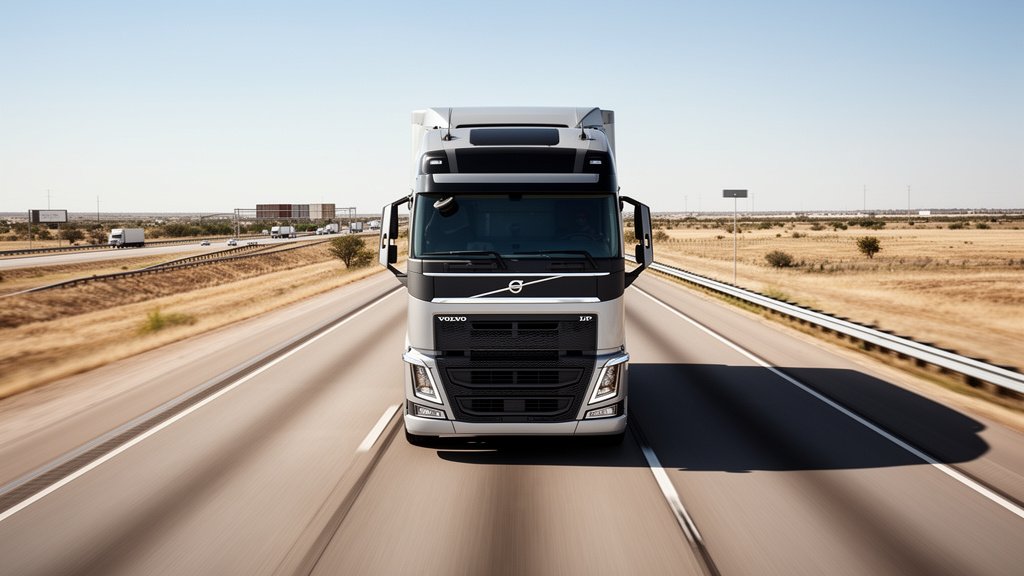
Volvo Autonomous Solutions and AI startup Waabi have officially initiated commercial autonomous freight operations in Texas, marking a transformative step for the logistics industry. The partnership utilizes Volvo’s autonomous-ready trucks equipped with the “Waabi Driver,” an advanced AI-based software, to transport freight for Warp across the pivotal Dallas-Houston logistics corridor, signaling a major transition from testing phases to real-world commercial deployment.
Key Highlights
- Strategic Partnership: Volvo Autonomous Solutions and Waabi have integrated their proprietary technologies to deliver a commercial-grade autonomous trucking service.
- Real-World Application: Logistics provider Warp is serving as the initial customer, with freight currently moving along the critical Dallas-Houston route.
- Advanced AI Technology: The operations are powered by the “Waabi Driver,” a software-defined autonomous solution that leverages generative AI and a closed-loop simulator to handle complex highway driving scenarios.
- Texas Infrastructure: The Dallas-Houston corridor was selected for its high volume of freight demand and regulatory alignment for autonomous vehicle testing and deployment.
Advancing Autonomous Logistics on the Texas Frontier
The launch of commercial freight operations by Volvo Autonomous Solutions (VAS) and Waabi represents a paradigm shift in how autonomous technology is integrated into the commercial trucking ecosystem. By combining Volvo’s extensive history in heavy-duty truck engineering with Waabi’s AI-first approach, the companies are moving beyond experimental pilot programs into tangible, revenue-generating logistics services. This deployment is not merely about removing the driver; it is about redefining the efficiency of the supply chain through predictive, software-defined navigation.
The Role of the Waabi Driver
At the core of this operation is the “Waabi Driver,” an AI-powered system designed to mimic human cognitive capabilities while maintaining machine-level consistency. Unlike traditional lidar-reliant systems that struggle with “edge cases,” the Waabi Driver utilizes generative AI, specifically trained in a high-fidelity, closed-loop simulator called Waabi World. This environment allows the AI to experience millions of miles of driving scenarios, including rare safety incidents, before ever hitting the pavement. This approach ensures that when the truck operates on Texas highways, it is responding to environments that the software has already mastered in simulation.
Warp: Optimizing the Logistics Network
While Volvo and Waabi provide the technological hardware and software, Warp plays the critical role of the logistics integrator. Warp specializes in high-efficiency, technology-enabled freight networks that optimize the “middle mile” of the supply chain. By utilizing the Volvo-Waabi autonomous fleet, Warp can improve reliability and reduce the overhead costs associated with human driver fatigue and scheduling constraints. This collaboration serves as a proof of concept for how autonomous platforms can seamlessly integrate into existing third-party logistics (3PL) workflows without requiring massive overhauls of existing infrastructure.
The Dallas-Houston Corridor
Choosing the Dallas-Houston corridor for this launch was a calculated strategic move. As one of the highest-volume freight lanes in the United States, this route provides the necessary complexity and frequency to stress-test the autonomous system. The route offers a mix of urban traffic, high-speed highway driving, and diverse weather conditions, providing the ideal “classroom” for the Waabi Driver to mature. Furthermore, Texas has emerged as the global leader in autonomous vehicle regulation, offering a stable environment for companies to scale operations without the friction found in more restrictive regulatory jurisdictions.
The Economic and Safety Implications
The long-term implications of this launch extend far beyond the immediate freight deliveries. First, there is the economic impact of addressing the chronic, long-standing driver shortage that has plagued the trucking industry for decades. Autonomous trucks can run longer routes with minimal downtime, potentially increasing the efficiency of logistics assets by upwards of 40-50% in the long term. Second, the safety mandate is paramount. By removing human error—which accounts for the vast majority of trucking accidents—the industry aims to significantly reduce highway fatalities. Finally, this deployment highlights a shift in the “AI Winter” fears; by proving that autonomous freight is financially viable, this partnership will likely accelerate venture capital and institutional investment into the autonomous trucking sector over the next 24 months, separating sustainable technology firms from those unable to make the leap to commercial viability.
FAQ: People Also Ask
What is the specific role of the Waabi Driver in this project?
The Waabi Driver is the “brain” of the truck. It is an AI-based software solution that manages the truck’s navigation, perception, and decision-making. Unlike rule-based systems, it is trained using generative AI and advanced simulation to adapt to real-world conditions.
Why was the Dallas-Houston corridor chosen for this launch?
The Dallas-Houston corridor is a massive, high-volume logistics lane. Its predictable demand, combined with Texas’s favorable regulatory climate for autonomous vehicle operations, makes it the optimal location for testing and scaling commercial freight.
How does Warp benefit from this collaboration?
Warp leverages this autonomous fleet to increase the efficiency and reliability of its freight network. By reducing dependence on manual scheduling for certain routes, they can move goods more predictably and reduce operating costs associated with traditional long-haul trucking.
What makes this different from previous autonomous trucking tests?
Many previous efforts relied on massive amounts of expensive lidar and manual driving to gather data. This partnership focuses on the commercialization phase, using simulation-trained AI to perform actual, billable customer shipments, signaling that the technology is ready for real-world business integration.