

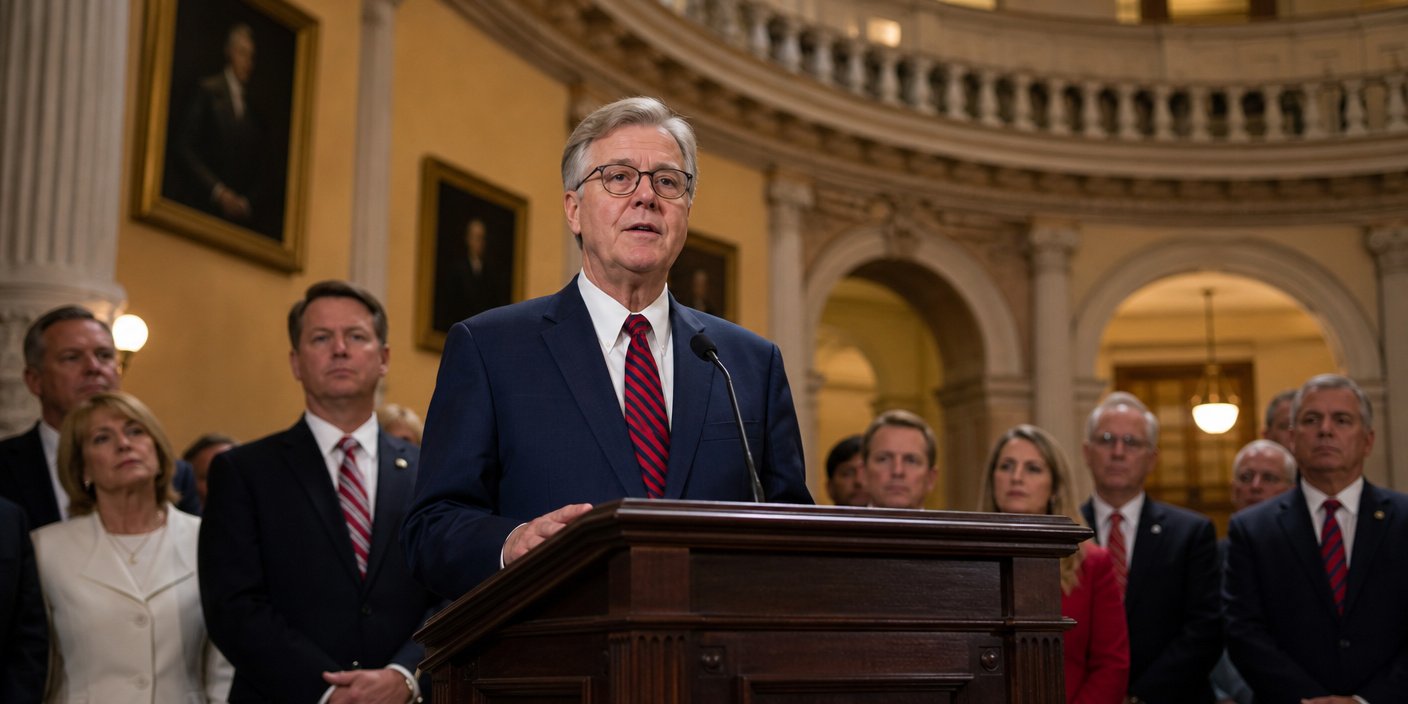
Texas Lieutenant Governor Dan Patrick has officially issued a series of interim charges to the Texas Senate, marking a pivotal moment in state policy ahead of the 89th legislative session. Among the most closely watched directives is the explicit instruction for senators to study and recommend ways to further ingrain religious principles into the fabric of Texas public life. This initiative signals a robust legislative effort to reshape the interplay between state governance and religious expression.
The Legislative Mandate: Defining the Scope
The directive, released as part of a comprehensive list of interim charges—tasks assigned to committees to study during the legislative off-season—tasks the Senate with evaluating how religious heritage can be more prominently featured or protected within public institutions. By directing the Senate to study this issue, Patrick has framed the move not merely as a cultural statement, but as a potential precursor to substantive legislative action. The charge is expected to involve public hearings, expert testimony, and rigorous debate regarding the constitutional limitations and possibilities of such integration.
Historical Context vs. Modern Legal Precedent
Central to this discourse is the tension between historical traditions and the modern interpretation of the First Amendment’s Establishment Clause. Advocates for the directive often point to Texas’s historical identity and the role of faith in the founding of American governance. Conversely, constitutional scholars emphasize that public entities, specifically those funded by taxpayer dollars like public schools and administrative offices, must navigate a fine line to avoid the government endorsement of religion.
This legislative charge does not exist in a vacuum. It follows a series of recent Texas-based legal battles regarding the placement of the Ten Commandments in school classrooms and the use of religious chaplains in public school settings. The Senate’s investigation will likely attempt to synthesize these disparate legal battles into a unified, coherent state strategy that challenges current judicial norms.
Implications for Public Institutions and Education
The impact of this directive will likely be felt most acutely in two sectors: public education and state-run agencies. If the Senate moves to codify a more prominent role for religious principles, educators and administrators could face new legislative frameworks governing how religious activities, clubs, or historical references are handled in classrooms.
Furthermore, the study aims to examine the legal protections for individuals in the public sphere to express their faith. This suggests that the Senate may pursue legislation that specifically defines and expands the definition of “religious liberty” within government buildings, potentially altering current policies regarding displays and invocations.
The Political Landscape of the 89th Session
Dan Patrick’s move is widely viewed by political analysts as a strategic positioning ahead of the next legislative session. By placing this issue on the interim docket, the Lieutenant Governor ensures that it will remain a headline-grabbing topic, solidifying his platform among conservative constituents. However, the move is also guaranteed to ignite significant opposition from civil liberties organizations and groups advocating for the strict separation of church and state, setting the stage for what promises to be one of the most polarizing legislative sessions in recent Texas history.
FAQ: People Also Ask
1. What is an ‘interim charge’ in the Texas Senate?
An interim charge is a directive issued by the Lieutenant Governor to Senate committees to study specific issues while the legislature is not in session. These studies often serve as the basis for drafting and passing legislation during the subsequent session.
2. Does this directive force religion into public schools?
It does not force it immediately; rather, it directs the Senate to study the topic. The outcome will be legislative proposals. Whether those proposals survive legal challenges regarding the Establishment Clause remains the critical question.
3. Will this lead to new laws in the next session?
Most likely. The purpose of these studies is to identify specific policy gaps or areas where the legislature can assert its authority, leading to the filing of new bills in the 89th legislative session.