
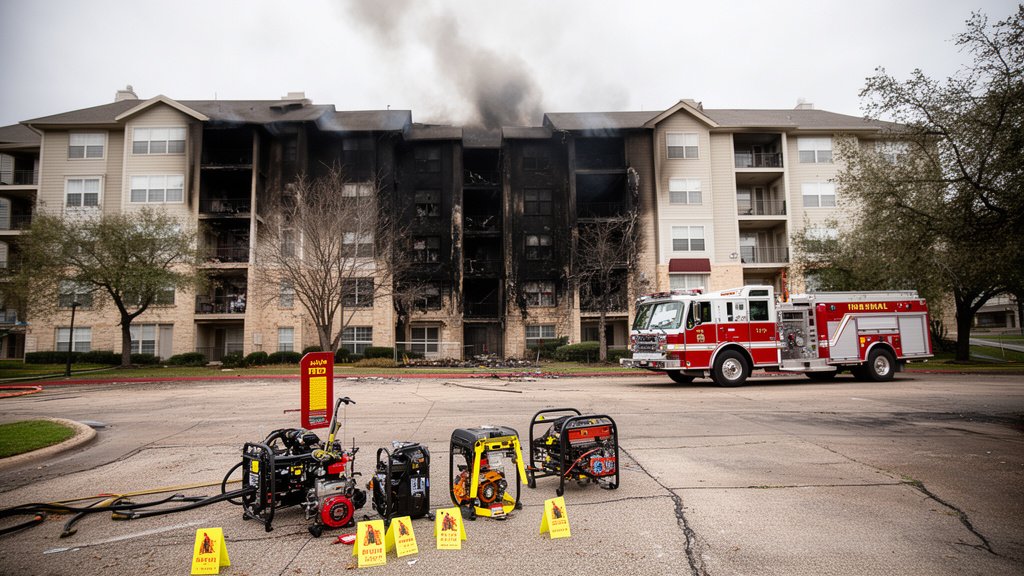
Plano fire authorities have officially shifted their response from suppression to investigation, designating a recent apartment complex fire as an act of arson. Officials from Plano Fire-Rescue confirmed that a person of interest has been taken into custody, marking a significant development in a case that has rattled residents of the North Texas suburb.
Key Highlights
- Investigation Status: Plano Fire-Rescue has classified the fire as arson, launching an intensive forensic investigation into the origin and cause of the blaze.
- Suspect Status: Law enforcement and fire investigators have detained a person of interest; the individual remains in custody while questioning and evidence analysis continue.
- Scene Safety: Residents were evacuated safely, though the structural integrity of the complex remains a primary concern for local authorities and building inspectors.
- Forensic Focus: The investigation is currently leveraging specialized arson detection units to analyze debris patterns and chemical traces.
Unraveling the Incident: Forensic Analysis and the Path to Prosecution
When Plano Fire-Rescue responded to the distress calls regarding the apartment blaze, the primary objective was the immediate containment of the fire and the preservation of life. However, the pivot to an arson investigation indicates that investigators quickly identified indicators inconsistent with accidental ignition. The designation of a “person of interest” rather than a formal suspect at this early stage suggests that while evidence connects the individual to the scene, the legal process of establishing intent and chain of custody is ongoing.
The Mechanics of an Arson Investigation
In the aftermath of a structure fire, the transition from emergency response to crime scene processing is a critical juncture. The Plano Fire-Rescue Fire Marshal’s Office utilizes rigorous methodologies to determine the source of ignition. This process typically involves a systematic “dig,” where investigators excavate debris to locate the “point of origin.” In cases suspected to be arson, investigators look for multiple points of ignition, burn patterns that defy convection logic (such as v-patterns on walls or floors), and the presence of accelerants.
The use of K-9 units trained specifically to detect hydrocarbons is often standard procedure in these scenarios. Once these volatile organic compounds are detected, samples are collected and sent to laboratories for gas chromatography-mass spectrometry (GC-MS) analysis. This scientific data creates the evidentiary foundation necessary to pursue formal arson charges under the Texas Penal Code.
The Legal Distinction: Arson vs. Reckless Damage
Under Texas law, arson is a serious offense involving the intentional starting of a fire or causing an explosion with the intent to destroy or damage a building. The legal threshold requires proving not just the act of lighting the fire, but the specific intent to cause damage or endanger others. The distinction between arson and other fire-related charges hinges on the “mens rea” or guilty mind. Investigators are likely currently reviewing security footage, witness testimony, and digital footprints to establish this critical element of intent.
Community Impact and Structural Recovery
Beyond the criminal proceedings, the incident has highlighted the vulnerabilities inherent in multi-family residential living. For the affected residents, the immediate aftermath involves navigating displacement, insurance claims, and the trauma of losing property. Property managers and city officials are now coordinating with aid organizations to ensure that those displaced have access to temporary housing. This incident also serves as a stark reminder for property owners regarding the necessity of robust, monitored fire suppression systems, which are essential in mitigating the damage caused by intentional acts.
The Psychological and Economic Aftermath
While the fire itself is a singular event, the ripple effects are widespread. Economically, arson investigations often trigger complex litigation involving insurance carriers, property owners, and the accused party. Psychologically, the breach of security in a home environment leads to a prolonged sense of unease among the local community. Neighborhood associations in Plano are already preparing to increase private security patrols, reflecting a broader trend of suburban communities tightening safety protocols in the wake of criminal activity.
FAQ: People Also Ask
1. What is the difference between a “person of interest” and a “suspect”?
A “person of interest” is someone police want to speak with because they may have information about a crime. A “suspect” is a person whom police believe has committed the crime based on evidence.
2. How long does an arson investigation usually take?
Depending on the complexity of the scene and the laboratory backlog for evidence testing, an arson investigation can take anywhere from several weeks to several months to conclude before formal charges are filed.
3. Will residents be allowed back into the building?
Access to the apartment complex will remain restricted until fire inspectors and structural engineers deem the building safe. This depends entirely on the extent of the fire damage and the risk of structural collapse.
4. What are the penalties for arson in Texas?
Arson is classified as a felony in Texas. If the fire results in bodily injury or death, or if the property is a habitation, the penalties can range from prison time to life imprisonment, depending on the specific circumstances and previous criminal history.