
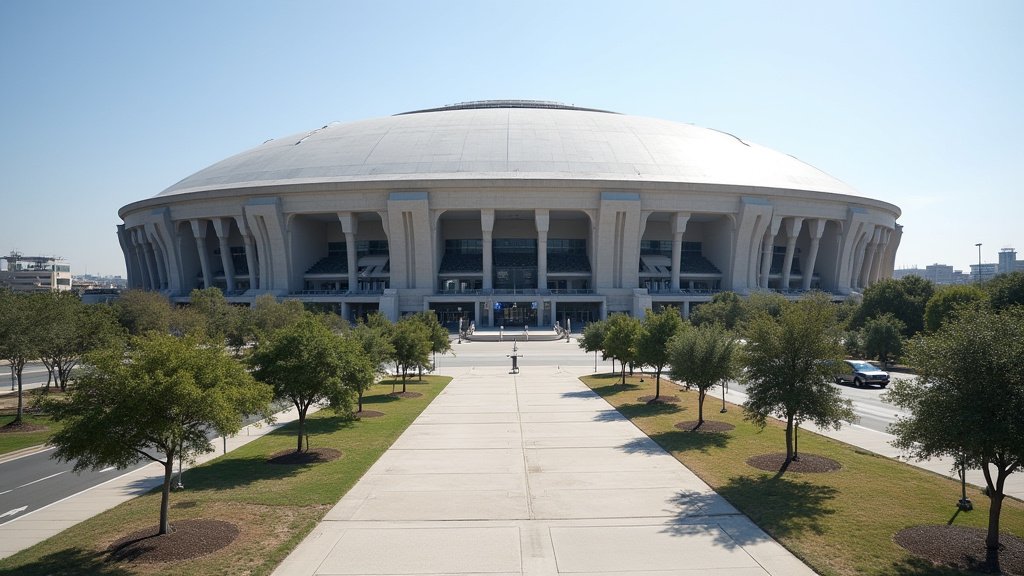
The atmosphere at the Alamodome shifted from festive anticipation to profound shock on September 28, 2024, when a routine pregame demonstration performed by members of the U.S. Air Force turned fatal. The incident, which occurred ahead of the University of Texas at San Antonio (UTSA) football game, claimed the life of an active-duty airman from the 13th Air Support Operations Squadron (ASOS). The tragedy unfolded before a crowd of over 23,000 fans, marking a somber moment for both the UTSA community and the United States military.
The Sequence of Events
Preliminary reports indicate that the airman was conducting a specialized rappelling demonstration, a staple of military ceremonial support at sporting events designed to showcase precision and tactical prowess. The demonstration, intended to energize the crowd and honor the service, involved airmen descending from the rafters of the Alamodome. During the maneuver, a critical malfunction or error occurred, resulting in a fall that proved fatal. Emergency medical personnel on-site responded immediately, but the airman succumbed to the injuries sustained.
The game, featuring the UTSA Roadrunners against the Houston Christian Huskies, continued after a delay, though the mood in the stadium was described by attendees as noticeably subdued. The university and military officials collaborated to provide support to those who witnessed the event, while the Air Force Office of Special Investigations (AFOSI) immediately launched a comprehensive inquiry into the mechanics of the accident.
The Role of the 13th Air Support Operations Squadron
The airman was a member of the 13th ASOS, a tactical unit based out of Fort Carson, Colorado, known for its high level of training and integration with ground forces. These airmen are frequently tasked with providing airpower support to Army combat units. Their participation in public demonstrations is not merely ceremonial; it serves as a testament to the rigorous physical and technical standards required of the career field.
Members of the 13th ASOS are trained in a variety of insertion and extraction techniques, including fast-roping and rappelling from helicopters and fixed structures. The precision required for these maneuvers is immense, demanding not only physical strength but also flawless execution of safety protocols. The loss of a team member in such a high-profile, public setting has sent shockwaves through the special tactics community, which prides itself on its safety record and operational excellence.
Safety Protocols and the Investigation Process
Following any training or demonstration-related fatality, the Department of the Air Force initiates a multi-layered investigation. The AFOSI, which handles criminal and major investigative matters within the Air Force, is spearheading the probe. They are examining equipment logs, maintenance records for the rappelling gear, and the specific sequence of decisions that led to the incident.
Furthermore, the Air Force often convenes a Safety Investigation Board (SIB). Unlike the AFOSI investigation, which focuses on potential criminal or procedural negligence, the SIB is designed solely to identify the root cause of the accident to prevent future occurrences. This process typically involves a review of “Human Factors,” including fatigue, environmental conditions in the stadium, and equipment reliability. The findings of these boards are critical, as they dictate whether specific maneuvers will be permanently grounded or if safety protocols must be overhauled across the Air Force special operations enterprise.
Community and Military Mourning
The intersection of the UTSA campus culture and the military presence in San Antonio—often referred to as “Military City, USA”—is deep. The city is home to Joint Base San Antonio, including Lackland and Randolph Air Force Bases. This profound connection meant the tragedy was felt deeply by the local civilian population, many of whom have family members in the armed forces.
In the days following the incident, both the university administration and Air Force leadership issued statements emphasizing the “tragic loss” and their commitment to supporting the airman’s family and unit. The university has also made counseling services available to students and staff who were present in the stadium. The incident has reignited broader conversations regarding the risks associated with public demonstrations, leading some to question the balance between maintaining strong community-military relations and the inherent dangers of tactical maneuvers performed in non-combat environments.
Future Implications for Ceremonial Demonstrations
Looking ahead, this incident will likely trigger a service-wide pause or review of all rappelling demonstrations. While such displays are morale-boosting and effective recruitment tools, the cost of human life is paramount. Military leadership will need to weigh the strategic value of these performances against the potential for catastrophic failure. It is probable that, in the short term, high-altitude or complex rappelling demonstrations at civilian sporting events will be subjected to significantly more stringent oversight, or perhaps temporarily suspended, while the Air Force recalibrates its risk management frameworks. This tragedy serves as a stark reminder that even in a controlled, non-combat setting, the operations performed by our service members remain inherently hazardous.