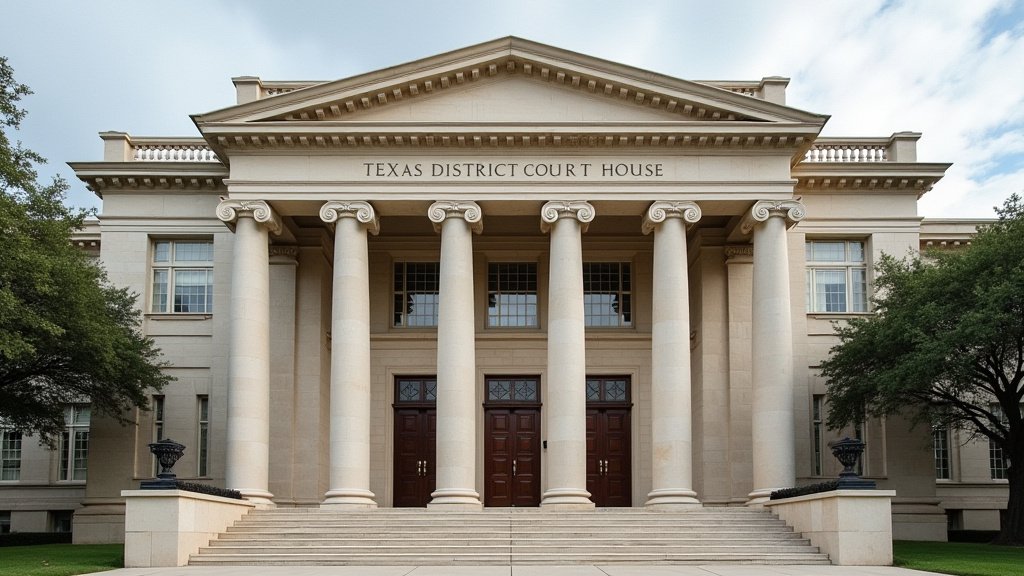

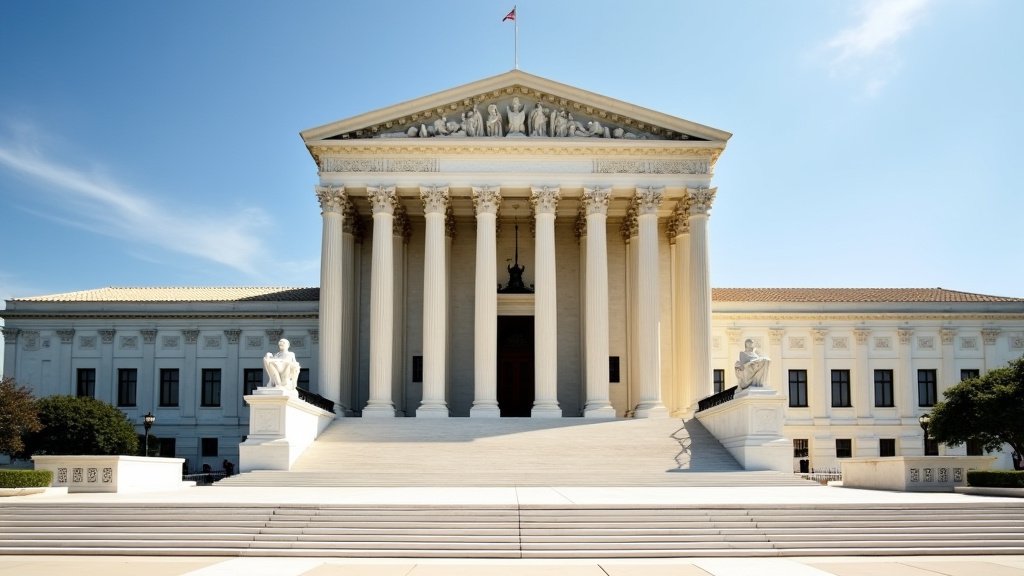
The Texas Supreme Court has begun hearing oral arguments regarding the constitutionality of the latest school voucher legislation, a highly contentious issue involving public school funding and private education tax credits. This legal battle represents the culmination of a multi-year political stalemate that has pitted the legislative majority against staunch defenders of the public school system. At the heart of the debate is whether the state’s potential use of taxpayer dollars to support private education violates the Texas Constitution’s long-standing mandate to provide an “efficient system of public free schools.”
Key Highlights
- Constitutional Scrutiny: The central legal question is whether Education Savings Accounts (ESAs) or similar voucher-style programs violate Article VII, Section 1 of the Texas Constitution.
- Funding Divide: Proponents argue for parental choice and competition; opponents cite the diversion of critical funds from the public education system, which serves over 5 million students.
- High-Stakes Precedent: A ruling in this case could overturn decades of established education funding law in Texas, potentially setting a national benchmark for school choice legislation.
- Legislative Pressure: Governor Greg Abbott has made the passage of school choice a cornerstone of his current agenda, pressuring the judiciary to resolve the ambiguity surrounding state-funded private education.
The Constitutional Battleground Over Texas School Choice
The legal proceedings currently unfolding in Austin are not merely procedural; they are a fundamental clash of philosophies regarding the state’s responsibility to its youth. The Texas Supreme Court is faced with determining the exact boundary between “public education” and “private support.” For decades, the Texas education system has been governed by the interpretation of Article VII, Section 1, which requires the Legislature to “establish and make suitable provision for the support and maintenance of an efficient system of public free schools.”
Historically, this clause has been used to compel the state to fund schools equitably, most notably in the Edgewood ISD v. Kirby line of cases in the 1980s and 1990s. Now, that same clause is being repurposed by plaintiffs to argue that the diversion of any public funds—whether directly or via tax credits—to private institutions inherently undermines the “efficiency” and exclusivity of the public “free” system.
The Mechanics of the Dispute
At the core of the debate are Education Savings Accounts (ESAs). These programs would allow parents to withdraw their children from public schools and use a portion of state funding to cover private school tuition, homeschooling expenses, or other educational costs.
Advocates of the legislation argue that the current “one-size-fits-all” public model fails many students, particularly those in underperforming districts or those with specific learning needs that public schools cannot accommodate. From their perspective, the Constitution does not forbid the state from empowering parents to choose the best educational environment for their children. They posit that competition will force public schools to improve, thereby benefiting the entire system.
However, the plaintiffs, which include a coalition of public school advocates, rural superintendents, and teachers’ unions, argue that ESAs create a secondary, private market subsidized by the taxpayer. They contend that the state cannot prioritize private enterprise at the expense of its constitutional obligation to fund public schools. The economic data presented in the briefings highlights a significant concern: that even a slight reduction in per-student funding, if extrapolated across millions of students, could lead to a massive budget shortfall for rural districts that rely heavily on state aid.
Political Context and the Role of the Executive
This case does not exist in a vacuum. It is heavily influenced by the administration of Governor Greg Abbott, who has made school choice one of his defining policy goals. The pressure on the judicial branch is palpable; the Governor has signaled that the current impasse in the legislature is unsustainable and that a definitive ruling is required to move Texas education policy forward.
The judiciary is thus caught in a precarious position. If the Court finds the legislation unconstitutional, it essentially forces the legislature to abandon the current voucher framework, leading to a potential constitutional amendment crisis. If it finds the legislation constitutional, it may open the floodgates for a massive shift in how Texas funds education, potentially reducing the tax base for public school districts and triggering a wave of new, complex litigation regarding educational equity in the coming decade.
The Rural-Urban Divide
One of the most compelling secondary angles in this case is the persistent divide between urban and rural Texas. In many rural counties, the local public school district is the largest employer and the cultural hub of the community. Rural representatives have historically been the most resistant to voucher programs, fearing that these initiatives will siphon off the few funds available to their districts, leading to the consolidation or closure of small schools.
Conversely, urban districts, which have seen a rise in homeschooling and charter school demand, often view the voucher program as a necessary release valve for overcrowding and systemic inefficiency. The Court’s eventual decision will need to account for these diverging realities, as a “blanket” ruling that applies to the entire state may have vastly different impacts depending on the district’s geography.
Future Predictions: The Aftermath of the Ruling
Regardless of the outcome, the impact of this case will be felt for generations. We are witnessing a fundamental re-evaluation of the social contract regarding public education in Texas. If vouchers are upheld, the state will likely move toward a “portable” funding model where money follows the student rather than the institution. This would require a massive restructuring of the Texas Education Agency (TEA) and a new auditing framework to ensure that private institutions receiving public funds are held to transparency standards comparable to public schools.
Conversely, if the voucher program is struck down, it will likely lead to a new round of legislative maneuvering. Supporters of school choice may attempt to pass constitutional amendments to explicitly allow for ESAs, turning the issue into a statewide referendum. The battle is far from over; this courtroom drama is simply the opening act of a much larger, systemic shift in the American education landscape.
FAQ: People Also Ask
1. What are Education Savings Accounts (ESAs) in the context of this case?
ESAs are proposed state-funded accounts that would provide parents with a specific dollar amount for each student. This money could be used for private school tuition, tutoring, or other educational services outside the public school system, effectively decoupling funding from the public institution.
2. Why is the Texas Constitution being cited as the main legal barrier?
Article VII, Section 1 of the Texas Constitution mandates an “efficient system of public free schools.” Opponents argue that transferring funds from this system to private, non-public institutions violates the constitutional requirement to fund the public system primarily and exclusively.
3. How does this case impact rural school districts?
Rural districts are concerned that a loss of students—and the associated per-pupil funding—will make it financially impossible to maintain basic services, such as transportation, building maintenance, and teacher salaries, as they often lack the economies of scale found in large urban districts.
4. Is there a timeline for a court decision?
While the Court has not provided an exact date for a final ruling, such high-stakes constitutional cases typically follow a deliberative process that can take several months, often resulting in a decision closer to the next legislative session to provide guidance for upcoming state budgeting.