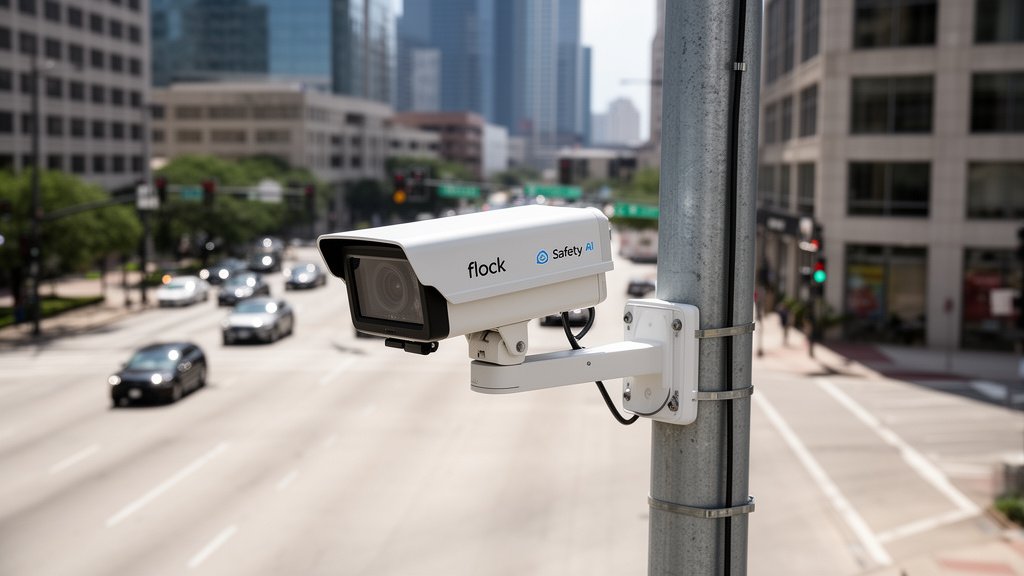
On September 15, the Dallas Police Department will execute a major shift in its surveillance strategy, deactivating 321 of its 689 Flock Safety AI-powered license plate reader cameras. This abrupt reduction comes as a direct consequence of a state grant funding expiration mandated by the office of Governor Greg Abbott, forcing the department to recalibrate its investigative infrastructure in a landscape where high-tech surveillance has become a standard tool for law enforcement. The remaining 368 cameras will continue to operate, leaving city officials and residents to grapple with the potential operational impacts on crime investigation and the ongoing tension regarding privacy in the digital age.
Key Highlights
- Massive Scale-Back: The Dallas Police Department (DPD) will deactivate 321 Flock cameras, representing nearly 47% of its total 689-unit fleet.
- Fiscal Catalyst: The cuts are triggered by the termination of state grant funding, which previously covered the operational costs of the hardware.
- Operational Continuity: DPD officials confirmed that 368 cameras will remain active, prioritizing high-priority investigative zones despite the budget shortfall.
- Ongoing Debate: The move reignites a polarizing discussion within the Dallas City Council regarding the balance between the efficacy of AI-assisted policing and municipal privacy rights.
The Digital Shift: Surveillance and the Cost of Security
The decision to decommission a substantial portion of the Dallas Police Department’s Flock network marks a critical junction for one of Texas’s largest law enforcement agencies. For years, the integration of Flock Safety cameras—which utilize automated license plate recognition (ALPR) and AI-driven vehicle identification—has been touted by the DPD as a “force multiplier.” These devices do not merely read plates; they track vehicle behaviors, identifying patterns that have proven instrumental in solving auto thefts, identifying suspects in violent crimes, and responding to Amber Alerts.
However, the sudden loss of state grant funding has exposed the fragility of municipal reliance on external financial vehicles to maintain critical infrastructure. When the grant program, overseen by Governor Greg Abbott’s administration, reached its sunset, the fiscal responsibility for the ongoing subscription and maintenance costs of these cameras shifted immediately to the city. With budget cycles already locked, the DPD faced a binary choice: either source immediate supplemental funds from an already strained municipal budget or streamline the existing network. The resulting decision to deactivate 321 units reflects a strategic retreat, forcing the department to prioritize the remaining cameras in areas with the highest demonstrated return on investment regarding public safety.
The Mechanics of the Deactivation
To understand the gravity of this loss, one must understand the technology being removed. Flock cameras operate differently from traditional CCTV. They are networked, cloud-based, and interconnected, allowing police to create a virtual “net” across city thoroughfares. When a vehicle passes a camera, it logs the make, model, color, and license plate information, cross-referencing this data against hotlists of stolen vehicles or active warrants in real-time.
By pulling 321 of these nodes offline, the DPD is effectively creating blind spots. While the department maintains that the remaining 368 cameras are strategically placed to cover essential transit corridors, the reduction is undeniably a degradation of the total coverage area. For criminal investigators, this represents a loss of critical “digital breadcrumbs.” In complex investigations, the ability to trace a vehicle’s movement across multiple zones is often the difference between closing a case and a cold investigation. The department now faces the challenge of maintaining investigative tempo with diminished visibility.
Privacy, Governance, and the Public Trust
Beyond the operational metrics, the reduction has reignited the privacy debate that has simmered in the Dallas City Council for years. Critics of the widespread implementation of ALPR technology argue that the accumulation of data—tracking the movements of ordinary, law-abiding citizens—presents a slippery slope toward over-surveillance. Conversely, supporters argue that the technology is a neutral tool for public safety, as it only catalogs publicly visible data on a public roadway.
This funding crisis serves as an unintended “stress test” for the city’s commitment to this technology. If the city council determines that the “digital net” provided by these cameras is indispensable, it may eventually seek to re-fund the decommissioned units via local tax revenue. However, such a move would likely trigger intense public pushback from privacy advocacy groups who see this funding gap as an opportunity to permanently roll back the surveillance state. The debate is no longer just about crime statistics; it is about the long-term governance of public spaces.
Economic and Institutional Impacts
Finally, the situation highlights the volatility of state-to-municipal funding models. The reliance on state grants for local law enforcement technology creates a dependency that can be severed by shifts in state-level political priorities. Governor Abbott’s decision to sunset these grants, despite their clear utility to local police, suggests a potential shift in state focus or perhaps a push for municipalities to take full fiscal ownership of their policing tools. This creates an economic ripple effect: cities must now decide if the cost of the subscription-based surveillance model is worth the fiscal burden, or if they must return to more traditional, labor-intensive investigative methods. As September 15 approaches, the Dallas Police Department is not just turning off cameras; it is pivoting its operating philosophy in a world that is becoming increasingly digital, yet increasingly expensive to secure.
FAQ: People Also Ask
Q: Why is the Dallas Police Department deactivating these cameras?
A: The primary driver is the loss of state grant funding that previously subsidized the operational costs of the Flock camera network. The city did not secure alternative funding to cover these specific units.
Q: Will the remaining cameras provide enough coverage?
A: The department plans to focus the 368 remaining cameras on high-priority investigative zones. While coverage will decrease significantly, officials aim to maintain the most critical nodes of the network to assist with ongoing investigations.
Q: Does this change the city’s privacy policy regarding AI surveillance?
A: Currently, no official policy change has been enacted, but the funding shortfall has prompted renewed calls from community members and some city council representatives to re-evaluate the scale and scope of AI surveillance in Dallas.
Q: Is there a possibility that the deactivated cameras could be turned back on later?
A: Yes. If the Dallas City Council decides to allocate municipal funds in future budgets to cover the subscription costs for these cameras, the deactivated units could technically be brought back online.