
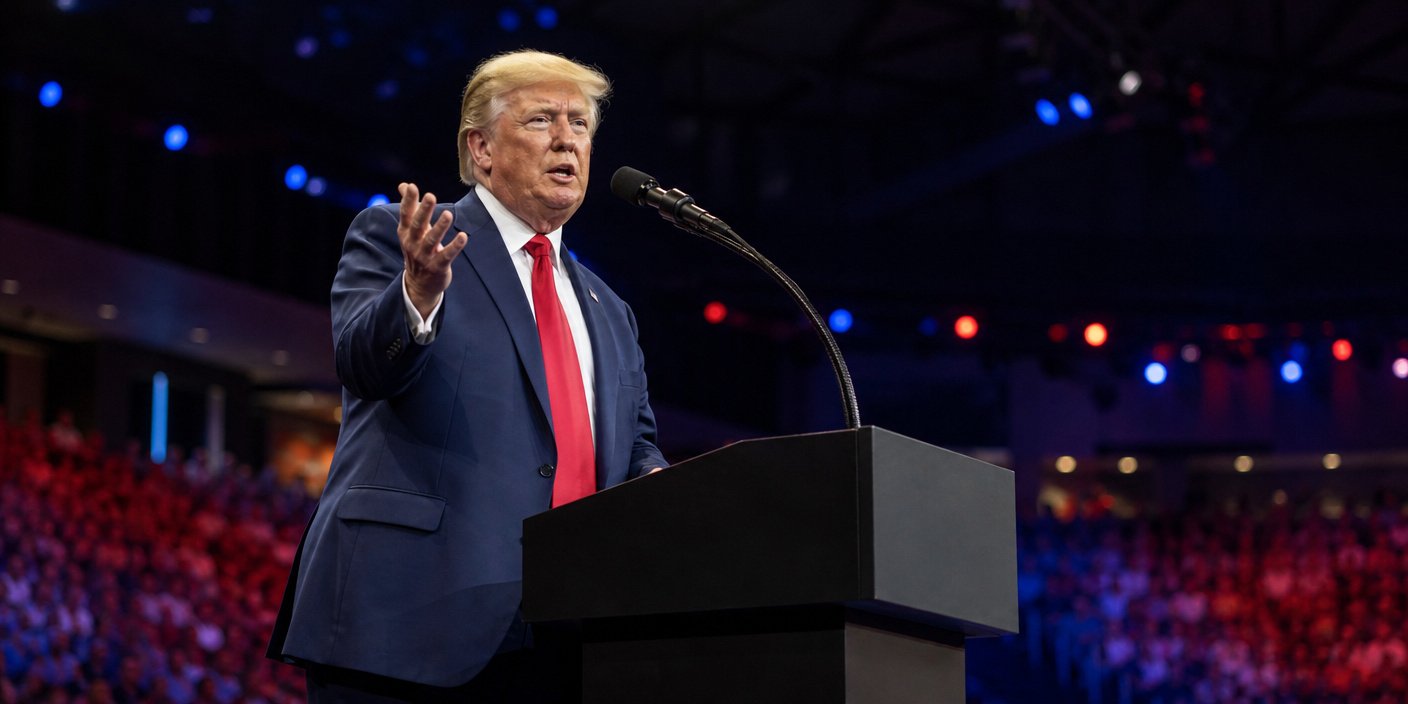
The political arena has long been a theater of perception, and the recent Republican midterm convention in Dallas served as its latest high-stakes production. As Democrats moved quickly to mock the event, labeling it a display of fringe ideology, the underlying question remained: Did Donald Trump successfully accomplish his primary goal of cementing his brand as the singular currency of Republican candidate success? The event, marked by fervent supporter turnout and a keynote address that doubled down on populist rhetoric, provided a distinct look at the current GOP power structure.
Key Highlights
- Brand Consolidation: Trump’s keynote focused on an ‘endorsement-first’ strategy, framing candidate loyalty to his platform as the sole pathway to electoral success.
- Democratic Counter-Narrative: Opposition strategists utilized the Dallas event to reinforce the ‘extremism’ label, attempting to alienate independent voters from the party’s base.
- The Metric of Success: Analysis suggests the strategy effectively energized the core base but left a measurable gap in broader general election appeal.
- Organizational Impact: The convention underscored the shift of the Republican National Committee’s (RNC) focus toward grassroots-level fundraising over traditional establishment outreach.
The Strategic Calculus of the Dallas Keynote
The central tension of the Dallas convention was the projection of authority. For Donald Trump, the goal was not necessarily to craft a policy-heavy platform, but to demonstrate that he remains the gravitational center of the Republican party. By dedicating his keynote address to the narrative of ‘retribution and restoration,’ Trump aimed to make the midterm election cycle a referendum on his own political brand.
From a strategic perspective, this approach serves two distinct purposes. First, it forces potential challengers to align with his platform or risk being branded as ‘establishment’—a toxic label in the current primary ecosystem. Second, it creates a feedback loop where grassroots donors are incentivized to contribute directly to candidates who have received the ‘Trump Seal of Approval.’ However, the Democratic reaction to this display—mocking the gathering as out of touch with suburban concerns—suggests that this consolidation of power may come at a strategic cost. By tightening the grip on the base, the party risks narrowing its appeal to the critical swing voters who ultimately decide general election outcomes.
The Democratic Counter-Strategy: Weaponizing the ‘Extremism’ Label
While the Dallas convention focused on intra-party unity, the Democratic National Committee (DNC) was actively utilizing the imagery and rhetoric from the event for opposition research. The strategy here is deliberate: Democrats are attempting to frame the modern Republican identity as fundamentally incompatible with the average American’s economic interests. By highlighting the most incendiary soundbites from the keynote, Democratic campaigns are seeking to boost turnout among their own base while attempting to drive suburban voters toward the center.
This creates a classic political paradox. The more Trump succeeds in winning over the Republican primary electorate by emphasizing his brand identity, the more ‘ammunition’ he provides to Democratic strategists to frame the party as a radicalized entity in the eyes of the general public. This ‘endorsement paradox’ was a defining feature of the 2022 cycle and continues to be the dominant narrative thread for the current midterm cycle.
Quantifying Candidate Success: Endorsements vs. Results
To determine if Trump accomplished his goal, one must look beyond the cheers of the convention floor and toward the cold metrics of voter turnout. The Dallas event succeeded in setting the tone for the primary season. Candidates who aligned themselves closely with the Trump-endorsed platform saw early spikes in small-dollar fundraising, a key metric for grassroots campaigns.
However, the ultimate test remains the transition from primary to general election. The data from recent cycles indicates that while the Trump brand remains the most powerful force in Republican primary politics, it faces significant headwinds in purple districts. The Dallas convention solidified the primary strategy, but it did little to address the systemic challenges candidates face when attempting to expand the coalition beyond the loyal base.
Future Implications for 2026 and Beyond
Looking ahead, the model established in Dallas appears to be the blueprint for the foreseeable future. The party has largely moved away from the traditional establishment consulting model, opting instead for a populist, personality-driven framework. Whether this strategy will lead to long-term legislative majorities or a cycle of localized wins remains the central question for political analysts.
If the objective was to ensure his dominance over the Republican primary process, Trump undeniably succeeded. The convention proved that the RNC is now inextricably linked to his specific brand of politics. Whether this consolidation translates into national electoral power is a question that will be settled at the ballot box, where the realities of voter behavior often defy the intensity of the convention stage.
FAQ: People Also Ask
Q: Did the Dallas convention actually change Republican polling numbers?
A: Polling in the immediate aftermath of such conventions usually reflects short-term enthusiasm among the base rather than a sustained shift in general election sentiment. Current analysis suggests the event successfully boosted internal morale but had a neutral impact on broader polling.
Q: How do Democrats use these conventions to their advantage?
A: Democrats leverage the media coverage from these events to craft specific attack ads, targeting independent and suburban voters by highlighting quotes or themes that they believe fall outside the American political mainstream.
Q: Is Trump’s ‘endorsement-first’ strategy unique to this cycle?
A: While candidate endorsements are standard, the intensity and direct linkage between the ‘Trump brand’ and candidate success is a distinct feature of the post-2016 Republican party, representing a significant shift from the previous party establishment model.
Q: What is the main risk of the current Republican midterm strategy?
A: The primary risk is ‘primary-general disconnect,’ where candidates who successfully run on a highly populist platform during primaries struggle to pivot to the more moderate rhetoric required to win competitive general election seats.