

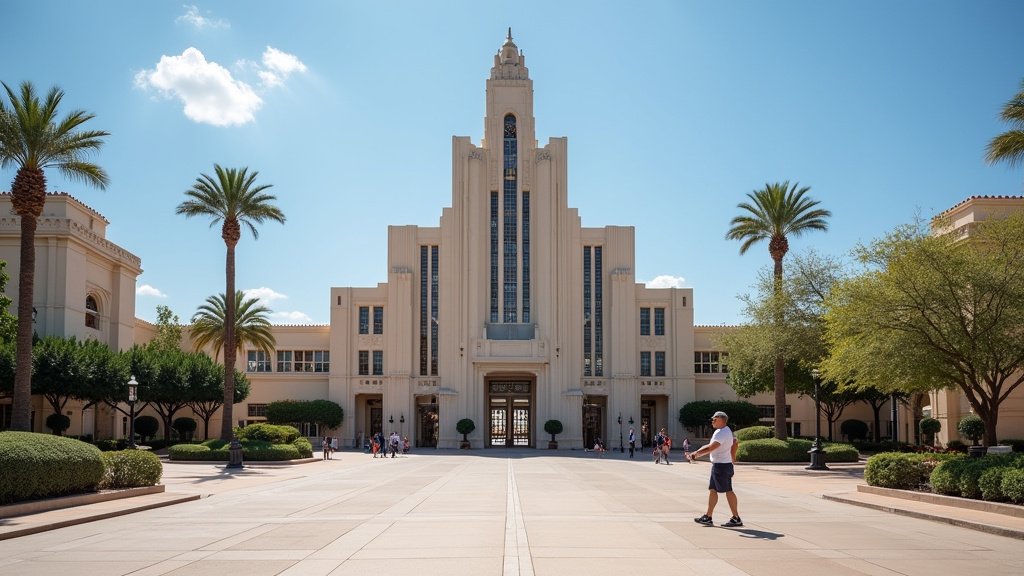
The State Fair of Texas has secured a major legal victory, with the Fifth District Court of Appeals upholding the organization’s authority to maintain a firearm-free policy within the event grounds. This decision effectively ends a period of intense legal speculation regarding the balance between Second Amendment rights and the operational autonomy of private, non-profit entities hosting events on public property. The court’s ruling reinforces that the Fair, as a private non-profit organization, retains the right to implement safety protocols—including weapon bans—even when operating within the parameters of a municipal lease, distinguishing it from government-run public facilities.
Key Highlights
- Judicial Confirmation: The Fifth District Court of Appeals sided with the State Fair of Texas, affirming its policy to prohibit firearms.
- Private Entity Status: The crux of the ruling hinges on the classification of the Fair as a private, non-profit organization, not a government body.
- Operational Precedent: This decision clarifies how Texas Local Government Code Section 229.001 applies to events held on public land by private lessees.
- Safety Mandate: The Fair continues to market its commitment to a family-friendly, secure environment, which officials argue necessitates strict weapon control.
The Judicial Decision: A Victory for Private Event Autonomy
The Core Legal Question
The central conflict at the heart of this legal challenge involved the interpretation of Texas’s preemption laws. Texas Local Government Code Section 229.001 generally restricts municipalities from adopting regulations related to the discharge, possession, or carrying of firearms. Critics of the Fair’s policy argued that because the State Fair of Texas takes place on public land—specifically, Fair Park in Dallas—it should be subject to the same firearm-permissive rules as a public city park. However, the appellate court’s analysis focused on the nature of the entity rather than the ownership of the land. By characterizing the State Fair as a private, non-profit entity that occupies the land through a lease agreement, the court effectively severed the link between the venue’s ownership and the operator’s internal conduct policies.
Defining “Private Entity” vs. “Public Land”
Legal experts note that this distinction is critical for future event management in the state. By ruling that the State Fair is not a governmental body, the court has provided a clear legal framework: a private organization holding a lease on public property is not automatically bound by the same firearm restrictions that would apply to a city or county government. This interpretation protects the rights of private entities to set their own terms of service, provided those terms do not violate broader state or federal constitutional protections. For the organizers of the State Fair of Texas, this validation is essential to maintaining the operational control necessary to host an event that draws millions of attendees annually.
Analyzing the Policy Impact
Safety Measures at the State Fair of Texas
Safety has been the cornerstone of the Fair’s defense. With attendance figures frequently reaching well over 2 million people throughout its annual run, organizers have consistently argued that the density of the crowds, the family-centric environment, and the presence of alcohol necessitate heightened security measures. The ban on firearms is presented as a component of a comprehensive public safety strategy, which includes enhanced metal detection, increased law enforcement presence, and perimeter control. With the legal challenge resolved in their favor, the Fair is expected to continue its current security policies without interruption or modification.
The Broader Landscape of Texas Firearm Law
The intersection of Texas’s robust Second Amendment protections and the operational requirements of large-scale events remains a dynamic area of law. While this ruling provides clarity for the State Fair, it also sets a precedent that will likely influence other public-private partnerships. The decision underscores that “public land” does not automatically equate to “public venue” in the context of regulatory preemption. As private entities continue to lease space from municipalities for concerts, festivals, and exhibitions, this ruling establishes a blueprint for how those organizations can craft safety policies that deviate from city-wide firearm ordinances.
Future Implications for Public-Private Partnerships
Looking ahead, this verdict may prompt municipalities to revisit lease agreements with private organizations to ensure that expectations regarding safety and policy are clearly defined. For advocacy groups pushing for uniform firearm regulations across all public venues, the court’s decision serves as a significant hurdle. Conversely, for event organizers, it provides much-needed legal certainty. As the State Fair of Texas looks to future seasons, the ruling allows them to focus on event logistics and visitor experience rather than protracted litigation, ensuring that the legacy of the Fair continues under the current security framework.
FAQ: People Also Ask
1. Why was there a lawsuit regarding the State Fair of Texas firearm policy?
Opponents argued that because the Fair takes place on public property (Fair Park), it should follow state laws that prevent municipalities from banning guns on public grounds. The lawsuit aimed to invalidate the Fair’s policy.
2. Does this ruling apply to all public events in Texas?
It specifically clarifies the status of private non-profits leasing public land. It sets a strong precedent for other similar organizations, but specific lease terms and corporate structures could still influence legal challenges in other contexts.
3. Will the State Fair of Texas change its safety policy after this?
No. The ruling affirms the existing policy, meaning the State Fair of Texas will continue to enforce its prohibition of firearms on the fairgrounds as part of its ongoing commitment to guest safety.
4. Is the State Fair of Texas a government entity?
No, the court emphasized that it is a private, non-profit organization. This classification was the deciding factor in the court’s opinion regarding its ability to set its own policies.