
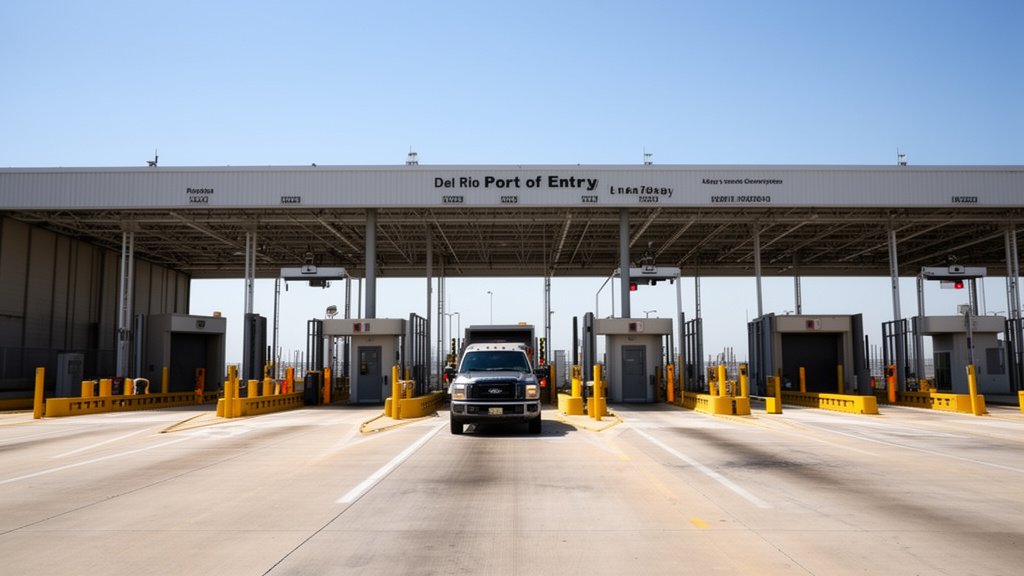
U.S. Customs and Border Protection (CBP) officers stationed at the Del Rio Port of Entry in Texas successfully disrupted a significant cross-border weapons trafficking operation. During a routine inspection of an outbound vehicle destined for Mexico, officers discovered a cache containing 17 firearms, including two high-powered .50-caliber assault rifles, alongside 37,677 rounds of ammunition and 1.1 pounds of methamphetamine. This interdiction represents a critical blow to the illicit supply chain that often fuels violence south of the border, demonstrating the persistent vigilance of federal law enforcement in detecting contraband moving both into and out of the United States.
Key Highlights
- Weapons Intercepted: A total of 17 firearms were recovered from the vehicle, significantly reducing the potential for violence in the destination region.
- High-Caliber Threat: The seizure included two .50-caliber assault rifles, weapons capable of penetrating armored vehicles and posing severe threats to law enforcement and civilians alike.
- Ammunition Volume: Officers secured 37,677 rounds of ammunition, indicating a high-volume supply effort intended for sustained conflict or rapid distribution.
- Narcotics Seizure: In addition to the arms, authorities found 1.1 pounds of methamphetamine, further linking the smuggling attempt to transnational criminal organizations.
- Operational Success: The interception occurred at the Del Rio Port of Entry, underscoring the vital role of NII (Non-Intrusive Inspection) technology and officer expertise in securing outbound traffic.
Analyzing the Mechanics of the Del Rio Interdiction
The events at the Del Rio Port of Entry serve as a stark reminder of the complexities inherent in modern border security. While much of the public discourse regarding the U.S.-Mexico border focuses on inbound migration and narcotics, outbound inspections play an equally vital role in regional stability. Smuggling operations often move sophisticated weaponry from the United States into Mexico, where it is frequently repurposed by cartels to consolidate power, enforce territorial claims, and challenge local law enforcement.
The Tactical Threat of High-Caliber Arms
Of particular concern in this seizure were the two .50-caliber assault rifles. These are not standard personal defense firearms; they are military-grade assets capable of disabling vehicles and piercing standard protective barriers. When such weaponry enters the illicit market, it dramatically alters the power dynamics on the ground. The seizure of these specific items suggests a high-level coordination within the smuggling syndicate, likely aimed at arming specific tactical units rather than simple street-level distribution. Law enforcement agencies, including the Bureau of Alcohol, Tobacco, Firearms and Explosives (ATF), often prioritize these shipments because they represent the most dangerous components of the ‘Iron River’—the steady flow of weapons moving south.
Technology as the First Line of Defense
Modern ports of entry like Del Rio are no longer just checkpoints; they are intelligence hubs. The detection of this contraband likely relied on a combination of Non-Intrusive Inspection (NII) technology—such as large-scale X-ray and gamma-ray imaging systems—and the heightened intuition of CBP officers. These officers are trained to identify behavioral anomalies and vehicle characteristics that suggest cargo irregularities. In this instance, the sheer volume of ammunition—nearly 38,000 rounds—suggests that the smugglers were attempting to move a ‘war-ready’ supply. Detecting such large quantities requires consistent, high-standard screening protocols, as smugglers often attempt to hide smaller, high-value items within common commercial or personal goods.
Strategic Implications for Cross-Border Enforcement
The discovery of both methamphetamine and military-grade hardware in a single vehicle suggests a diversified criminal business model. Cartels and smuggling rings increasingly rely on hybrid logistics, moving drugs north and weapons or illicit cash south. By dismantling this specific supply chain, federal officers have not only prevented the distribution of dangerous narcotics but have also denied traffickers a significant investment in their tactical capacity. This seizure will likely trigger follow-up investigations by federal agencies to map the origin of the weapons, potentially identifying straw purchasers or illicit dealers operating within the United States. Such investigative work is the second half of the equation; interdiction stops the contraband, but intelligence operations aim to stop the source.
FAQ: People Also Ask
Q: Why does the US inspect outbound traffic for weapons?
A: While outbound inspections are not as frequent as inbound, they are critical to national security. The U.S. enforces strict laws against the unauthorized export of military-grade weapons and ammunition, which often fuel violence and criminal activity in neighboring countries.
Q: What happens to the seized weapons and drugs?
A: Typically, the items are seized by CBP as evidence. The case is then handed over to other federal law enforcement agencies, such as Homeland Security Investigations (HSI) or the ATF, for further investigation, forensic analysis, and eventual prosecution.
Q: How common are these types of seizures at the Del Rio Port of Entry?
A: Port of Entry seizures happen regularly, though the scale varies. High-volume ammunition seizures are less common than small-scale drug interceptions, making this a significant operational success for local officers.