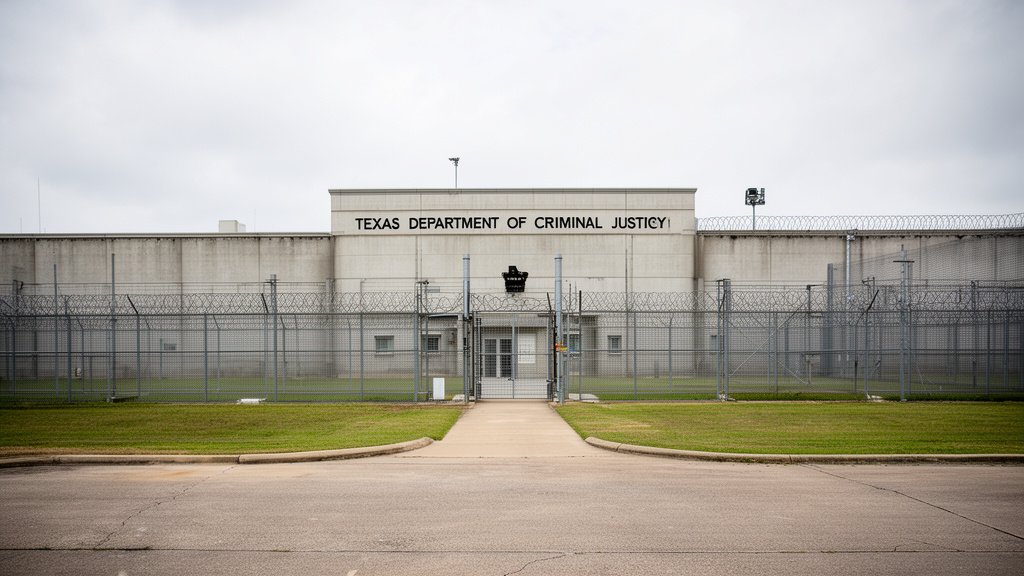

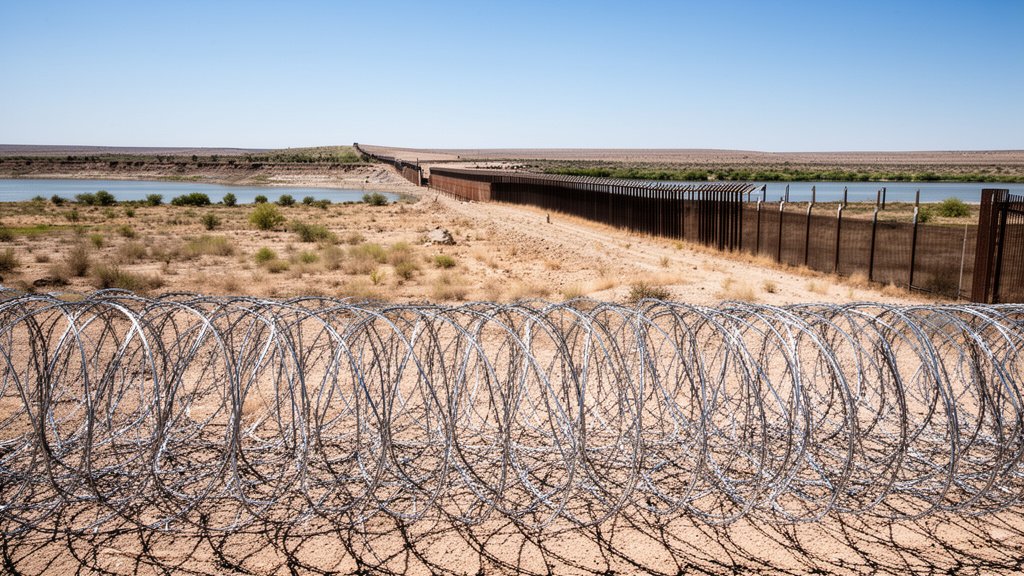
In a decisive conclusion to a years-long legal stalemate, the State of Texas and the federal government have finalized a 30-year agreement that solidifies the state’s ability to maintain razor wire barriers along a strategic stretch of the Texas-Mexico border. The settlement, involving the Texas General Land Office (GLO) and the International Boundary and Water Commission (IBWC), represents a fundamental recalibration of federal-state cooperation regarding border infrastructure in the Del Rio sector.
The Anatomy of the 30-Year Agreement
This historic pact centers specifically on Val Verde County, an area that has been a focal point of intense political and legal friction. Under the terms of this newly ratified agreement, Texas officials are granted the legal pathway to continue the deployment and maintenance of anti-climb razor wire—a move that had previously been the subject of multiple federal injunctions and lawsuits.
By securing a 30-year timeline, the GLO has effectively removed the immediate threat of federal removal orders for these specific installations. This is not merely a localized operational update; it is a significant regulatory carve-out. The IBWC, which oversees boundary integrity between the United States and Mexico, has conceded operational space to state authorities in exchange for a formalized framework that ensures the barriers do not impede the commission’s other treaty obligations.
Strategic Importance of the Del Rio Sector
Why prioritize this specific location for a three-decade commitment? The Del Rio sector has historically experienced high volumes of irregular crossings, making it the primary theater for Operation Lone Star. By locking in a long-term agreement here, Texas officials have effectively established a ‘hardened’ perimeter that serves as a proof-of-concept for similar initiatives across other sectors.
Legal analysts suggest this agreement provides a shield against the U.S. Department of Justice (DOJ), which had previously argued that state-installed barriers obstructed federal border patrol access and violated treaty stipulations. With this agreement, the DOJ’s primary legal arguments—centered on obstruction—are largely neutralized for the next thirty years within the defined Val Verde boundaries.
Secondary Angles: Examining the Fallout
To understand the broader implications of this settlement, we must examine the following secondary angles:
1. The Precedent of Federal Deference: This agreement marks a rare instance of federal agencies deferring to state-led security initiatives for the long term. It signals a potential change in how the U.S. government approaches border management, moving from a position of absolute federal exclusivity to one of negotiated state-federal co-management.
2. Financial and Logistical Sustainability: Committing to a 30-year agreement necessitates a sustained capital investment. This is no longer a temporary stop-gap measure; it is a permanent structural commitment. The GLO must now account for the long-term maintenance costs of industrial-grade razor wire, which is prone to weather damage and corrosion in the harsh desert climate.
3. Environmental and Treaty Considerations: The IBWC agreement does not provide a blank check. There are strict stipulations regarding hydraulic flow and international treaty obligations. Any shift in the river’s path or unintended environmental impact could technically trigger a review, making this agreement as much about environmental compliance as it is about national security.
Future Predictions and Administrative Stability
Looking ahead, this agreement offers a rare moment of administrative stability in a landscape characterized by perpetual litigation. By codifying these measures for 30 years, both state and federal actors have essentially ‘de-escalated’ a specific front in the broader border war. While political rhetoric may continue to flare, the practical, bureaucratic reality on the ground in Val Verde County is now settled law. This likely paves the way for further state-federal agreements in other sectors, as both parties seek to avoid the immense costs associated with protracted litigation.
FAQ: People Also Ask
Does this agreement apply to the entire Texas-Mexico border?
No. The settlement is specific to defined areas within Val Verde County. It does not provide blanket authorization for razor wire across the entire 1,200-mile Texas border, though it does set a strong precedent that could influence negotiations in other sectors.
Does this settlement end the legal battles regarding border wire?
It resolves the specific litigation surrounding the IBWC and the barriers in Val Verde County. However, it does not necessarily preclude future lawsuits concerning other border policies or installations in different locations.
Why was a 30-year duration chosen?
30 years is a standard ‘useful life’ duration for infrastructure projects of this nature. It effectively takes the issue off the table for a generation, ensuring that neither state nor federal agencies are forced to re-litigate the issue during every election cycle.
What role did the Texas General Land Office play?
The GLO took the lead in negotiating the terms of access and maintenance, framing the wire as a critical component of state land management and security infrastructure, which forced the federal IBWC to the table to reach a workable compromise.