
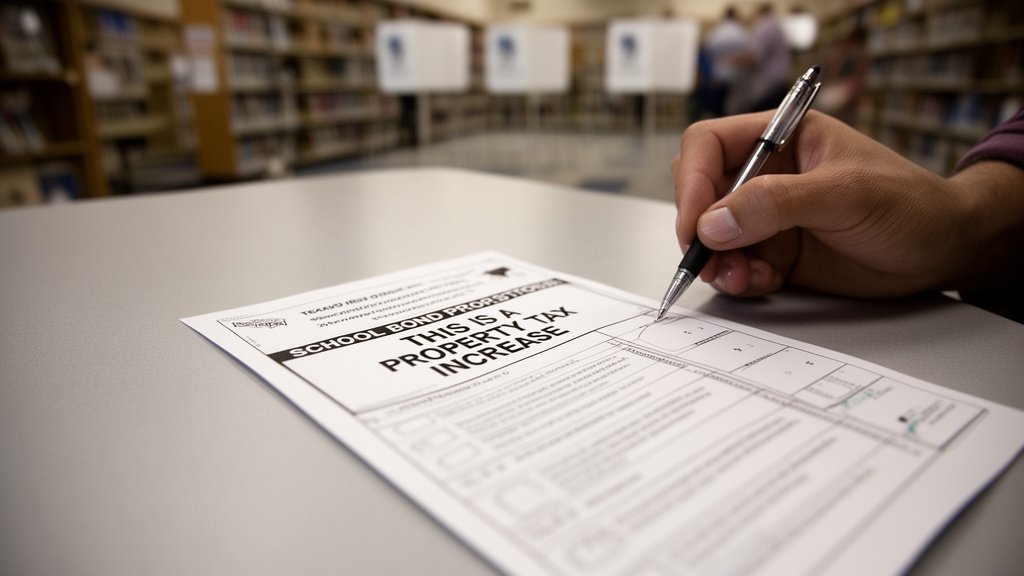
In the complex ecosystem of Texas public education finance, clarity is often the first casualty. Voters in districts across the state are currently grappling with a legislative mandate that requires every school bond proposition to carry the same blunt, potentially misleading warning: “THIS IS A PROPERTY TAX INCREASE.” This mandatory language, dictated by state law, is frequently applied even when a school district does not intend to raise the property tax rate, creating a significant barrier to the passage of essential infrastructure projects.
The Mechanics of Misinformation
The roots of this issue trace back to the Texas Legislature’s desire for increased transparency regarding taxpayer liabilities. However, the implementation of this mandate, codified through legislation such as the updates to the Texas Property Tax Code stemming from 2019’s House Bill 3, has created an unintended consequence: widespread voter confusion. The law dictates that ballot language must include the “property tax increase” phrase if a bond proposition could technically result in an increase, even if the district plans to manage the debt within its existing tax rate structure.
This rigid, binary phrasing ignores the nuance of modern school finance, where districts often leverage rising property values to pay off new debt without raising the actual tax rate levied on residents. For the average voter, the bolded, capitalized warning on the ballot acts as a visceral deterrent. The dissonance between the ballot language and the school district’s actual financial plan has created a “cry wolf” effect, where voters reject bond proposals primarily due to the mandated wording rather than the merits of the specific projects being proposed.
Impact on Local Districts: The Northside and South San Antonio Experience
The impact of this legislative hurdle is not theoretical; it is being felt on the ground in major Texas municipalities. The Northside Independent School District and the South San Antonio Independent School District serve as prime examples of how this language influences electoral outcomes. Both districts have seen bond proposals struggle to gain traction, with analysts and local editorial boards—including the San Antonio Express-News—pointing directly to the deceptive nature of the ballot language as a contributing factor to recent defeats.
In these districts, the disconnect between the official ballot prompt and the administration’s detailed financial presentations is staggering. When a district presents a plan for new classrooms, safety upgrades, or technological investments, they often emphasize that the bond will not require a tax rate hike. Yet, when a voter enters the booth, they are met with a state-mandated warning that contradicts the district’s public campaign. This adversarial dynamic between the state’s required legal disclosures and local fiscal reality has fundamentally altered the path to securing voter approval for educational facilities.
Secondary Angles: Exploring the Systemic Implications
To understand the full scope of this issue, one must look at three critical secondary angles:
1. The Infrastructure Lag: As bonds are defeated due to confusion rather than fiscal disapproval, districts face a mounting backlog of maintenance and expansion projects. This leads to overcrowded classrooms and reliance on portable buildings, which carry their own long-term costs and safety concerns.
2. Historical Shift in Transparency vs. Deception: Originally, these transparency laws were designed to empower taxpayers against rapid increases in government spending. However, the shift from “transparency” to “mandatory framing” suggests that the law now prioritizes a specific political narrative over neutral, descriptive ballot language.
3. Legislative Reform Outlook: There is growing pressure from school boards and advocacy groups for the Texas Legislature to revisit this specific statute. A potential compromise could involve allowing districts to add a short, neutral clarification to the ballot, or modifying the criteria to only require the “tax increase” warning if the district explicitly plans to raise the tax rate.
As Texas continues to grow, the ability of school districts to build the infrastructure needed for a burgeoning student population remains paramount. If the state-mandated language continues to serve as an insurmountable barrier, the legislature may soon find that “transparency” has come at the cost of the very education system it is meant to support.