
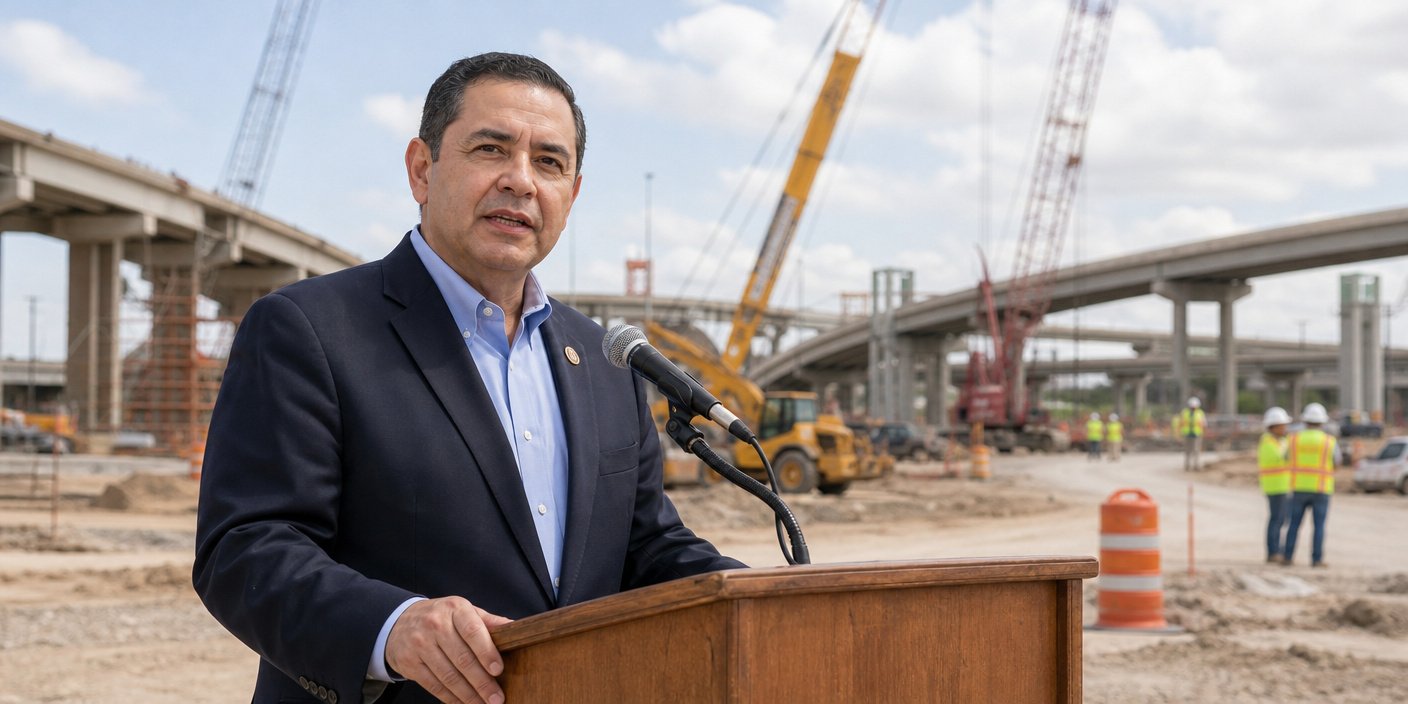
Representative Henry Cuellar has officially unveiled a landmark $1.65 billion federal funding package, marking a critical investment in the future of Texas’ transportation and utility infrastructure. As the state grapples with rapid population growth and the increasing necessity for grid modernization, this injection of capital is designed to enhance economic competitiveness while addressing the foundational requirements for water, electricity, and transit reliability. This announcement arrives at a pivotal moment, as the Representative anticipates significant structural shifts within U.S. House leadership that could redefine the legislative landscape for the remainder of the fiscal term.
Key Highlights
- Significant Capital Injection: A total of $1.65 billion in federal funds has been secured specifically for Texas-based transportation infrastructure projects.
- Multi-Sector Focus: The funding package explicitly targets the interconnected needs of modern transit, water management, and electricity infrastructure.
- Strategic Economic Catalyst: The investment is framed as an essential requirement for maintaining Texas’ competitive edge in domestic and international trade.
- Anticipated Legislative Shifts: Representative Cuellar is actively positioning regional priorities to remain resilient despite expected changes in House leadership.
Strengthening the Texas Foundation: A Multi-Billion Dollar Mandate
The $1.65 billion allocation secured by Representative Cuellar is not merely a budgetary line item; it represents a strategic pivot toward long-term structural resilience. In a state that has seen exponential population growth over the past decade, the strain on existing infrastructure—ranging from interstate highways to local utility grids—has reached a critical threshold. By prioritizing these funds, Cuellar aims to address the “bottleneck effect” that occurs when transportation capacity fails to keep pace with economic activity.
The Interconnected Nature of Infrastructure
One of the most noteworthy aspects of this funding package is its holistic approach. Rather than focusing solely on highway expansion, the plan recognizes the convergence of transit and essential utilities. In Texas, the reliance on the power grid and water supply is inseparable from the transportation network. When heavy rains or extreme heat events impact transit, they frequently coincide with grid stability challenges. By bundling these funding priorities, the initiative seeks to foster a more integrated infrastructure model where transit routes are built with the foresight of utility easement requirements and water resource protection.
Navigating the House Leadership Transition
Beyond the specific financial metrics, the timing of this announcement is politically significant. With discussions of potential changes in House leadership gaining momentum, lawmakers are under pressure to lock in funding for their respective districts. Cuellar’s ability to secure this package suggests a strategic focus on “must-pass” infrastructure priorities that transcend partisan divides. By framing the project as a matter of economic survival and competitiveness, he has effectively insulated these funds from the volatility that often characterizes legislative transitions. This approach serves as a blueprint for how districts can ensure federal dollars remain committed to local interests even as the internal dynamics of the House of Representatives shift.
Economic Competitiveness and Future Growth
Texas has established itself as a global hub for manufacturing and logistics, particularly along the border corridors. However, maintaining this status requires more than just low tax rates or a skilled workforce; it requires world-class logistical throughput. The proposed $1.65 billion is intended to modernize major commercial transit hubs and trucking corridors. Improved road quality and modernized traffic management systems are expected to reduce long-term logistics costs for local businesses, effectively functioning as a stimulus for the regional economy. The Representative’s focus on reliable transit is directly tied to the state’s ability to move goods efficiently to international ports and domestic markets, ensuring that Texas remains a premier destination for corporate investment.
FAQ: People Also Ask
1. What specific areas of Texas will receive this funding?
While the full list of projects is subject to ongoing implementation, the funding package is designed to support statewide transit improvements, with a particular emphasis on high-growth corridors and trade-critical regions that facilitate commerce.
2. How does this funding impact the Texas power grid?
While the primary classification is transportation infrastructure, the integration of funding ensures that transit projects are developed with the necessary support for adjacent electrical and utility infrastructure, helping to improve systemic reliability across the state.
3. Will the change in House leadership affect the availability of these funds?
Representative Cuellar has secured these funds within the framework of federal appropriations. Once these allocations are finalized and signed into law, they are generally protected from administrative leadership changes, providing stability for the planned multi-year infrastructure rollout.
4. Why is this amount ($1.65B) considered critical?
In the context of the current federal budget, $1.65 billion represents a substantial share of non-discretionary spending earmarked for regional development. It allows for the completion of large-scale, multi-year projects that local municipal budgets would struggle to finance independently.