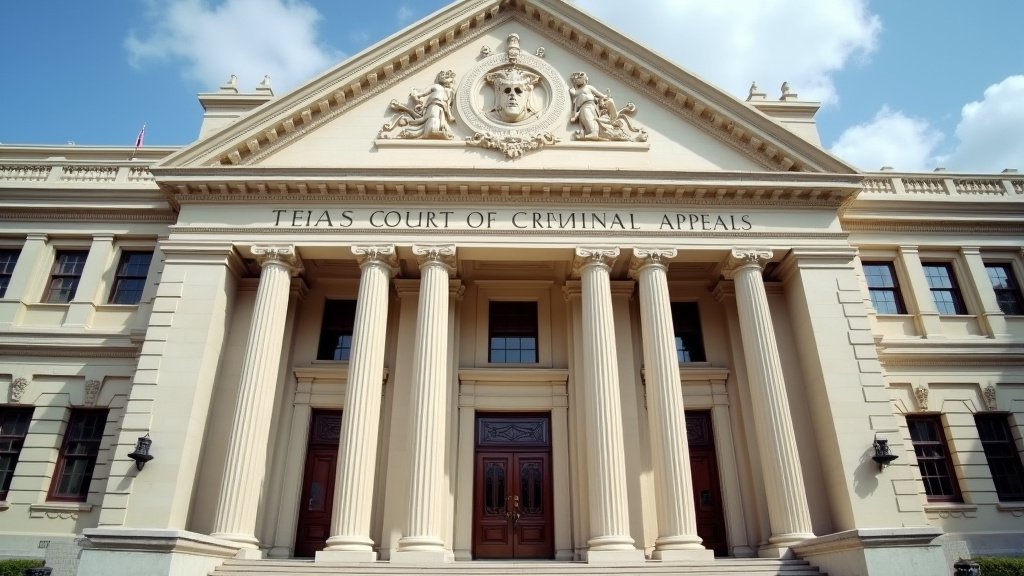

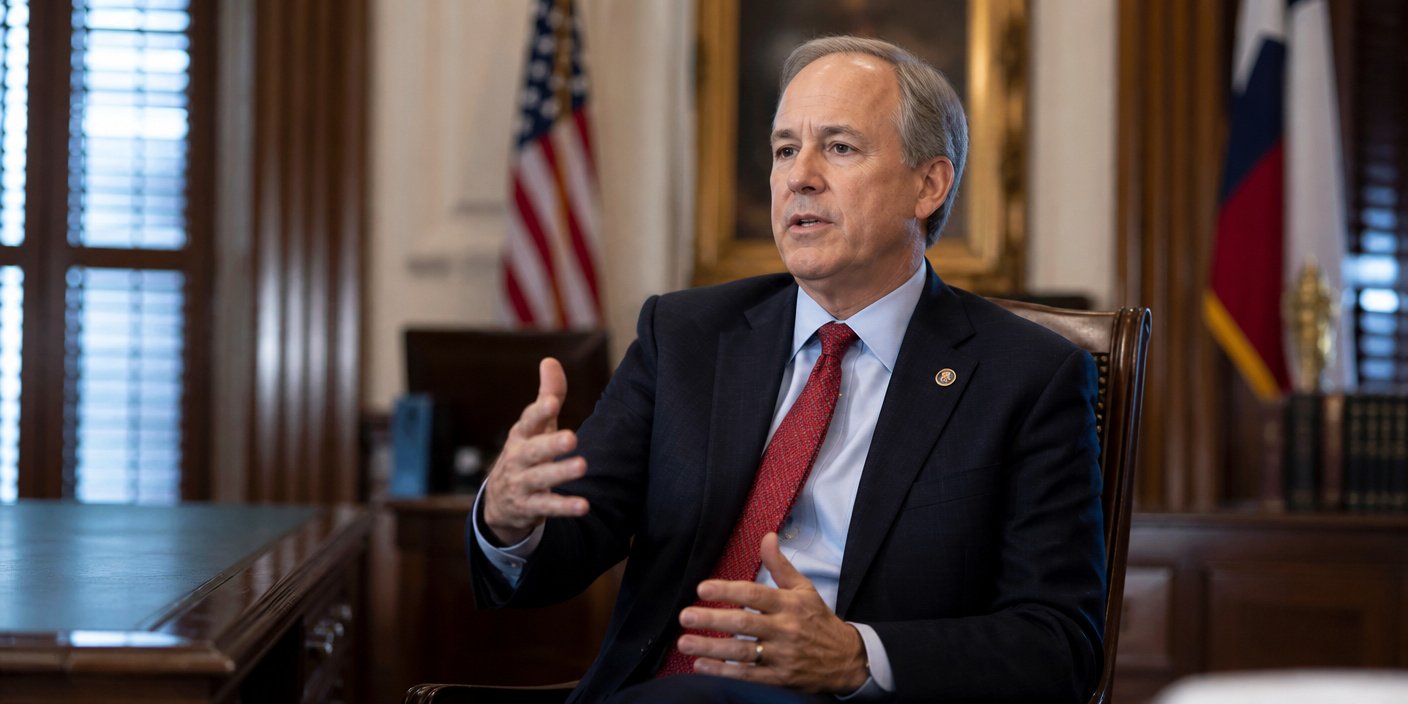
Texas Attorney General Ken Paxton has officially clarified his stance on the rapid proliferation of data centers across the state, pivoting from a posture of skepticism to a nuanced position of “yes with conditions.” As Texas cements its status as a global hub for technological infrastructure, Paxton’s latest intervention signals that while the state welcomes the economic windfall of the Artificial Intelligence (AI) boom, this growth will no longer occur in a regulatory vacuum. The Attorney General’s directive emphasizes that data centers are essential for maintaining U.S. competitiveness—particularly in the geopolitical rivalry with China—but mandates that these facilities cannot come at the expense of the Electric Reliability Council of Texas (ERCOT) grid stability or local water supplies.
Key Highlights
- Conditional Support: Attorney General Paxton has moved to a ‘yes with conditions’ stance, allowing for data center expansion contingent upon rigorous resource management.
- The Geopolitical Imperative: Paxton justifies the need for increased data capacity as a critical national security measure to maintain U.S. technological dominance against Chinese AI development.
- Grid & Water Security: The primary constraints placed on the industry involve strict adherence to energy consumption limits and water usage efficiency to protect state utilities.
- Regulatory Oversight: The Attorney General’s office is signaling a shift toward more stringent oversight of utility providers and data center developers to prevent regional shortages.
Balancing Innovation with Infrastructure Stability
The fundamental tension at the heart of Paxton’s clarification is the collision between Texas’s booming “Silicon Prairie” economy and its historical struggle with resource infrastructure. Data centers are uniquely energy-intensive, requiring massive amounts of continuous power to operate the high-performance computing (HPC) clusters needed for training Large Language Models (LLMs) and advanced AI systems. This demand has placed unprecedented pressure on the ERCOT grid, which is already managing a population surge and a transition toward more intermittent renewable energy sources.
Paxton’s strategic shift reflects a realization that data centers are not merely commercial developments; they are strategic assets. By framing the issue through the lens of a technological arms race with China, Paxton has elevated the conversation from one of local zoning concerns to one of national survival. If Texas refuses to host the infrastructure necessary to power the next generation of AI, the economic and security burden will likely shift elsewhere, potentially to competing nations that do not share American strategic interests. However, this national security argument provides no reprieve for the local citizen facing brownouts during peak summer heat. Consequently, the “conditions” implied in Paxton’s stance likely refer to mandatory grid-resiliency investments—such as behind-the-meter generation or microgrid integration—that developers must fund to offset their load.
The Resource Conflict: Water and Power
Beyond the electricity grid, the consumption of water resources has emerged as a sleeper issue in the data center debate. Modern data centers require substantial cooling, often utilizing evaporative cooling towers that consume millions of gallons of water annually. In arid or drought-prone regions of Texas, this usage directly competes with municipal and agricultural interests. Paxton’s conditional approach suggests that future project approvals will be tied to water-neutral operations or the use of closed-loop cooling technologies that minimize the drawdown on the state’s precious water tables.
This policy framework forces industry players to internalize costs that were previously socialized. Developers can no longer count on cheap, unregulated access to Texas utilities. Instead, they must become partners in the state’s infrastructure resilience. This could lead to a bifurcation in the market: large-scale, hyper-scale operators who can afford the capital expenditure of building private energy infrastructure will thrive, while smaller or less-capitalized data centers may struggle to clear the new regulatory hurdles.
Secondary Angles: Future Implications
1. The Legislative Pivot: Paxton’s stance serves as a precursor to upcoming legislative sessions. We can expect to see bills introduced that codify these ‘conditions’ into state law, potentially creating a specific permitting tier for high-load, high-impact technological infrastructure that includes binding agreements on water usage and energy-offset contributions.
2. The Economic Opportunity Cost: Critics of tighter regulations argue that Texas risks losing the AI arms race. If the cost of compliance becomes prohibitive, data center operators may migrate to states with more lenient regulations, effectively exporting Texas’s economic potential. The success of Paxton’s strategy depends entirely on whether the market deems the Texas advantage—low taxes, friendly business climate, and skilled labor—worth the added cost of infrastructure compliance.
3. The Sustainability Paradox: There is an inherent contradiction in using non-renewable energy sources to fuel the AI systems that are meant to solve climate change and efficiency problems. The mandate for data centers to be “good citizens” of the power grid may ultimately force the entire industry to accelerate the adoption of nuclear or high-capacity battery storage solutions, effectively creating a private-sector push for grid modernization that the state utility regulators have struggled to achieve on their own.
FAQ: People Also Ask
Q: Why is Ken Paxton involved in data center regulation?
A: As Attorney General, Paxton is involved because data center expansion impacts critical state infrastructure, specifically the ERCOT power grid, which is a matter of public interest, legal compliance, and statewide security.
Q: How do data centers threaten the Texas power grid?
A: Data centers have a high, constant electrical load that is difficult for grid operators to balance, especially during periods of extreme temperature when power demand for cooling already surges across the state.
Q: What is the significance of the China connection?
A: Paxton argues that data center capacity is a prerequisite for AI development. He asserts that losing the AI race to China, which is investing heavily in its own digital infrastructure, poses a long-term national security risk to the United States.
Q: Will this change the cost for local electricity consumers?
A: By forcing data centers to invest in their own grid-resiliency infrastructure, the policy aims to prevent developers from passing on the costs of grid upgrades to average Texas residential and commercial ratepayers.