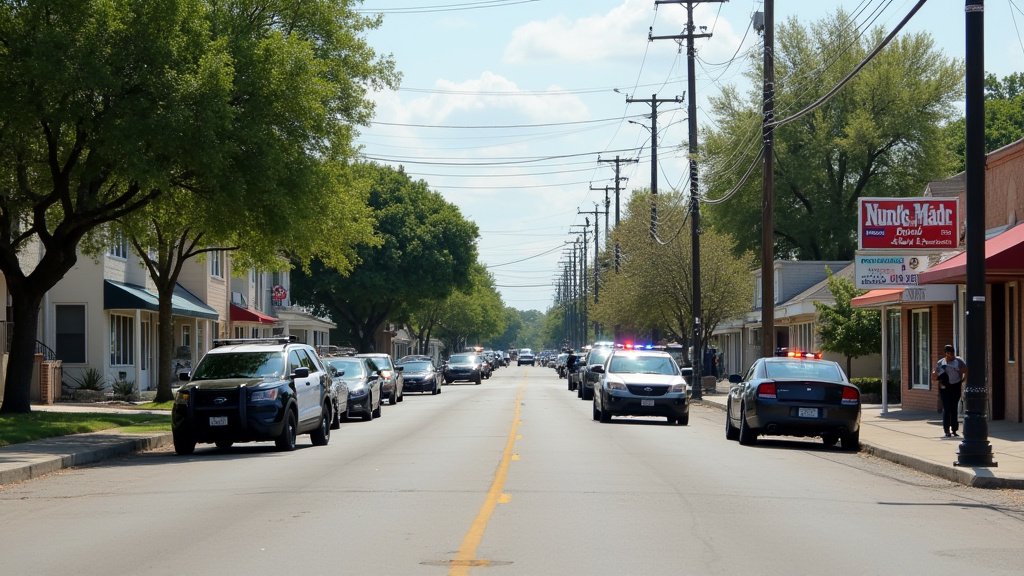

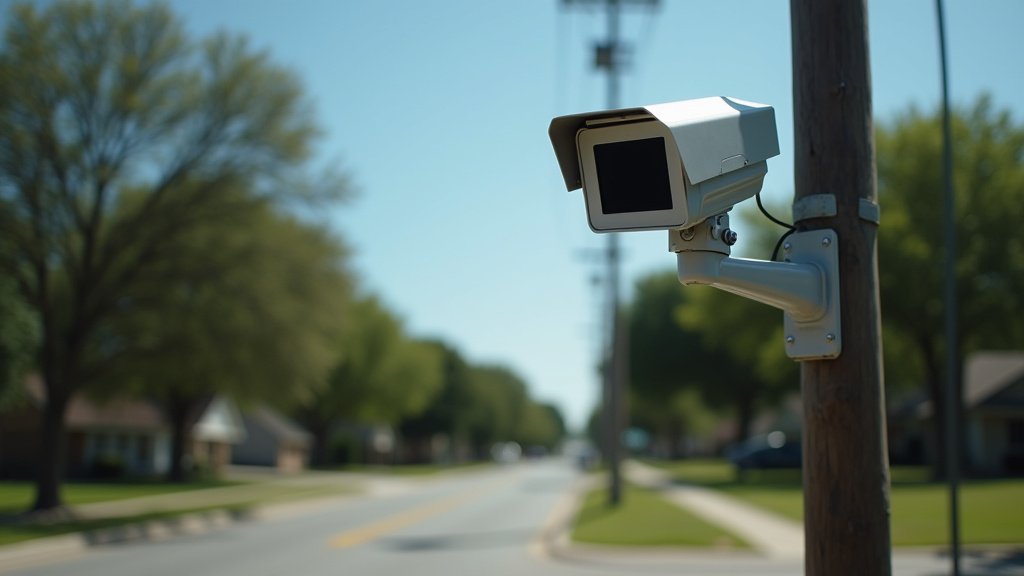
At least 900 automated license plate reader (ALPR) cameras, widely known as Flock cameras, have been taken offline across Texas following the expiration of state funding. This mass decommissioning marks a significant turning point in the state’s approach to digital surveillance, as local municipalities scramble to determine whether to absorb the maintenance and subscription costs of these high-tech law enforcement tools or allow the technology to remain dormant. The move has triggered a wave of intense local scrutiny, with cities such as Pflugerville and Hutto leading the charge in terminating their agreements, citing a combination of fiscal responsibility and growing unease regarding privacy and the ethics of continuous data sharing.
Key Highlights
- Mass Decommissioning: At least 900 Flock Safety cameras have been powered down across Texas jurisdictions following a state funding cliff.
- Municipal Budget Crunch: Cities like Pflugerville and Hutto have opted to cut ties with the vendor, prioritizing municipal budget allocations over the high annual subscription fees required for the ALPR network.
- The Privacy vs. Security Debate: The disconnect has intensified the tension between privacy advocates—who fear a “surveillance state” where vehicle data is permanently logged—and law enforcement, who view the technology as a critical, force-multiplying asset.
- Fragmented Enforcement: The loss of these devices creates a fragmented security map, potentially weakening the collaborative crime-tracking capabilities that the network once provided.
The Surveillance Sunset: Texas Faces a Tech Blackout
The sudden removal of these cameras is not merely a technical glitch; it is the direct result of a fiscal policy shift. For years, Texas provided substantial grant funding that allowed local law enforcement agencies to deploy Flock Safety’s automated license plate readers—devices capable of capturing real-time data on vehicles, including make, model, color, and license plate information. These systems were marketed as a “force multiplier,” allowing understaffed police departments to identify stolen vehicles and track criminal suspects across municipal boundaries with startling efficiency. However, when the state-level funding spigot was turned off, the burden of financing these expensive, cloud-connected subscriptions shifted entirely to local taxpayers.
The Financial Threshold: Why Cities Are Pulling the Plug
For many mid-sized cities in Texas, the cost of continuing the service without state subsidies proved untenable. When local city councils reviewed their annual budgets, the recurring operational costs of maintaining hundreds of cameras—which require ongoing cloud storage fees, maintenance, and software updates—became a target for austerity. Cities such as Pflugerville and Hutto serve as case studies for this trend. In these jurisdictions, officials weighed the projected crime deterrence metrics against the rising costs of technology. The decision to terminate the contracts reflects a growing sentiment that municipal resources must be directed toward essential services, with some council members arguing that the return on investment for high-cost surveillance technology is insufficient to justify the expense during times of fiscal tightening.
Privacy Concerns in the Surveillance Age
Beyond the budget spreadsheets, the disconnection of these cameras has galvanized local privacy advocates. The core of the opposition rests on the nature of the data collected: unlike traditional CCTV, which provides video footage, Flock cameras create a permanent, searchable database of vehicle movements. Opponents have argued that the widespread, often warrantless, tracking of law-abiding citizens constitutes an overreach of police power. The “unplugging” of these cameras is being viewed by some as a victory for civil liberties. Privacy groups have voiced concerns that the centralization of this data creates a vulnerability, as local agencies and potentially third-party corporations could misuse or mismanage millions of data points tracking the daily travels of innocent civilians.
The Law Enforcement Perspective: Losing a Critical Tool
Conversely, law enforcement advocates and proponents of the technology warn that the state is effectively going blind in critical areas. Police representatives emphasize that ALPR technology is essential for solving “hot crimes”—violent incidents that occur rapidly and require immediate interdiction. By losing the network of cameras, police argue they lose the ability to quickly “ping” the location of a suspect vehicle in real-time. For a force operating with limited personnel, these cameras served as a digital patrol officer that never slept, never grew tired, and could scan thousands of plates per hour. The sudden gap in coverage means that stolen vehicles may pass through these communities unnoticed, potentially reversing recent gains in property crime recovery statistics.
Future Implications: A Patchwork Security Map
As the state moves forward, the landscape of law enforcement surveillance in Texas is becoming a patchwork. Some wealthy municipalities may choose to foot the bill, keeping their cameras online, while others remain offline. This inconsistency creates a significant challenge for regional law enforcement collaboration. If a criminal suspect flees from a “camera-active” city into a “camera-dark” city, the digital trail effectively evaporates. The long-term implication is a lack of continuity in public safety infrastructure, forcing Texas police departments to develop new strategies for inter-agency information sharing that do not rely exclusively on this fragmented, privately-owned camera network.
FAQ: People Also Ask
1. Why did the state cut funding for Flock cameras in Texas?
The funding was linked to specific state-level grant programs aimed at enhancing local public safety. As these grant cycles concluded and state budget priorities shifted, the financial responsibility for maintaining these recurring, subscription-based technology services fell to the local jurisdictions, many of which chose to discontinue the service.
2. How do Flock cameras differ from traditional traffic cameras?
While traditional traffic cameras are often used for monitoring congestion or red-light enforcement, Flock cameras specifically capture and store data on license plates, vehicle descriptions, and timestamps. This data is fed into a searchable database that police can query to track vehicle movements over time.
3. Do all cities in Texas have to disconnect their cameras?
No. Only those cities that relied on the expired state grants and have chosen not to reallocate their own municipal funds to cover the subscription costs are disconnecting the cameras. Cities with independent budgets or different funding priorities may choose to keep their systems online.
4. What are the primary arguments against using these cameras?
Primary arguments include privacy concerns regarding the mass surveillance of law-abiding citizens, the lack of transparency in how data is shared between private companies and law enforcement, and the belief that the technology offers less crime-solving utility than its cost might suggest.