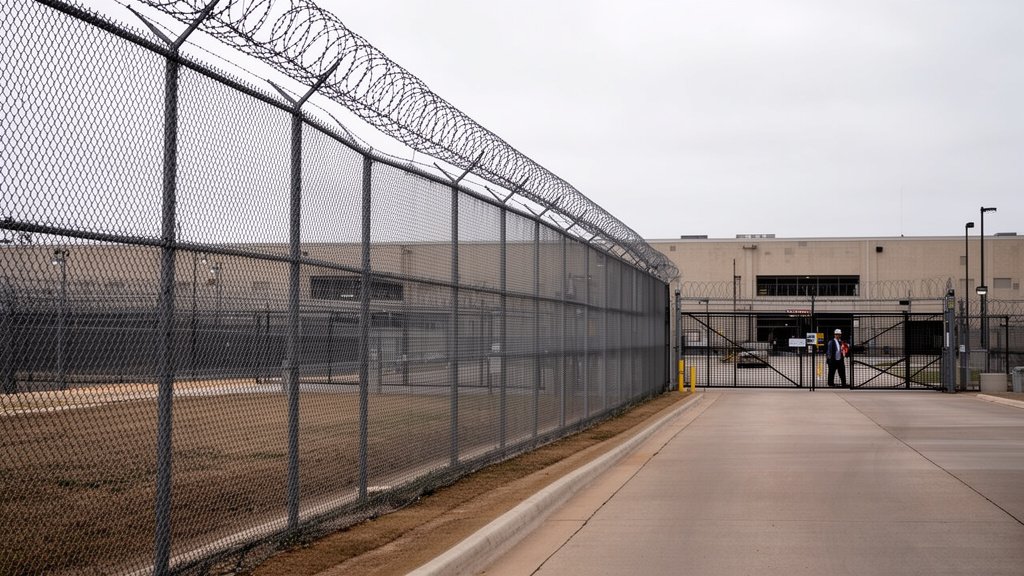


Texas has officially secured a $7.5 billion federal reimbursement, ending a high-stakes funding deadlock regarding state-led border security expenditures incurred during the Biden administration. This significant financial reconciliation marks a pivotal shift in the federal-state relationship concerning border management, providing the State of Texas with long-awaited compensation for costs associated with Operation Lone Star and other related initiatives. The release of these funds resolves a dispute that had simmered for years, pitting state executive authority against federal budgetary discretion.
Key Highlights
- $7.5 Billion Settlement: The Trump administration has awarded Texas a total of $7.5 billion in federal funding to reimburse past border security costs.
- Resolution of Funding Delay: This payment officially concludes a protracted period of fiscal stagnation where Texas operated without the federal assistance it claimed was owed.
- Historical Context: The expenditures were largely accrued during the Biden administration’s tenure, amid ongoing friction over jurisdictional control of the border.
- Fiscal Impact: This influx of capital provides substantial relief to the Texas state budget, which had absorbed billions in operational costs to sustain enforcement efforts.
Financial Reconciliation: Closing the Spending Gap
The authorization of this $7.5 billion transfer represents one of the most substantial federal-to-state financial reconciliations in recent memory regarding border infrastructure. For years, the Texas Department of Public Safety (DPS) and various state agencies mobilized significant resources under Operation Lone Star—a multi-billion-dollar initiative designed to fill perceived gaps in federal enforcement. While the state consistently argued that these expenditures were necessary to protect the sovereignty of Texas, the prior federal administration maintained that border security remained the sole, centralized purview of the U.S. federal government, leading to the withholding of reimbursement claims.
This fiscal logjam created significant pressure on Texas lawmakers, who had to balance the state’s commitment to border security against other domestic priorities like education, infrastructure, and healthcare. With this reimbursement, the state is now in a position to recoup capital that was previously diverted from other programs. Financial analysts suggest that this payment acts not only as a reimbursement but as a significant validation of Texas’ unilateral enforcement approach, potentially setting a precedent for how future border crises might be managed across state lines.
The Operational Cost of State-Led Security
The $7.5 billion figure encompasses a wide array of operational expenditures. This includes the deployment of National Guard troops, the construction of physical barrier infrastructure, surveillance technology, and the administrative costs of processing migrants under state law. Because U.S. Customs and Border Protection (CBP) operations often rely on standardized federal budgeting, the injection of $7.5 billion serves to ‘true up’ the state’s balance sheet against the actualized costs of these intensified operations.
From a logistical standpoint, the transfer requires coordination between the Texas Comptroller of Public Accounts and the U.S. Treasury. The mechanism of this payment effectively recognizes the legitimacy of the state’s claimed border security ‘expenses,’ treating them as essential federal obligations that the state effectively fronted. This technical recognition is arguably as important as the funding itself, as it aligns federal budgetary policy with the current state-led strategy of aggressive, localized enforcement.
Political and Administrative Implications
The timing of this disbursement is not coincidental. By settling this dispute, the current administration is signaling a departure from the adversarial posture previously held toward state-led border interventions. Administrative experts note that this move could facilitate a more collaborative, if complex, era of cooperative federalism. By clearing the fiscal backlog, both the Governor’s office and federal agencies can pivot toward future infrastructure projects and joint patrols rather than dwelling on the reconciliation of past expenditures.
However, critics point out that this infusion of cash might encourage states to engage in more expansive, unilateral security measures, assuming they will eventually be reimbursed by federal coffers. This potential ‘moral hazard’ in budgetary politics could lead to a permanent, decentralized approach to border enforcement, where the financial risks of intervention are mitigated by the expectation of federal settlement.
FAQ: People Also Ask
Q: Why was there a delay in the $7.5 billion reimbursement?
A: The delay stemmed from a fundamental disagreement between the Biden administration and Texas officials regarding the authority of the state to conduct and seek reimbursement for border security operations, which the previous administration categorized as a federal, not state, function.
Q: What is Operation Lone Star?
A: Operation Lone Star is a Texas-led border security mission launched in 2021, involving the Texas Department of Public Safety and the Texas National Guard, aimed at curbing illegal immigration and drug trafficking along the U.S.-Mexico border.
Q: Does this payment cover future border security costs?
A: No, this $7.5 billion specifically covers expenditures already made by the state during the previous period. It does not necessarily constitute a recurring annual budget allocation for future state-led operations.
Q: Who authorized the final payment?
A: The payment was awarded under the current Trump administration, which directed relevant federal agencies to resolve the pending reimbursement claims submitted by Texas.