

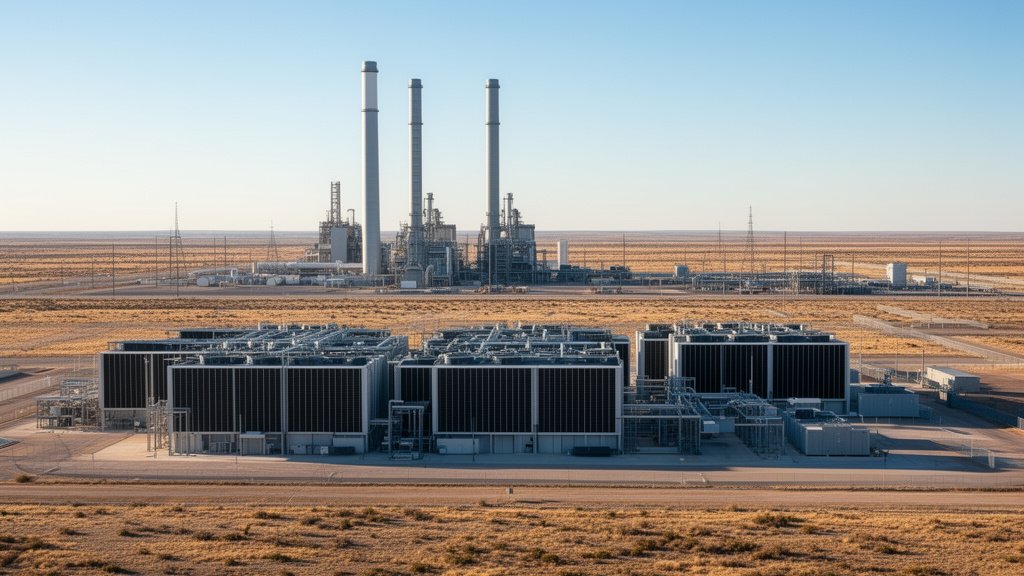
In a decisive move to solidify the operational future of the Texas Critical Data Center project in Odessa, New Era Energy & Digital, Inc. has finalized a long-term power purchase agreement (PPA) with Vistra Corp. This 20-year contract secures a minimum of 200 MW, with a ceiling capacity of 207 MW, sourced directly from a nearby natural gas-fired generation facility. The agreement represents a strategic alignment between high-performance computing infrastructure and stable, dispatchable baseload power, a critical requirement for modern, large-scale data center operations.
Key Highlights
- 20-Year Commitment: A long-term PPA secures energy supply for the Texas Critical Data Center through the next two decades.
- Operational Capacity: The deal guarantees a minimum of 200 MW, scaling up to a peak capacity of 207 MW.
- Strategic Source: Power is sourced from a Vistra-owned natural gas-fired facility, chosen for its reliability and proximity to the Odessa site.
- Regional Growth: The agreement reinforces Odessa’s emerging status as a critical node in Texas’ digital infrastructure.
The Convergence of Data Infrastructure and Baseload Energy
The landscape of the Texas energy market is undergoing a fundamental shift as digital infrastructure demands converge with industrial power generation. The partnership between New Era Energy & Digital and Vistra Corp is a prime example of the “co-location” strategy—placing data centers near existing, reliable energy sources. By utilizing a natural gas-fired facility, the Texas Critical Data Center project circumvents some of the intermittency challenges associated with purely renewable-based grid strategies, opting instead for a consistent, dispatchable baseload that can handle high-density computing loads 24/7.
The Mechanics of the 20-Year PPA
In the utility sector, a 20-year PPA is a major financial instrument that serves as a hedge against volatility. For New Era Energy & Digital, this agreement effectively locks in energy pricing and supply security for two decades, which is essential for attracting institutional investment and underwriting the massive capital expenditures required to build out a modern data center. From Vistra Corp’s perspective, the deal provides a long-term, high-volume off-taker, ensuring predictable revenue streams from their generation assets.
Odessa: The New Nexus of Computational Power
Odessa has historically been defined by its role in the Permian Basin’s oil and gas sector. However, this agreement highlights the city’s pivot toward becoming a hub for digital industry. The proximity of the Texas Critical Data Center to established natural gas infrastructure provides a logistical advantage, reducing transmission losses and potentially lowering connection costs. As Texas continues to experience rapid population and economic growth, the state’s grid—managed by the Electric Reliability Council of Texas (ERCOT)—is increasingly being taxed. Developments that secure their own dedicated generation capacity, such as this one, are viewed as assets that relieve pressure on the wider electrical grid by operating behind or near the meter.
Strategic Economic Implications
This 207 MW procurement is more than just a utility contract; it is a signal of the scale required to compete in the current AI and cloud-computing race. Most smaller colocation facilities operate with significantly lower power profiles. The commitment to a 200+ MW load indicates that the Texas Critical Data Center is designed for high-performance computing (HPC) and advanced data processing, which often requires a more robust energy footprint. This project effectively anchors a significant industrial load in West Texas, signaling long-term economic development and tax base stability for the Odessa region.
FAQ: People Also Ask
Why does a data center need a 20-year PPA?
Data centers are massive capital investments that require long-term operational certainty. A 20-year PPA provides price stability and guarantees that the facility will have the power necessary to operate around the clock, protecting the project from the volatility of wholesale energy markets.
Why was natural gas chosen over renewables for this PPA?
While many data centers strive for green energy, high-density computing facilities require “firm” power—energy that is available 24/7, regardless of weather conditions. Natural gas-fired facilities provide baseload power that is dispatchable and reliable, which is often a requirement for critical data infrastructure that cannot tolerate the intermittency of solar or wind.
What is the significance of the 207 MW capacity?
207 MW is a substantial amount of power, sufficient to support a large-scale enterprise data center or an industrial-sized mining operation. It allows for high-density server racks and complex AI-training workloads that require consistent, high-amperage cooling and processing power.
How does this affect the local Odessa power grid?
By securing power directly from a nearby generation facility, the project minimizes the reliance on long-distance transmission lines. This can reduce congestion on the ERCOT grid and creates a more localized energy ecosystem, which is generally viewed as beneficial for grid stability in the Permian Basin region.