
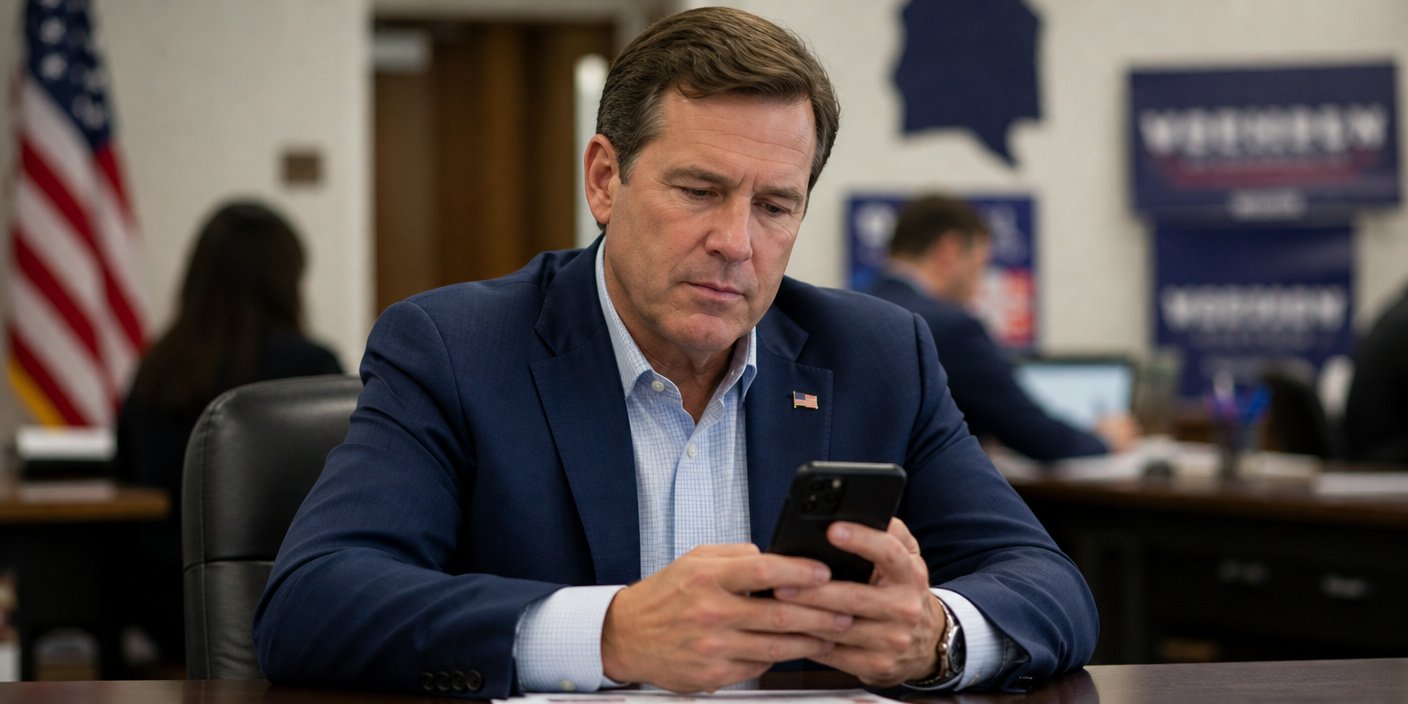
The political fallout from inflammatory social media posts by Tarrant County candidate Bo French has reached a fever pitch, forcing the Texas Republican Party to confront a growing crisis of discipline and messaging. National observers and local party strategists alike are sounding the alarm, suggesting that this incident is not merely an isolated case of poor judgment, but a symptom of a larger, systemic schism within the Texas GOP. As Election Day approaches, the rhetoric used by candidates on digital platforms is proving to be a double-edged sword, threatening to alienate the very suburban and independent voters necessary to maintain the party’s long-standing dominance in the state.
Key Highlights
- Digital Volatility: The controversy centers on Bo French’s social media activity, which critics argue utilizes racially charged and inflammatory language, contradicting the party’s platform of broad appeal.
- The Coattail Effect: Strategists fear a ‘negative coattail effect,’ where controversial rhetoric at the local level could depress turnout or drive undecided voters toward opposition candidates across the entire ballot.
- Institutional Fracture: The incident highlights a widening divide between the party’s populist, ‘base-first’ wing and the institutionalist faction concerned with long-term electability and suburban retention.
- Call for Discipline: Donors and establishment figures are increasingly calling for stricter digital vetting processes, viewing unchecked social media usage as a direct threat to the party’s bottom line.
The Digital Tipping Point in Texas Politics
The incident involving Bo French serves as a case study in the modern era of political campaigning, where the barriers between private sentiment and public policy advocacy have dissolved into a stream of unfiltered social media content. For the Texas Republican Party, which has historically relied on a robust, disciplined coalition, the emergence of such controversy creates a unique tactical dilemma. Candidates are incentivized by algorithmic rewards to post provocative content that engages the base, yet this same strategy risks repelling the moderate electorate that decides tight down-ballot races.
The Anatomy of the Schism
At the heart of the current Texas political crisis is a clash of philosophies. The ‘institutionalists’ within the GOP are concerned that the aggressive, often abrasive tone adopted by figures like French is alienating the rapidly diversifying suburbs of Dallas-Fort Worth. This demographic is notoriously sensitive to rhetoric that they perceive as discriminatory or divisive. Conversely, the populist wing argues that ‘political correctness’ is a weakness and that unfiltered communication is necessary to energize a demoralized voter base.
This friction is not just ideological; it is logistical. When a candidate becomes the focal point of a negative news cycle, resources that should be spent on get-out-the-vote operations are instead diverted to crisis management and damage control. The ‘French incident’ has forced state-level party leadership to decide whether to distance themselves from the candidate—thereby potentially angering the base—or to defend the rhetoric, which risks alienating moderate donors and independent voters.
Down-Ballot Consequences and Voter Behavior
In Texas, the ‘down-ballot’ effect is a critical metric for party success. A controversy at the county level does not remain contained; it permeates the messaging of state representatives, judges, and school board candidates. When a candidate’s inflammatory post goes viral, it often becomes the defining feature of the election cycle for that district.
Political science data suggests that in polarized environments, a single controversial event can swing independent voters by 3% to 5%—a margin that is often the difference between victory and defeat in competitive Texas districts. Local party chairs are now tasked with mitigating the damage, often issuing statements that are either too weak to satisfy critics or too strong to avoid internal backlash. This paralysis is exactly what opposing campaigns leverage to frame the GOP as ‘extreme’ or ‘out of touch.’
The Future of Campaign Accountability
As we look toward future election cycles, the French situation raises a fundamental question: Is the party apparatus capable of enforcing standards, or has social media effectively decentralized political authority?
Historically, the party structure acted as a filter, vetting candidates for electability and temperament. Today, that filter has been largely bypassed by candidates who communicate directly with voters. This democratization of the message is a double-edged sword. While it allows for authentic connection, it also lacks the guardrails that prevent career-ending missteps. The consensus among analysts is that unless there is a move toward more stringent vetting—or at least professional social media management—the Texas GOP may find itself constantly on the defensive, reacting to self-inflicted wounds rather than setting the political agenda.
FAQ: People Also Ask
Q: How do controversial social media posts impact election outcomes in Texas?
A: While base voters often remain loyal, controversial posts frequently alienate independent and suburban voters. Data shows this can shift the margin of victory in tight races, often by several percentage points, which is significant in close contests.
Q: What is the ‘down-ballot’ effect mentioned in the context of Bo French?
A: The ‘down-ballot’ effect refers to how a controversial candidate at the top or mid-level of the ticket affects voters’ perceptions of all other candidates in the same party. A scandal involving one candidate can create a negative brand association that hurts party colleagues running for lower offices.
Q: Is the Texas Republican Party planning to implement stricter social media guidelines?
A: While no official policy changes have been announced, internal pressure from donors and party establishment figures is mounting. Many are calling for professional review processes for candidate social media accounts to avoid similar future controversies.