
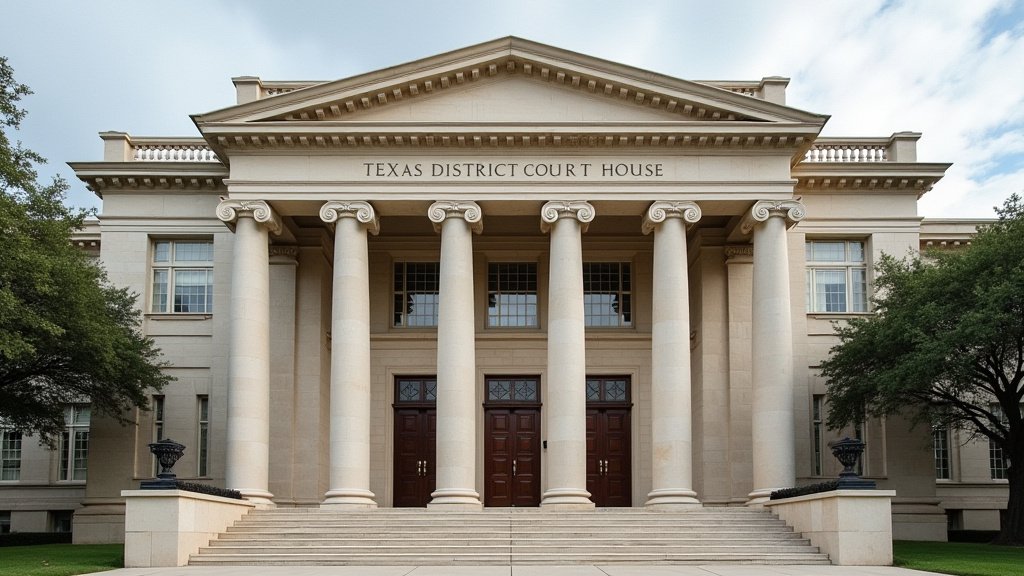
In a significant development for digital regulation and consumer protection, a Texas district court has issued a ruling that effectively establishes TikTok’s liability for deceiving parents about its safety protocols. This decision marks the first time a U.S. state has successfully navigated the complex legal hurdles to hold the platform accountable for the way it presents its safety features to consumers. By affirming that the state’s claims against the platform can proceed, the court has paved the way for a remedies phase, signaling a major turning point in the ongoing battle between state regulators and the short-form video giant.
Key Highlights
- Landmark Liability: The court denied TikTok’s motion to dismiss, establishing that the platform can be held liable under the Texas Deceptive Trade Practices Act (DTPA).
- Deceptive Practices: The ruling centers on evidence that TikTok knowingly misled parents and consumers about the efficacy of its safety tools and the protection of minors from explicit content.
- The Remedies Phase: With the liability phase successfully navigated, the legal proceedings will move into a remedies phase next month, where specific penalties and behavioral injunctions will be debated.
- State vs. Platform: This case serves as a test case for whether state-level consumer protection laws can successfully challenge global social media algorithms despite federal Section 230 protections.
The Legal Shift: Challenging Digital Accountability
The court’s recent decision represents a seismic shift in how legal systems interpret the obligations of tech platforms toward their users. For years, social media companies, including ByteDance-owned TikTok, have relied heavily on the shield provided by Section 230 of the Communications Decency Act to avoid liability for content moderation decisions. However, the Texas lawsuit—spearheaded by Attorney General Ken Paxton—took a different, sharper approach: it did not target the content itself as much as it targeted the misrepresentation of the platform’s protective capabilities.
The Application of the Texas Deceptive Trade Practices Act (DTPA)
At the heart of this victory is the application of the Texas Deceptive Trade Practices Act (DTPA). The state argued that TikTok’s marketing materials—which heavily touted “family safety,” “parental controls,” and a “safe environment” for children—were fundamentally at odds with the reality of the app’s algorithmic design. The court found that these marketing claims constituted specific representations of fact that could be scrutinized in a court of law. By ruling that the lawsuit can proceed, the judge essentially validated the state’s argument that if a company promises a “walled garden” or a safe user experience for minors and fails to provide it, they are engaging in deceptive trade practices.
Impact on Parental Safeguards and Minor Safety
For parents, the ruling provides a legal mechanism to challenge the opaque nature of social media safety tools. The prosecution provided evidence suggesting that TikTok’s “Family Pairing” features and other safety filters were often ineffective or circumventable, yet were marketed as robust safeguards. The court’s recognition of this liability suggests that the judiciary is becoming increasingly skeptical of the “tech-first” defense, which often claims that complex algorithmic systems are beyond the scope of consumer protection laws. The ruling suggests that if a product is marketed to children and parents as safe, the manufacturer must be held to the same standards of honesty as a company selling physical safety equipment.
Secondary Angles: Broader Implications for the Tech Industry
Historical Context: The Evolution of Digital Liability
This ruling should be viewed as part of a long-term trend of increasing state-level activism in the tech space. Historically, federal agencies like the FTC have led the charge on data privacy and consumer rights. However, states like Texas, California, and Florida have increasingly stepped into this vacuum, utilizing state-specific statutes to regulate platforms that federal regulators have struggled to constrain. This shift reflects a frustration with the pace of federal legislation, which has stalled repeatedly despite years of committee hearings and industry lobbying. This Texas ruling could serve as a blueprint for other states looking to bypass federal gridlock by focusing on specific consumer fraud statutes.
Economic Impact: The Cost of Compliance
The transition to the remedies phase next month introduces significant economic uncertainty for TikTok. Beyond potential monetary fines, which could reach staggering totals depending on the scale of the alleged deception, the real long-term cost may be structural. If the court orders a mandatory change in the platform’s algorithm or a total overhaul of its safety “features,” it could disrupt the user experience that drives TikTok’s ad revenue. Forced changes to the algorithm often result in reduced user engagement, which is the primary currency of the modern social media economy. Consequently, investors are closely watching the remedies phase to see if the court mandates a “compliance architecture” that could limit the platform’s ability to maximize time-on-app metrics.
Future Predictions: The Precedent for National Regulation
While this is currently a Texas-specific outcome, its reach is likely to be national in scope. If the state secures a favorable judgment in the remedies phase, it creates a powerful legal precedent that plaintiffs in other jurisdictions will almost certainly cite in their own litigation. Furthermore, it exerts pressure on Congress. Legislators are under increasing pressure to pass comprehensive federal social media privacy and safety laws. A patchwork of successful state-level lawsuits against a platform as large as TikTok makes the argument for a unified, federal regulatory framework more compelling for both the industry—which prefers a single set of rules over fifty different state standards—and for consumer advocates who want uniform protections.
FAQ: People Also Ask
1. Does this ruling shut down TikTok in Texas?
No. This ruling established that the state can pursue its lawsuit regarding deceptive trade practices. It does not impose an immediate ban or suspension of the app, though the upcoming remedies phase could force significant changes to how the app operates or how it markets its safety features.
2. What are the ‘remedies’ the court might impose?
In the upcoming phase, the court will evaluate potential punishments. These could include civil penalties (fines) for each instance of deception, permanent injunctions requiring the company to change its marketing and safety features, and potentially mandated third-party oversight of the platform’s safety protocols.
3. Is this related to the national TikTok ban effort?
It is distinct but related. The national ban efforts are primarily focused on national security, foreign ownership, and data sovereignty. The Texas lawsuit is focused on consumer protection, specifically the safety of minors and the truthfulness of the company’s marketing claims to parents.
4. Will this case go to the Supreme Court?
Given the high stakes for the technology industry, it is highly likely that this case will face extensive appeals. If the state succeeds in securing significant penalties, TikTok will likely exhaust all appellate options, potentially leading to state supreme court intervention and possibly the U.S. Supreme Court, particularly concerning the limits of state laws vs. federal immunity.