Texas is currently the epicenter of a historic collision between the rapid expansion of Artificial Intelligence (AI) infrastructure and the realities of electrical grid capacity. As global data center developers scramble to secure reliable power for massive new facilities, the state is shifting its strategy toward localized, gas-fired power generation. This move, explicitly endorsed by Governor Greg Abbott, is designed not only to fuel the digital economy but to alleviate persistent pressure on the state’s main power grid, the Electric Reliability Council of Texas (ERCOT).
Key Highlights
- Grid Integration: Developers are increasingly opting for “behind-the-meter” gas power plants to provide immediate, reliable electricity to high-load data centers.
- Abbott’s Endorsement: Governor Greg Abbott has publicly supported this strategy, framing it as a critical step to ensure grid reliability amidst industrial growth.
- AI Infrastructure Demand: The exponential growth of AI and machine learning facilities is driving a power load demand that traditional renewable sources struggle to meet alone due to intermittency issues.
- Strategic Shift: The move represents a departure from reliance on external grid transmission, focusing instead on on-site, dispatchable natural gas generation to ensure 24/7 uptime.
The New Energy Nexus: Powering the Digital Future in Texas
The economic landscape of Texas is being fundamentally reshaped by the data center boom. As global tech giants and specialized developers seek to establish footprints in the Lone Star State, they face a singular, immutable hurdle: the availability of immense amounts of electricity. Unlike traditional manufacturing, data centers—particularly those hosting AI training clusters—require a constant, non-negotiable supply of power. When this demand clashes with the volatile nature of some renewable energy sources, the risk of downtime becomes an unacceptable business expense. This has led to the emergence of a new paradigm: the integration of natural gas generation directly into data center development plans.
The Move Toward “Behind-the-Meter” Generation
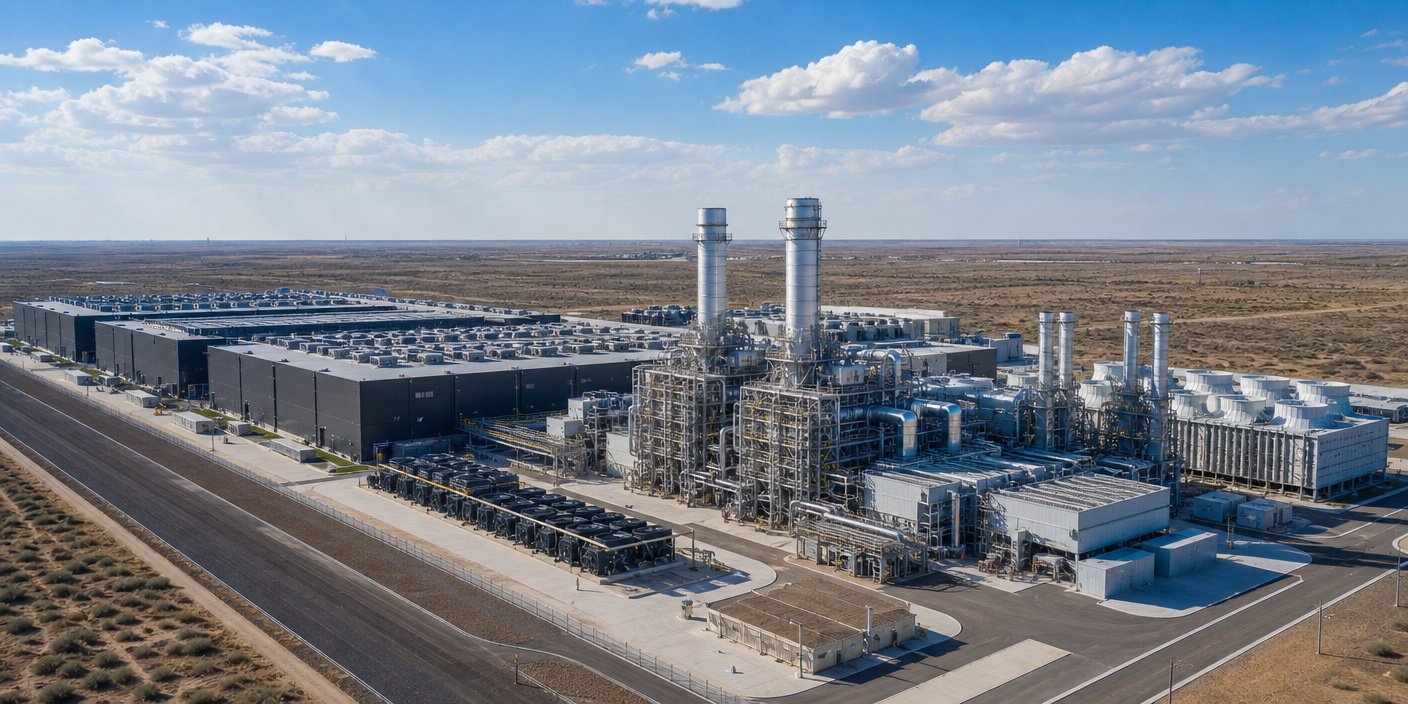
For years, data center developers relied on grid interconnection, pulling power from the ERCOT network. However, as the cumulative load of these facilities threatens to outpace current grid transmission capacity, developers are turning to on-site solutions. By constructing natural gas-fired plants on or immediately adjacent to data center sites, developers can “island” their operations from the main grid’s variability. This “behind-the-meter” approach offers two distinct advantages: it ensures that the facility has a dedicated, uninterrupted power source, and it removes the burden of that massive load from the public electrical grid during peak periods.
Governor Greg Abbott has signaled his strong approval of this trajectory. In public remarks, the Governor has emphasized that the goal is to maintain the state’s competitive edge as a tech hub while simultaneously reinforcing the grid. By encouraging private companies to fund their own power infrastructure, the state effectively gains a decentralized energy network that can operate independently during grid emergencies, thereby enhancing the overall resilience of the Texas energy ecosystem.
The Reliability Gap: Why Natural Gas?
While Texas leads the nation in wind energy production, the intermittent nature of wind and solar remains a critical factor for AI data centers. Large language models and machine learning processes are hypersensitive to latency and power fluctuations. A split-second drop in voltage can result in compute failure, costing millions of dollars in interrupted training sessions. Natural gas provides the high-density, dispatchable “baseload” power that is currently missing from the volatile renewable energy mix. Gas-fired turbines provide the inertia and consistent current necessary to keep servers running 24/7, regardless of weather conditions or time of day.
ERCOT and the Regulatory Landscape
The Electric Reliability Council of Texas (ERCOT) faces the gargantuan task of balancing industrial growth with residential stability. The surge in data center requests has forced ERCOT to fast-track grid study processes to assess the feasibility of these new connections. The shift toward natural gas is, in many ways, a pressure relief valve for ERCOT. By offloading the potential demand of these massive facilities to private, on-site generation, the grid operator can focus on maintaining reliable service for the millions of Texans who require power for heating, cooling, and daily living. This hybrid model—where industrial giants fund their own infrastructure while contributing to the state’s surplus capacity—is viewed by many policymakers as a win-win scenario.
Environmental and Economic Trade-offs
Critics of the plan point to the environmental impact of expanding natural gas infrastructure. However, developers and supporters argue that the energy efficiency of modern, high-tech gas turbines—often equipped with carbon capture or optimized for low-emission output—is a necessary trade-off for the economic engine that data centers represent. The job creation, tax revenue, and the strategic importance of becoming an AI hub are prioritized by state leadership. As Texas continues to attract firms from California and other tech centers, the ability to guarantee power availability is rapidly becoming the state’s most valuable currency.
Looking ahead, the collaboration between private developers and the state is expected to serve as a blueprint for other regions. If successful, Texas could become the model for how a massive, industrializing economy integrates high-load digital infrastructure without compromising the integrity of its existing electrical grid. The reliance on natural gas is not just an energy choice; it is a strategic decision that bridges the gap between today’s infrastructure and the digital demands of tomorrow.
FAQ: People Also Ask
1. Why is Texas specifically choosing natural gas for data centers instead of renewables?
Natural gas provides “dispatchable” baseload power, meaning it can be turned on or off to meet demand and provides a constant, steady current. Renewables like wind and solar are intermittent; they cannot guarantee the 24/7, uninterrupted power necessary for sensitive AI training and high-performance computing tasks.
2. What is “behind-the-meter” power generation?
This refers to power generation infrastructure (like a gas turbine plant) that is located on the same site as the facility consuming the electricity. Because it is connected directly to the user (the data center) rather than transmitting through the main public grid, it is considered “behind-the-meter.”
3. Will these gas projects raise electricity prices for Texas residents?
Ideally, the opposite. By allowing data centers to build their own power plants, these corporations remove their massive energy load from the public grid. This potentially reduces the strain on ERCOT, which can help stabilize prices and reduce the frequency of grid-related alerts or outages for residential customers.
4. How does Governor Abbott’s stance impact the speed of these projects?
Governor Abbott’s support acts as a political green light, signaling to regulators like the Public Utility Commission of Texas that these projects are a priority. This encourages a streamlined permitting process, allowing developers to move from planning to construction at a faster pace than in states where such projects face stricter opposition.