

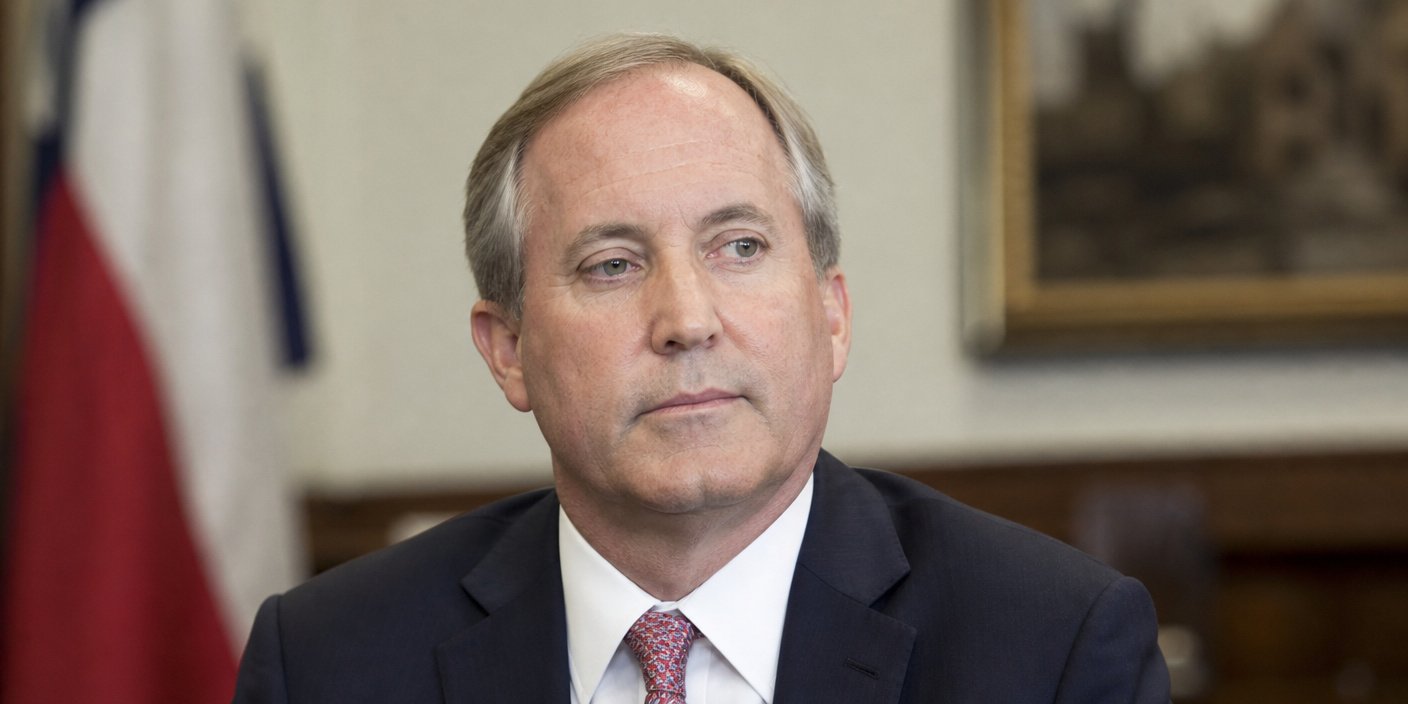
Texas Attorney General Ken Paxton has ignited a firestorm within the conservative movement and beyond after audio emerged of him privately suggesting that federal entitlement programs—specifically Social Security and Medicare—must face significant cuts to address the United States’ mounting national deficit. The comments, captured on a recording, have provided a rare and unfiltered look into the fiscal priorities of a prominent Republican figure, creating immediate friction with his current campaign platform and the broader political reality of election-year optics.
The Anatomy of the Recording
The revelation hinges on a private discussion where Paxton, when pressed on the looming fiscal crisis, characterized the necessary solution with blunt, almost fatalistic language: “We have to suck it up.” The remarks suggest that the Texas Attorney General views the reduction of entitlement spending not merely as a policy option, but as an unavoidable harsh necessity to stave off long-term economic instability. For decades, Social Security and Medicare have been considered the “third rail” of American politics—touching them is widely viewed as electoral suicide. Paxton’s willingness to vocalize this sentiment, even in private, underscores a growing divide between grassroots fiscal hawkishness and the practicalities of a general election.
Fiscal Realities vs. Entitlement Dependency
To understand the gravity of Paxton’s position, one must analyze the current state of the United States federal budget. As of 2024, the national debt has surpassed $34 trillion, a figure that continues to climb at an accelerated rate. Mandatory spending, which encompasses Social Security, Medicare, and Medicaid, constitutes the largest share of the federal budget.
Economists have long argued that without structural reform—either through increased taxation, decreased spending, or significant economic growth—the trajectory of these programs is unsustainable over the next three decades. When Paxton suggests that the nation needs to “suck it up,” he is aligning himself with a specific, albeit controversial, economic school of thought: that the preservation of the nation’s creditworthiness and the long-term viability of the dollar take precedence over the maintenance of the current entitlement status quo. Critics, however, argue that such an approach disproportionately harms the elderly and those living on fixed incomes, effectively balancing the budget on the backs of the most vulnerable citizens.
The Political Calculus of the Texas Senate Race
This disclosure is particularly volatile given the current political climate in Texas. As Paxton navigates a high-stakes campaign for the U.S. Senate, his stance on federal benefit programs could serve as a wedge issue. In a state where older voters represent a substantial and active voting bloc, any rhetoric suggesting the dismantling of Social Security is fraught with peril.
Political strategists observe that while fiscal conservatism remains a potent rallying cry for the Republican base, it often clashes with the reality of older, reliable voters who rely on these programs. By vocalizing a desire to cut these benefits, Paxton risks alienating key demographics while simultaneously providing his opponents with a potent attack vector. The Democratic opposition is already pivoting to characterize Paxton’s comments as an out-of-touch assault on the foundational promises made to American seniors, contrasting his private stance with the public messaging typically deployed by the GOP.
Historical Context: The Third Rail Revisited
Historical precedents suggest that politicians who openly advocate for entitlement reform face immediate and severe consequences. In 1983, the Greenspan Commission successfully reached a bipartisan compromise to stabilize Social Security, but only after intense political theater. Since then, successive administrations have largely avoided structural changes, opting for incremental adjustments rather than the wholesale cuts that Paxton’s comments imply.
Paxton’s position reflects a generational shift in fiscal ideology. Newer, more libertarian-leaning factions of the Republican party argue that the post-war consensus on the welfare state is bankrupting the country. However, the disconnect remains: the public generally favors deficit reduction in the abstract but strongly opposes cuts to the programs they perceive as earned benefits. Whether Paxton’s private admission will be dismissed as a one-off remark or scrutinized as a blueprint for his legislative agenda remains the central question of his campaign narrative.
The Path Forward: Defining the Debate
As the election cycle intensifies, the audio recording of Ken Paxton will undoubtedly become a focal point of debate. It forces voters to confront a difficult question: Is the current trajectory of the federal deficit an existential threat that requires immediate, painful intervention, or are entitlement programs inviolable contracts that cannot be renegotiated?
Paxton’s blunt assessment forces this conversation into the open. Whether it provides a rallying cry for fiscal hawks or a damning liability in the face of the general electorate will determine not only his success in the Senate race but also the degree to which “entitlement reform” remains a taboo subject in American politics.