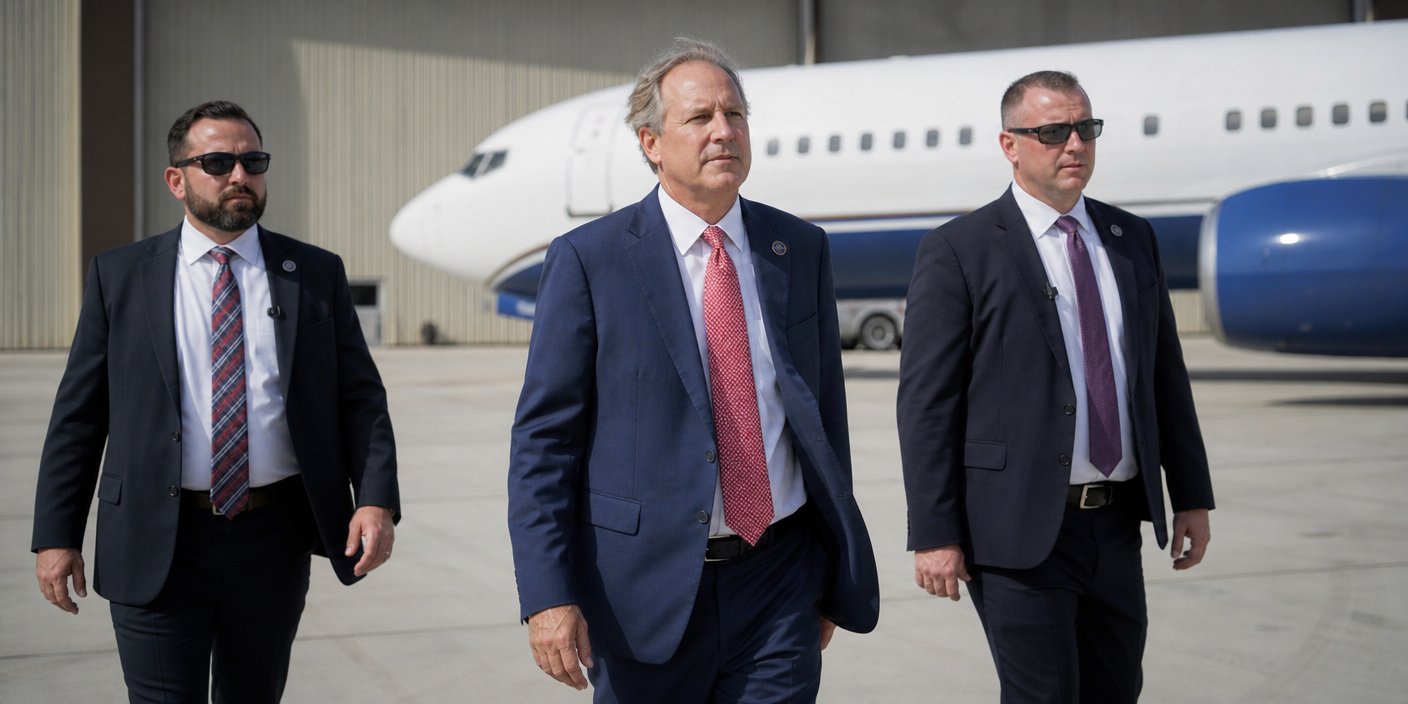
The $3.3 Million Question: Scrutinizing Paxton’s Travel Logs
The recent investigative collaboration between The Texas Tribune and ProPublica has ignited a firestorm of debate regarding the management of public funds within the Texas Attorney General’s office. At the center of the controversy is a staggering figure: nearly 1,000 state-funded security trips taken by Attorney General Ken Paxton since 2015. With the total cost to taxpayers reaching approximately $3.3 million, the data suggests a systemic pattern where the lines between necessary state protection and personal convenience appear increasingly blurred. While the Texas Department of Public Safety (DPS) is mandated to provide security for constitutional officers, the revelation that only one in six of these specific trips carried a verified business purpose raises significant questions about transparency, departmental oversight, and the ethical use of state resources.
The Disconnect Between Security and State Business
The primary point of contention in this investigation is the discrepancy between the volume of travel and the justification for such movement. According to the analysis, the security details—comprised of DPS agents—have consistently traveled with Paxton on trips that frequently align with personal vacation schedules, political fundraising events, and private family excursions. For many state officials, security is a non-negotiable requirement due to the nature of their office; however, the lack of documentation connecting these specific trips to official state business creates a transparency gap.
When taxpayers foot the bill for security, they are not only paying for the protection itself but also for the associated travel expenses of the DPS officers, including flights, hotels, and per diems. If a significant majority of these trips are categorized as having no clear business nexus, it challenges the protocol that dictates how and when taxpayers should underwrite an official’s protection. The investigation highlights that for a large portion of the 1,000 trips, there is a total absence of specific business itineraries, leading critics to argue that the protective detail is being utilized as a de facto personal concierge service rather than a necessary security apparatus.
Analyzing the Financial Burden on Texas Taxpayers
Beyond the ethical concerns, the financial implications are profound. $3.3 million is a substantial allocation of state funds. To contextualize this amount, one must consider that these costs involve more than just the Attorney General’s travel; they encompass the entire protective detail’s operational budget. This includes overtime pay for agents, specialized logistics, and the continuous administrative support required to maintain a 24/7 security posture for high-level officials.
The Role of the Texas Department of Public Safety (DPS)
The Texas Department of Public Safety is tasked with balancing the mandate to protect the Attorney General with the responsible stewardship of public funds. The investigation suggests that the DPS has maintained a permissive stance, effectively granting the Attorney General wide latitude in how and where his protective detail is deployed. This “hands-off” approach has left the department vulnerable to criticism that it lacks the internal controls necessary to prevent the potential misuse of state assets. In many government agencies, there is a rigorous vetting process for travel expenses; however, the protective nature of these assignments seems to have created a loophole where questioning the destination or the necessity of the trip becomes difficult for the agents on the ground, who are ultimately subordinate to the official they are protecting.
Accountability in the Public Sphere
The findings have prompted calls for a legislative review of how protective services are billed and approved. In a political climate where trust in government institutions is paramount, the appearance of utilizing state resources for non-business purposes can be as damaging as the actual financial cost. If the “1 in 6” ratio holds up under further scrutiny, it may force the Texas Legislature to define the parameters of “security travel” more strictly, perhaps requiring detailed, auditable records for every trip that involves state-funded personnel. Until such guardrails are established, the debate over Attorney General Ken Paxton’s travel history will likely serve as a case study in the tension between individual security needs and the public’s right to fiscal transparency.
FAQ: People Also Ask
Q: Why does the Attorney General of Texas have a state-funded security detail?
A: Constitutional officers in Texas, including the Attorney General, are provided with protective details by the Texas Department of Public Safety (DPS) due to the high-profile nature of their office and potential security risks inherent in their public duties.
Q: Does the $3.3 million figure include only the Attorney General’s travel expenses?
A: No. The $3.3 million represents the total taxpayer cost, which includes the travel, lodging, overtime pay, and operational expenses for the DPS officers assigned to the security detail throughout the 1,000 trips.
Q: What has been the response from the Texas Department of Public Safety regarding these findings?
A: The DPS has generally maintained that their primary mission is the safety of the protected official and that they do not dictate the official’s schedule. They have faced criticism for the lack of internal auditing regarding the business necessity of the travel they secure.
Q: What is the significance of the ‘1 in 6’ statistic?
A: This statistic highlights that for every six trips taken by the Attorney General with security, only one trip could be documented as having a clear, official state business purpose. This disparity is the core of the controversy regarding the potential misuse of taxpayer funds.