

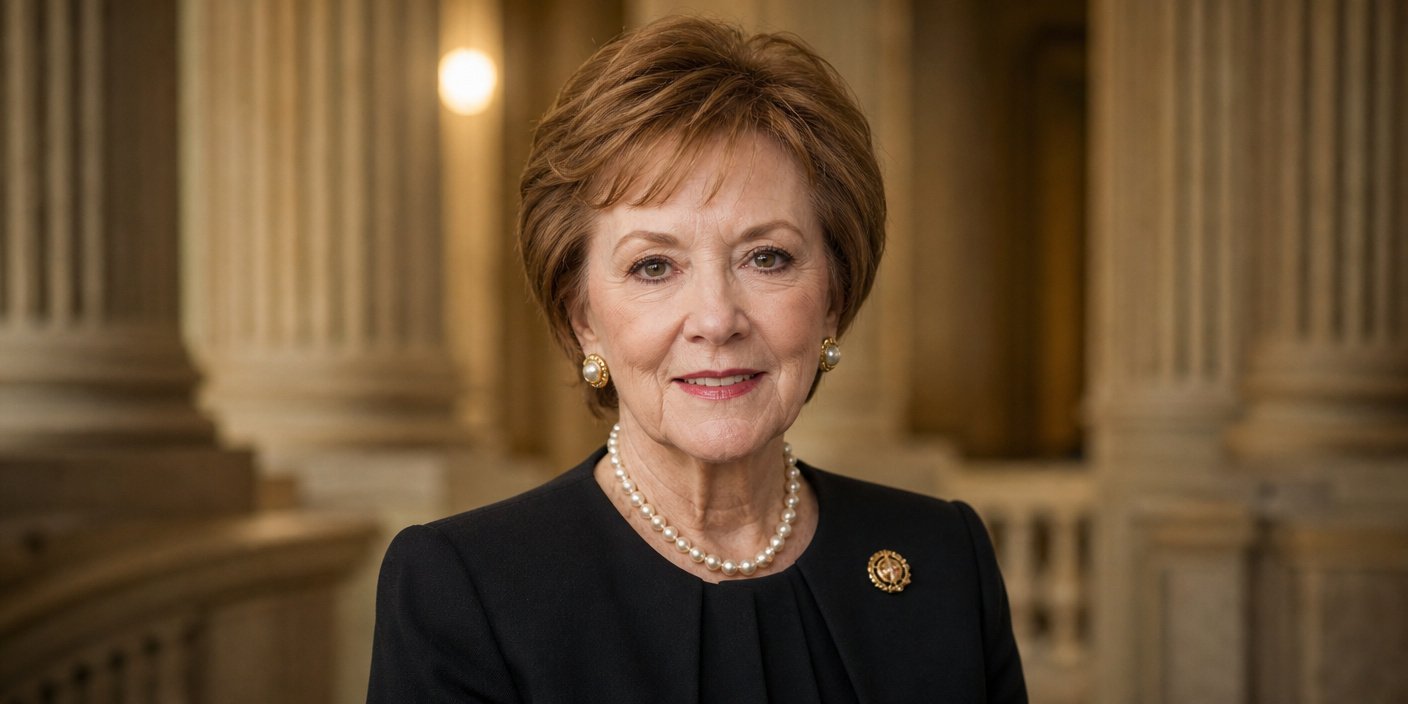
The political landscape of Texas and Washington, D.C. mourns the loss of Kay Granger, a pioneering figure who shattered glass ceilings and wielded significant influence over the federal budget. Granger, who served in the U.S. House of Representatives for 28 years, passed away at the age of 83. Her death marks the end of a long and impactful career that fundamentally changed the face of Texas representation in the nation’s capital.
Key Highlights
- Elected in 1996, Kay Granger became the first Republican woman in Texas history to serve in the U.S. House of Representatives.
- Prior to her congressional career, she served as the first female mayor of Fort Worth, Texas, from 1991 to 1995.
- She rose to the pinnacle of legislative power, serving as the Chair of the influential House Appropriations Committee during the 118th Congress.
- A fierce advocate for national security and aviation, she was instrumental in securing federal support for the Fort Worth defense industry, particularly the F-35 program.
- Granger announced her retirement in 2024, closing a nearly three-decade tenure that navigated the shifting political demographics of North Texas.
A Legacy Forged in Texas and Washington
Kay Granger’s journey into the halls of Congress began in the boardrooms and town halls of Fort Worth, where she refined her ability to manage complex municipal operations. Her transition from local governance to federal policymaking was not merely a political shift; it was a watershed moment for the Republican Party in Texas. When she won her seat in the 12th Congressional District in 1996, she broke a long-standing barrier, proving that a female conservative from North Texas could command authority in a male-dominated legislative environment.
The Rise of a Legislative Powerhouse
Granger did not simply occupy a seat; she climbed the ranks of the House Appropriations Committee, eventually reaching the role of Chair. This position, often described as possessing the “power of the purse,” allowed her to exert significant influence over government spending. Her tenure was characterized by a pragmatic approach to governance, focusing on federal appropriations that bolstered infrastructure, healthcare, and most notably, the defense sector. She understood that her district in North Texas was the engine room of American aerospace manufacturing, and she used her committee leverage to ensure that projects like the Joint Strike Fighter remained a priority for the Department of Defense.
Navigating the Shifting Political Sands
Throughout her 28 years in office, Granger witnessed the dramatic transformation of her home turf. The 12th Congressional District, once a reliably conservative stronghold, saw increasing suburbanization and demographic diversification over the decades. Granger managed to maintain her support base by balancing traditional conservative values with the growing needs of a modernized, urbanizing Fort Worth. Her ability to pivot between local constituent services and high-stakes federal budgeting was a hallmark of her career. She bridged the gap between the “old guard” of Texas politics and the demands of the 21st century.
Beyond the Gavel: Institutional Impact
Beyond her legislative victories, Granger was known for her role in mentoring junior members and prioritizing institutional stability. In an era often defined by hyper-partisanship, she frequently sought to maintain the functionality of the Appropriations Committee, viewing it as the backbone of congressional responsibility. Colleagues on both sides of the aisle often noted her work ethic and her commitment to the deliberative process. Her passing creates a void not just in the Texas delegation, but in the institutional memory of the House of Representatives, where she was one of the longest-serving and most battle-tested members.
FAQ: People Also Ask
Q: What was Kay Granger’s primary legislative focus?
A: Her primary focus was the House Appropriations Committee. She spent years securing funding for national defense, transportation infrastructure, and medical research, with a specific emphasis on the aerospace and defense industry in Texas.
Q: Why was her election in 1996 considered historic?
A: It was historic because she was the first Republican woman from Texas elected to serve in the U.S. House of Representatives, representing a significant breakthrough for women in the state’s conservative political leadership.
Q: How did she influence the Fort Worth area?
A: Beyond her time as Mayor of Fort Worth, she used her position on the Appropriations Committee to bring billions in federal funding to North Texas, supporting highway projects, hospital expansions, and critical military-industrial programs like the F-35.
Q: When did she leave office?
A: Kay Granger retired from Congress in 2024, choosing not to seek re-election after serving 14 consecutive terms in the U.S. House.