Democratic Senate candidate James Talarico has announced a significant $25 million campaign pledge aimed squarely at increasing outreach and turnout among Black voters in Texas. This strategic pivot comes in the wake of mounting criticism from party insiders and local community leaders who have argued that the Talarico campaign had previously failed to adequately engage this critical demographic. By dedicating a substantial portion of his war chest to this initiative, Talarico is attempting to bridge the engagement gap in one of the most consequential Senate races in the country.
The Genesis of the $25 Million Pledge
The announcement of the $25 million fund marks a definitive shift in Talarico’s operational methodology. For months, the campaign had faced internal scrutiny regarding its allocation of resources, particularly concerning the underrepresentation of Black voter mobilization efforts in major metropolitan areas such as Houston, Dallas, and San Antonio. The funds are earmarked for a multi-pronged approach: strengthening local precinct organizations, launching localized media buys in traditionally overlooked radio and digital spaces, and hiring experienced community organizers who have established trust within these specific voter blocks. Campaign officials have stated that this financial injection is not merely a symbolic gesture but a necessary operational expansion designed to secure the margins of victory required in a statewide Texas race.
Addressing the ‘Engagement Gap’
Criticism of the Talarico campaign had intensified during the primary season, with community organizers and Democratic strategists pointing to lower-than-anticipated engagement levels in historically reliable Democratic districts. Critics argued that the campaign’s reliance on broad, digital-first strategies neglected the personal, high-touch interaction required to effectively mobilize Black voters in Texas. By pivoting to a $25 million pledge specifically targeting these voters, Talarico is acknowledging the validity of these concerns. This strategy is designed to move beyond generic messaging, focusing instead on hyper-local issues that resonate deeply with the Black community in Texas, including economic equity, education funding, and voting rights protection. The shift suggests a realization that, in a state where statewide races are often decided by razor-thin margins, failing to mobilize the base is not merely a tactical error—it is a fatal one.
Strategic Implementation and Geographic Focus
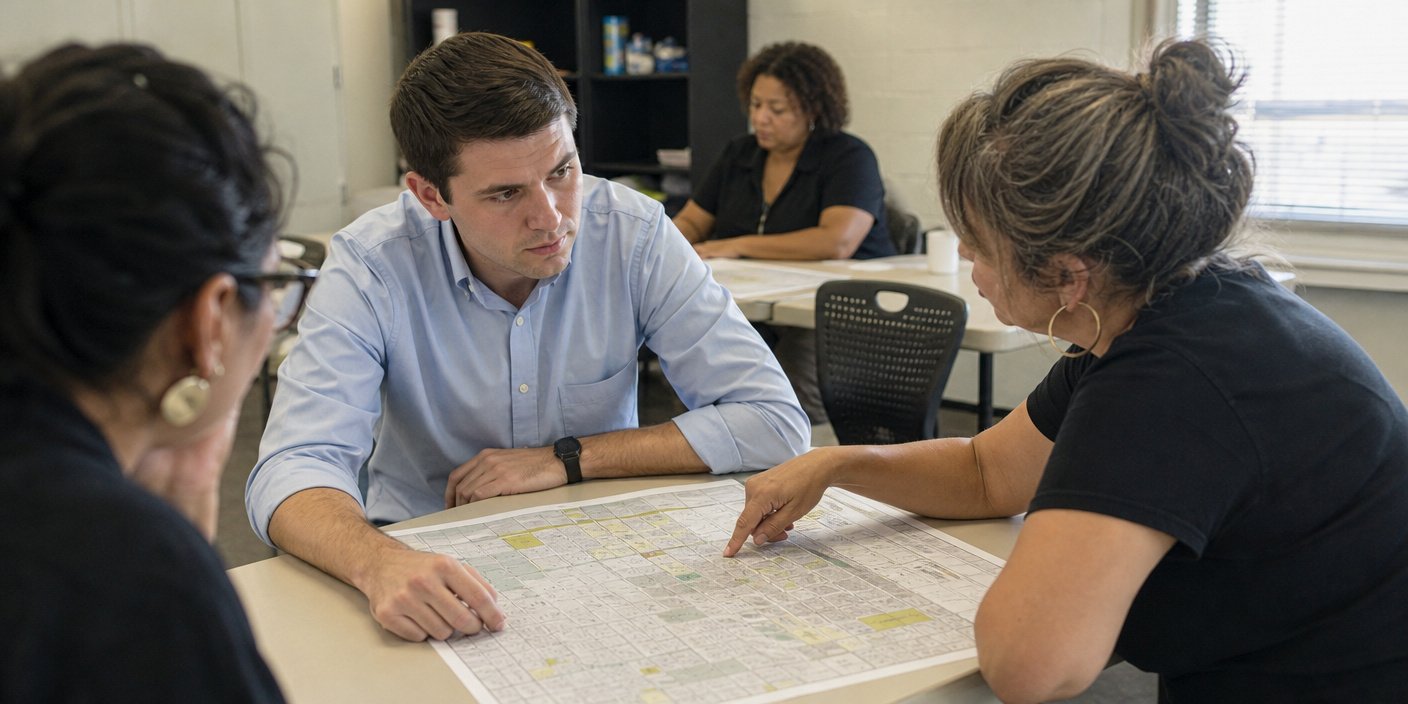
The implementation of this $25 million program will be centralized in Texas’s urban corridors, where the density of Black voters is highest. The campaign’s strategy document reveals that a significant percentage of these funds will be diverted to direct voter contact—knocking on doors, hosting town halls, and funding community-based organizations that are already operating on the ground. Unlike previous campaign spending, which often prioritized television advertising, this budget is structured around ‘relationship-based organizing.’ The campaign aims to deploy localized, trusted messengers to articulate Talarico’s platform. This is a deliberate attempt to counteract apathy and build sustainable enthusiasm, ensuring that when election day arrives, voters feel a personal stake in the outcome.
Secondary Angle: The Historical Context of Texas Voter Turnout
Historically, Texas has struggled with lower-than-average voter turnout, despite having a massive, diverse population. For the Democratic Party, the ‘Texas equation’ has always been simple but difficult to solve: maximize turnout among minority voters in urban centers while minimizing losses in rural areas. Historically, Democratic candidates have struggled to consistently achieve the turnout numbers seen in neighboring Southern states. This initiative by Talarico represents a historical attempt to break that pattern by institutionalizing outreach rather than treating it as a secondary, late-cycle concern. If successful, this could serve as a case study for future Democratic campaigns in the state, potentially rewriting the playbook on how to campaign in a diversifying, yet Republican-dominated, political environment.
Secondary Angle: Economic Impact on Campaign Infrastructure
A $25 million pledge of this nature ripples through the political ecosystem. It signifies a massive infusion of capital into regional vendors, local consulting firms, and neighborhood-level businesses that handle canvassing and event management. By focusing on local hiring rather than relying solely on high-cost national political consultants, the Talarico campaign is stimulating a localized economic feedback loop. This not only builds goodwill within the community but also creates a temporary, yet robust, professional infrastructure that strengthens the long-term capacity of Texas-based political organizations to mobilize voters for future election cycles.
Secondary Angle: Future Implications for Southern Races
Looking forward, the success or failure of this $25 million investment will have cascading effects on Democratic strategy across the South. If Talarico demonstrates that a dedicated, high-capital investment in Black voter engagement can move the needle in a statewide Texas race, it could fundamentally alter the DNC’s national allocation of resources. Should the gamble prove successful, it will likely pressure future candidates in states like Georgia, North Carolina, and Florida to prioritize similar, bottom-up mobilization strategies over traditional top-down media spending. The political stakes are high; Talarico is not just campaigning for a seat, he is auditioning a new model of political engagement for the modern, diverse American South.
FAQ: People Also Ask
What does the $25 million pledge cover?
The pledge is allocated for direct voter contact, hiring local community organizers, funding localized media campaigns, and supporting grassroots organizations that specialize in mobilization within the Black community across Texas.
Why was there criticism of the campaign prior to this announcement?
Critics argued the campaign had not invested enough in traditional, person-to-person engagement strategies and had relied too heavily on generic digital advertising, which some community leaders felt was insufficient for the necessary turnout levels.
Which demographic is the primary focus of this initiative?
The $25 million investment is specifically targeted at Black voters in Texas, aiming to address engagement gaps in major urban centers and historically Democratic-leaning districts.
Could this change the outcome of the race?
Campaign analysts suggest that in a tight race, even small percentage shifts in turnout within the Black voting bloc can significantly impact the statewide results in Texas, potentially shifting the margin of victory.
Is this the first time a candidate has made such a pledge in Texas?
While candidates frequently discuss outreach, a specific, multi-million dollar earmark dedicated exclusively to Black voter mobilization of this scale represents a significant escalation in campaign resources compared to standard previous strategies.