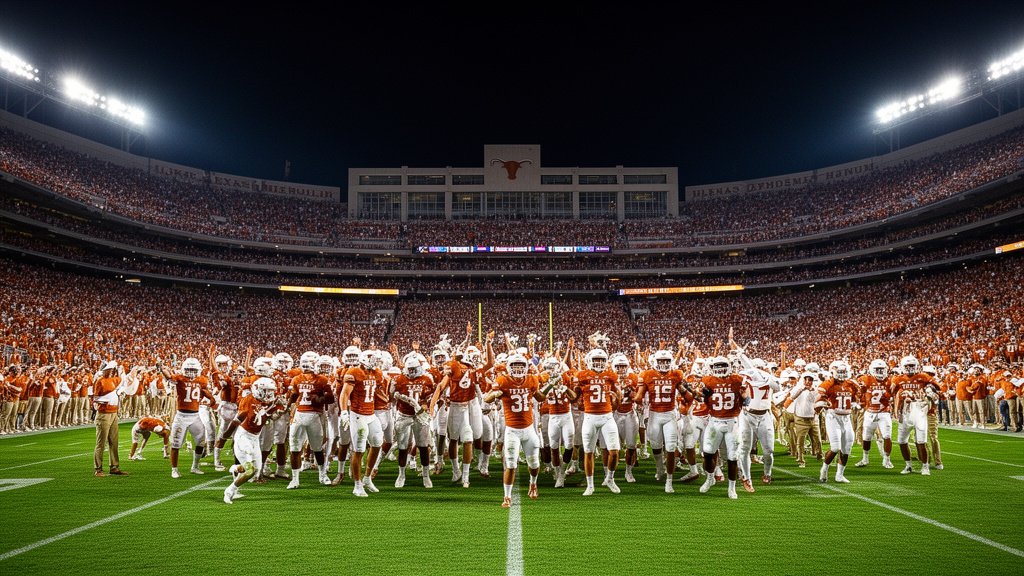


The University of Texas at Austin is currently navigating a period of introspection following a surge of online discourse concerning the racial demographics of the student section at Darrell K Royal-Texas Memorial Stadium (DKR). The conversation, which materialized in the wake of recent college football activity, has ignited a wider debate regarding the intersection of collegiate sports culture, social media scrutiny, and the evolving makeup of the university’s student body. While digital commentary has been robust and polarized, the discourse highlights a growing tension between traditional game-day culture and the contemporary values of an increasingly diverse public research institution.
Key Highlights
- Catalyst of Discourse: Recent college football games triggered widespread social media commentary focused on the perceived racial homogeneity within the DKR student section.
- Institutional Tension: The conversation underscores a friction point between the historic culture of Texas Longhorns fandom and the rapidly diversifying demographic profile of the UT Austin student population.
- Digital vs. Physical: This incident exemplifies how social media algorithms amplify specific observations, forcing universities to address long-standing cultural norms under the lens of modern DEI (Diversity, Equity, and Inclusion) standards.
The Digital Arena Meets DKR Stadium
The recent attention directed toward the student section at DKR Stadium serves as a microcosm for a larger phenomenon in American collegiate athletics: the migration of campus-specific tensions into the national digital town square. When social media users began highlighting the racial makeup of the student seating area, the critique moved quickly from casual observation to a heated public debate regarding representation in collegiate extracurriculars. For the University of Texas, a flagship institution with a storied tradition of athletic excellence, this discourse forces an examination of whether the game-day environment accurately reflects the diverse academic community it serves.
Analyzing the Online Narrative
The comments circulating online often rely on anecdotal evidence—snap-shot images or short video clips taken from television broadcasts—to make broader claims about the inclusivity of Texas Athletics. These digital narratives, regardless of their statistical accuracy or representational bias, carry significant weight in the court of public opinion. By the time a topic trends, the institution is often forced to respond to an aggregated perception. Experts in media studies suggest that the issue isn’t merely about the people in the stadium, but about the ‘visual signaling’ that athletic departments project. When the visual culture of a high-profile stadium section appears discordant with the university’s stated values of diversity, students and alumni inevitably demand accountability.
Demographic Shifts and Athletic Heritage
Texas, both as a state and an educational system, is in a state of rapid demographic transformation. The University of Texas at Austin has invested heavily in recruitment efforts aimed at diversifying its student body, ensuring that the campus population more closely mirrors the state’s changing demographic realities. However, the student section in a stadium of 100,000-plus capacity operates on a different logic. Student tickets are often tied to seniority, legacy, or specific organizational affiliations that can perpetuate historic demographic trends. The current friction arises because the administrative efforts to diversify the classroom have not always synchronized with the established social hierarchies of the stadium stands. This discrepancy creates a ‘visibility gap’ that social media is now effectively policing.
The Path Forward: Administrative Responsibility
How does a major public university respond to digital scrutiny without compromising the spirit of its athletic traditions? The answer likely lies in intentional community building. Athletic departments across the country are observing the Texas discourse as a case study. Strategies under consideration often include diversifying the marketing of student ticket blocks, auditing the distribution processes for student organizations, and fostering a game-day culture that explicitly welcomes students from all backgrounds. The goal is to move the student section from a space of exclusionary legacy to one of inclusive community, where the ‘Longhorn experience’ is accessible to the entire student body, not just those with historic ties to the university’s athletic culture.
Furthermore, the role of leadership in mitigating these tensions cannot be overstated. By acknowledging the validity of the student concerns while actively working to broaden engagement, the administration can pivot from a defensive stance to a proactive one. This involves not only changing the optics but changing the logistical pipelines that determine who gets the front-row seats and why. Addressing the ‘makeup’ of the section is effectively an exercise in administrative transparency.
FAQ: People Also Ask
Q: Has the University of Texas officially responded to the social media comments?
A: While UT Austin often emphasizes its broad commitments to diversity and inclusion, institutions typically treat specific social media trends as evolving discourse rather than singular crises, though the athletic department constantly reviews student engagement strategies.
Q: Is the racial makeup of DKR Stadium actually changing?
A: Demographics in higher education are shifting nationally. While stadium seating remains influenced by legacy structures, universities are increasingly aware that their public-facing student sections are subject to the same diversity standards as the rest of the campus.
Q: Why are stadiums becoming flashpoints for social discourse?
A: Stadiums are the most visible symbols of a university’s identity. When public perception of a university’s values clashes with the imagery of its most popular events, social media users often use the stadium as a proxy for broader discussions about systemic representation.
Q: What is the significance of the student section culture in this debate?
A: Student sections are historically rooted in organizations, Greek life, and seniority-based seating. Critics argue these ‘gatekeeping’ mechanisms create barriers to entry that disproportionately favor certain demographic groups, leading to the visual homogeneity that sparked this current conversation.