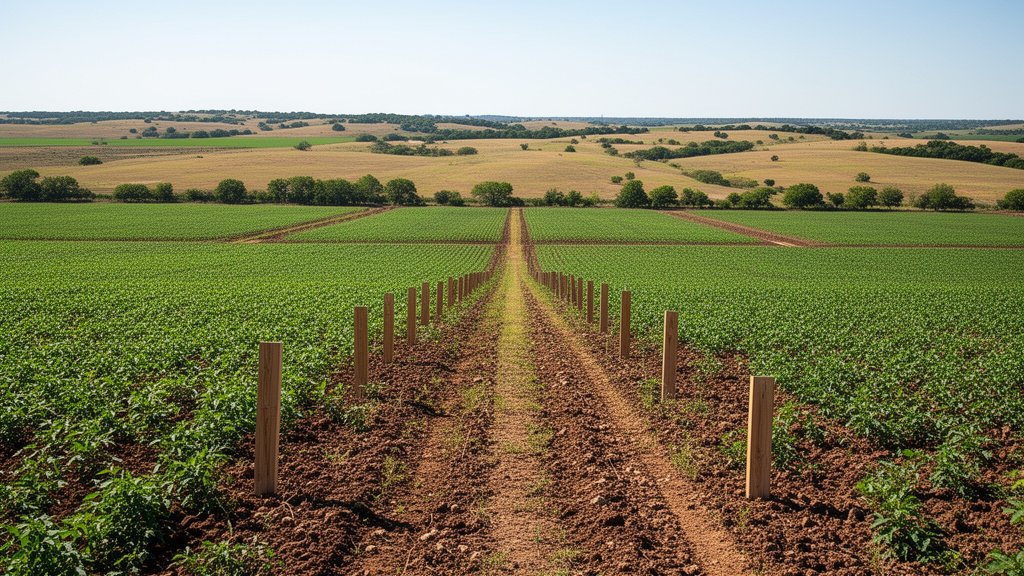
A century-old family farm in the heart of Atascosa County, renowned for its long-standing role as a local supplier to the H-E-B grocery empire, has become the unexpected epicenter of a heated debate over Texas infrastructure. The farm, which has weathered decades of droughts, market fluctuations, and regional development, now faces an unprecedented existential threat: the proposed $1.4 billion Howard-Solstice Transmission Line. This massive energy infrastructure project, aimed at bolstering the state’s grid resilience, is currently on a collision course with multi-generational land rights, illuminating the widening gap between the necessary modernization of the Texas energy sector and the preservation of its rural agricultural backbone.
The Scope of the Howard-Solstice Project
The Howard-Solstice Transmission Line is a major capital investment spearheaded by AEP Texas, designed to fundamentally upgrade power transmission capabilities across the region. At a projected cost of $1.4 billion, the project is characterized by energy planners as a critical intervention to prevent the types of grid failures that have plagued the state in recent years. By establishing high-voltage corridors, the project aims to connect power generation sources more efficiently to the growing demand centers in the San Antonio and South Texas regions. For the utility companies and regulators at the Public Utility Commission of Texas (PUC), the project is a utilitarian necessity, prioritized for the greater good of statewide grid reliability. However, for landowners in the proposed path, including the family operating the threatened farm, the project represents a permanent encroachment on heritage property. The technical scope of the project requires wide right-of-way clearances, often necessitating the construction of towering steel lattice structures that can bisect pastures, restrict crop irrigation equipment, and permanently alter the landscape of agricultural operations that have functioned uninterrupted for over a century.
Agricultural Heritage vs. Infrastructure Necessity
The farm in question is more than just a plot of land; it is a tangible piece of Texas agricultural history and a vital cog in the supply chain for H-E-B, one of the most beloved grocery chains in the United States. For years, this farm has supplied high-quality produce to local distribution centers, fulfilling the company’s commitment to sourcing regional goods. The integration of this specific farm into the H-E-B supply network underscores the farm’s economic efficiency and quality control, factors that have allowed it to survive where others have folded.
When high-voltage transmission lines traverse active agricultural land, the disruptions are not merely visual. Farmers cite significant concerns regarding the physical impedance of large farm machinery, the potential for soil compaction during construction, and the long-term impact on property valuation. Furthermore, the aesthetic and cultural value of a century-old property is effectively erased when the horizon is redefined by industrial infrastructure. The tension here is a classic case of “eminent domain”—the state’s power to seize private land for public use—clashing with the private property rights that are deeply embedded in Texas culture.
Economic and Cultural Ripples
The implications of the Howard-Solstice project extend far beyond the property lines of the affected farm. As Texas continues its rapid urbanization, the demand for power is skyrocketing. Yet, this demand creates a paradox: to power the cities, the state must expand into the countryside. This encroachment threatens the very supply chains that feed those same urban centers. If the farm’s operations are compromised, the ripple effect reaches the consumers who rely on locally sourced produce.
From a macroeconomic perspective, the project highlights the inefficiency of current land-use planning. Critics argue that utility planners often favor the path of least resistance (and cost) for the utility company, rather than the path of least resistance for the community. The legal battle that is beginning to unfold serves as a bellwether for other rural areas across Texas. As the Public Utility Commission of Texas continues to weigh the necessity of grid expansion, the Howard-Solstice case provides a test for how much weight state regulators will give to heritage and local supply chain security against the cold, hard logic of infrastructure advancement.
Secondary Angles: The Future of Land and Power
1. The Technology Gap: While the lines themselves represent 20th-century technology—massive steel towers and overhead wires—there is a growing call from advocacy groups for the implementation of underground transmission technology or more modern, lower-profile grid solutions. This article explores whether the $1.4 billion budget could have accommodated less intrusive technical designs.
2. The Supply Chain Fragility: The connection to H-E-B is not incidental. It serves as a case study for the fragility of regional food systems. As major retailers emphasize “local” and “fresh,” their ability to do so depends heavily on the resilience of farms that are increasingly under pressure from industrial expansion, housing sprawl, and now, massive energy projects.
3. Legislative Precedent: This dispute is fueling new discussions in the Texas legislature regarding eminent domain reform. The outcome of the Howard-Solstice litigation could set a legal precedent for how much compensation and consideration utility providers must offer to landowners whose primary livelihood is tied to the integrity of the soil they own.
As the project moves through its regulatory phases, the family at the center of this dispute remains steadfast. They are not merely fighting for a property boundary; they are fighting for the continuity of a century-old legacy. Whether the grid will ultimately pave over that history remains the defining question of the Howard-Solstice era.
FAQ: People Also Ask
Q: What is the primary purpose of the Howard-Solstice Transmission Line?
A: The project is a $1.4 billion infrastructure initiative by AEP Texas designed to improve grid reliability and power transmission capacity in South Texas, helping to meet rising demand in the San Antonio area.
Q: Why is the farm’s connection to H-E-B significant in this dispute?
A: The farm is a long-standing supplier to H-E-B, highlighting how infrastructure projects can inadvertently disrupt local food supply chains and impact the economic viability of multi-generational agricultural businesses.
Q: What is the main legal mechanism being used for the line construction?
A: AEP Texas utilizes eminent domain, a legal power that allows utilities to acquire private land for infrastructure projects deemed to be of public necessity, which is the primary point of contention for the affected property owners.
Q: Is there any alternative to the current route?
A: Opponents of the current route, including the farmers, are advocating for route adjustments that would minimize impact on historic agricultural land, though utility planners often cite cost-efficiency and technical requirements as reasons for the current proposed path.