
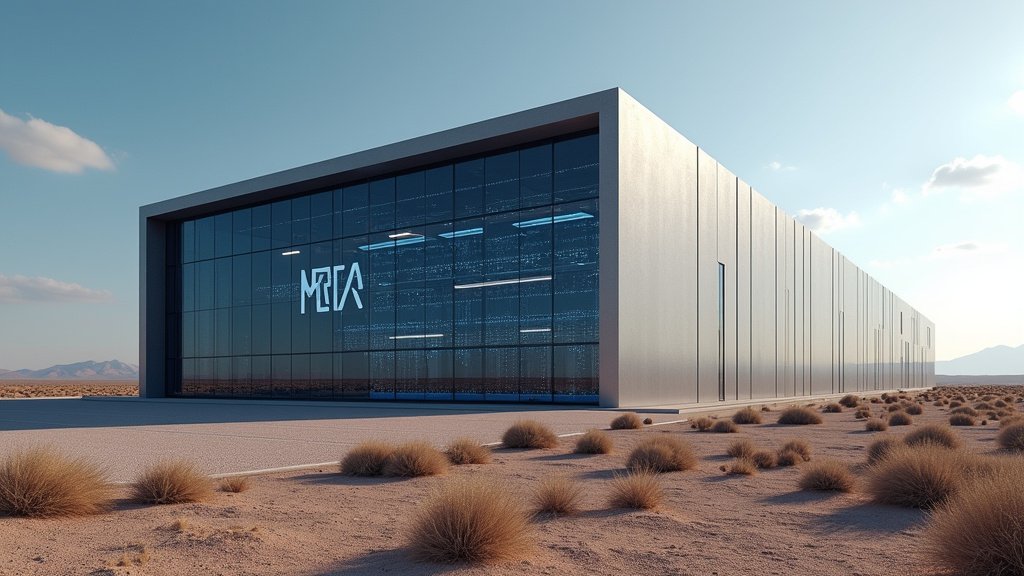
Meta is investing over $1.5 billion to construct a new, gigawatt-scale AI data center in El Paso, Texas. This significant development marks Meta’s 29th data center globally and its third in the state, underscoring the company’s aggressive expansion of its artificial intelligence infrastructure. The El Paso facility is slated to become operational in 2028, with a capacity designed to reach 1 gigawatt, enough to power a city the size of San Francisco for a day, positioning it among the largest planned data center campuses in the United States.
Building the Future of AI: Meta’s Strategic Investment
This investment is a critical component of Meta’s broader strategy to advance its artificial intelligence capabilities. The company is pouring substantial resources into AI, with a global capital expenditure forecast for 2025 ranging between $66 billion and $72 billion, primarily directed towards data centers, advanced chips, and AI talent acquisition. Meta’s CEO, Mark Zuckerberg, has emphasized the imperative to overspend on AI rather than risk falling behind in what he terms the most important technology for the next decade and a half. The El Paso data center is specifically designed to accommodate the evolving demands of AI, supporting both current server technologies and future generations of AI-enabled hardware, aiming to deliver top-tier AI models and progress towards superintelligence. This strategic build-out is crucial for Meta to maintain its competitive edge against rivals like OpenAI, Google, and Anthropic in the rapidly advancing AI landscape.
Economic Impact and Regional Development
The new El Paso facility is projected to stimulate considerable economic activity in the region. At its peak, the construction phase is expected to create over 1,800 jobs, with an additional approximately 100 operational jobs anticipated once the data center is fully functional. Meta has cited El Paso’s robust electrical grid and skilled workforce as key factors influencing its site selection. The company has a significant existing presence in Texas, having invested over $10 billion across the state and employing more than 2,500 people statewide in its data centers, offices, and research labs. Local economic development groups, such as the Borderplex Alliance, have been instrumental in facilitating this project, with indications that Meta’s move may encourage further data center investments in the region.
Broader Industry Trends and Environmental Commitments
Meta’s investment in El Paso is part of a larger trend among hyperscale cloud service providers like Amazon, Alphabet, and Microsoft, who are collectively expected to invest over $360 billion in AI infrastructure in 2025, with a significant portion allocated to data centers. These investments are driving a rapid expansion of data center capacity across the United States, with Texas emerging as a significant hub due to its availability of land, business-friendly environment, and developing infrastructure. While AI data centers demand substantial energy and water resources, Meta has committed to environmental stewardship for the El Paso facility, pledging to use 100% renewable energy and restore 200% of the water consumed to local watersheds. The facility is also designed to achieve LEED Gold certification.
Texas as a Growing AI Hub
This development highlights El Paso’s growing importance as a technology hub and reinforces Texas’s position as a key state for AI infrastructure development. The substantial investment underscores Meta’s long-term vision for artificial intelligence and its commitment to building the foundational infrastructure necessary for future technological advancements.
The Expanding AI Infrastructure Landscape in Texas
The rapid growth of AI data centers across Texas is creating significant demand on the state’s electrical grid, with projections indicating that by 2031, the grid may need to double its 2024 capacity. This surge in demand is prompting discussions and strategic planning for future energy needs, with some regions in West Texas also becoming attractive locations for AI data centers due to abundant natural gas resources. The overall landscape of AI infrastructure investment is highly competitive, with companies like Poolside and CoreWeave also announcing major projects in Texas, and a consortium including BlackRock, Nvidia, and Microsoft acquiring Aligned Data Centers for $40 billion to bolster AI infrastructure.