
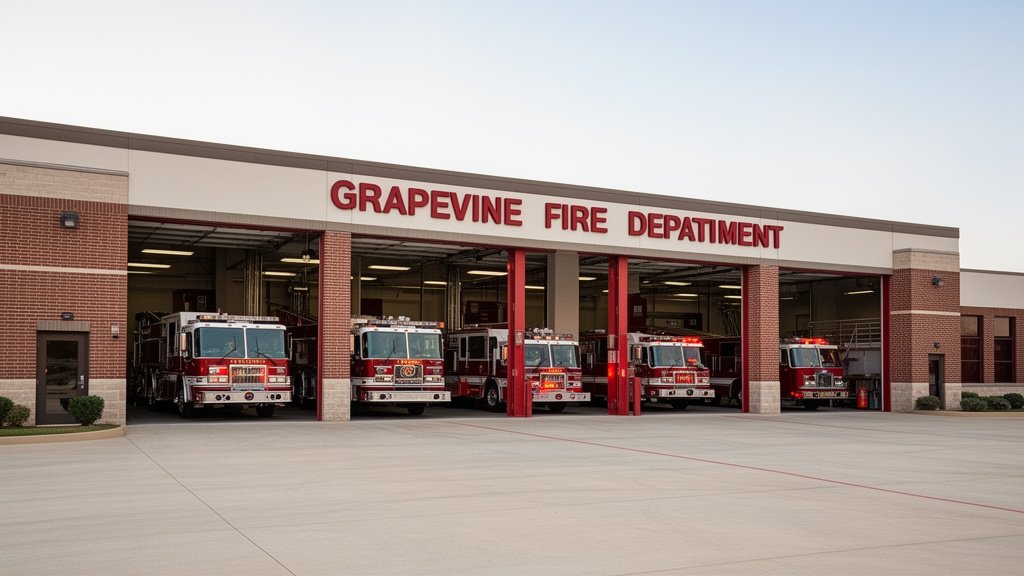
Grapevine Professional Firefighters Association (GPFA) members have delivered a stinging rebuke to department leadership, casting an overwhelming vote of no confidence in Fire Chief Darrell Brown. The move, characterized by union leadership as a last resort, highlights deep-seated tensions within the Grapevine Fire Department, specifically concerning the administration’s handling of personnel morale and recent shifts in operational tactics that have sparked significant internal debate.
Key Highlights
- Overwhelming Dissent: Union members voted 96% in favor of the no-confidence resolution, signaling a near-unanimous rejection of the current departmental trajectory.
- Operational Controversy: The core grievance centers on the replacement of a traditional engine company with a squad-based model, which critics argue diminishes fire suppression capabilities.
- Morale Crisis: Firefighters cite a growing disconnect between leadership and rank-and-file, claiming that trust within the department has eroded significantly over the last year.
- Public Safety Concerns: The GPFA has voiced ongoing concerns that the administrative shift toward EMS-heavy squads prioritizes administrative efficiency over the city’s immediate fire suppression needs.
The Crisis of Confidence: Analyzing the Grapevine Divide
The formal vote of no confidence, representing a rare and significant public split between the union and the fire administration, serves as a flashpoint for a conflict that has been simmering for months. By declaring their lack of confidence in Chief Darrell Brown, the members of the Grapevine Professional Firefighters Association have elevated a internal dispute into a public-facing critique of city management and departmental strategy. This event is not merely a personnel dispute; it represents a broader collision between traditional fire suppression tactics and the increasingly EMS-centric demands placed on modern suburban departments.
The Shift to Squad-Based Operations
At the heart of the disagreement is the controversial decision to replace an engine company with an EMS-focused squad. In the context of modern American firefighting, this is a highly debated tactical pivot. Proponents of the squad model argue that as the call volume for emergency medical services (EMS) continues to dwarf fire calls, departments must adapt their fleet and personnel deployment to match the realities of demand. By deploying specialized squads—often carrying high-level medical equipment and smaller teams—departments aim to reduce response times for medical emergencies.
However, the Grapevine firefighters argue that this shift represents a “de-prioritization” of suppression capability. An engine company typically carries the necessary hose lines, water, and specialized tools required for structural fire attack. Removing an engine in favor of a squad—which may lack the same firefighting payload—is seen by the union as a degradation of safety. The central point of contention is whether the city can maintain its current Insurance Services Office (ISO) ratings and fire safety efficacy if the number of fully equipped engines is reduced in favor of lighter, medical-focused units.
Morale and Communication Breakdown
Beyond the operational technicalities, the no-confidence vote reflects a profound failure in communication. The GPFA has cited a “culture of silence” and a perceived lack of transparency from the Chief’s office regarding how these changes are evaluated and implemented. For many, the frustration is rooted in a feeling that the front-line perspective—the individuals who actually deploy on scene—is being ignored or overruled by administrative directives.
When a department of this size experiences a 96% no-confidence vote, it signals a systemic issue rather than a isolated disagreement. Morale in public safety is fragile; it relies on the mutual understanding that leadership supports the risks taken by personnel. When firefighters feel their operational needs are being traded for administrative flexibility, the result is a breakdown in organizational cohesion that can impact retention, recruitment, and ultimately, service delivery.
Tactical Implications for the Future
The situation in Grapevine mirrors a national trend where suburban departments are struggling to balance fiscal responsibility with the high cost of emergency preparedness. The “squad vs. engine” debate is likely to intensify across the state of Texas as growth continues to push city resources to their limits.
Looking ahead, the city leadership and the fire department must address the gulf between the union’s operational concerns and the chief’s administrative goals. If these issues remain unresolved, the department risks high turnover and a potential decline in readiness. The GPFA’s action serves as a public demand for mediation, transparency, and a re-evaluation of the current operational plan. Whether the city council intervenes or the department returns to the drawing board remains to be seen, but the status quo is clearly unsustainable for the Grapevine Fire Department.
FAQ: People Also Ask
1. What does a ‘no confidence’ vote actually achieve?
It is primarily a symbolic and political action. While it does not legally force the removal of a Fire Chief, it signals to city officials, the public, and the Mayor’s office that the rank-and-file workforce no longer supports the current leadership’s direction, often triggering internal investigations or city council review.
2. Why are EMS squads replacing fire engines in some cities?
Fire departments are increasingly responding to medical calls rather than fires. EMS squads are designed to be more maneuverable, cheaper to operate, and better equipped for medical response than massive, expensive-to-run fire engines.
3. Is this a common trend in Texas?
Yes. As Texas suburbs expand rapidly, fire departments face increasing call volumes. Many are exploring hybrid models to handle medical surges, leading to frequent friction between traditionalists, who prioritize fire suppression, and administration, which prioritizes call-volume management.
4. What happens to the fire protection level if engines are replaced?
This is the core of the dispute. The union argues that replacing engines creates “gaps” in suppression capability, potentially increasing response times for fire-specific tools or reducing the number of firefighters trained and equipped for interior structural attacks.