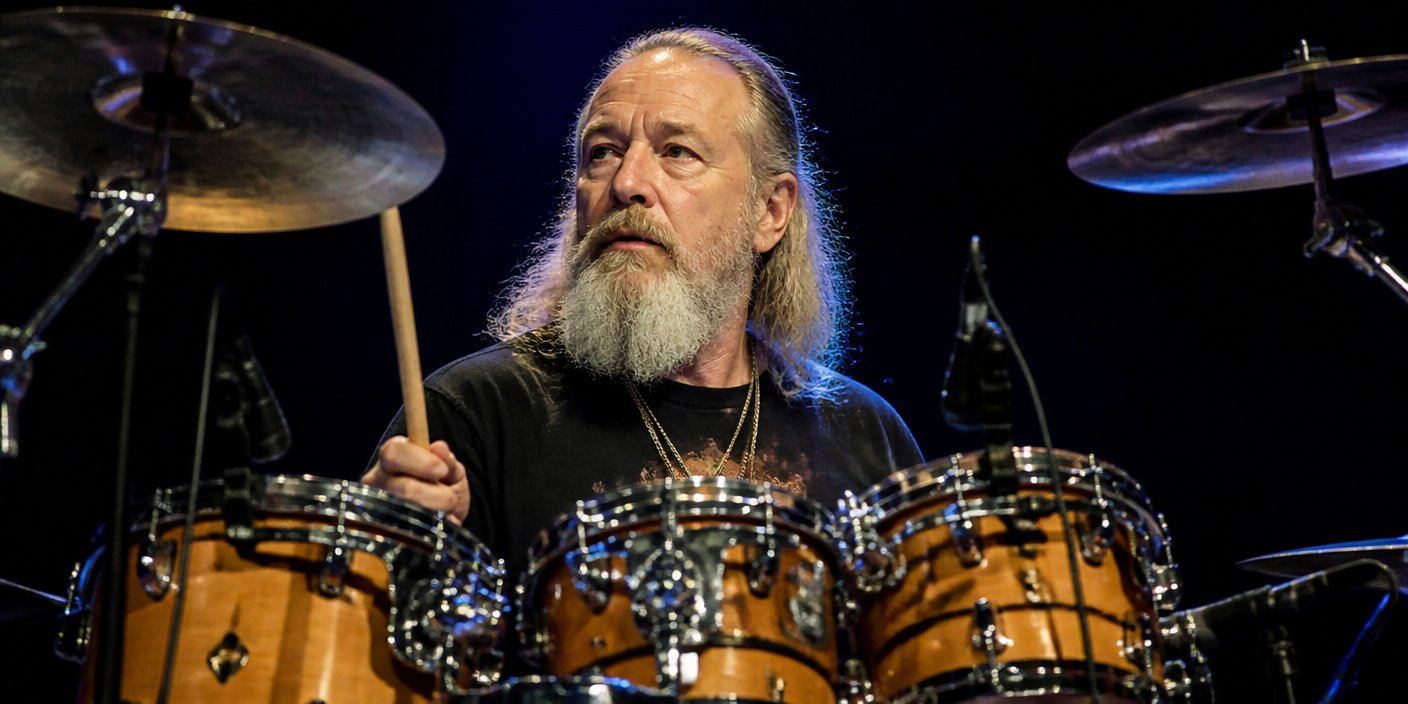
ZZ Top’s rhythmic heartbeat has fallen silent. Frank Beard, the legendary drummer of the iconic Texas-based rock trio, has passed away at the age of 77. The news, confirmed on August 19 by longtime bandmate Billy Gibbons, marks the end of an era for one of the most enduring bands in rock history, with Beard reportedly passing while in hospice care in Richmond, Texas. His departure leaves a void in the landscape of classic rock, silencing the kit of a musician who helped bring the “Texas Blues” sound to the global stage.
- Frank Beard, the influential drummer for the Rock and Roll Hall of Fame band ZZ Top, has died at age 77.
- The announcement was made on August 19, with Billy Gibbons sharing the somber news of his friend and collaborator’s passing.
- Beard died while receiving hospice care in Richmond, Texas, surrounded by his legacy of over five decades in music.
- Known as the ironic “beardless” member of the trio, Beard provided the steady, minimalist percussion that became the band’s hallmark.
The Rhythmic Foundation: A Career Defined by Texas Blues and Precision
Frank Beard was never a drummer who sought the spotlight through excessive flair or complex, ego-driven solos. Instead, he was the embodiment of restraint, the architect of a groove so deep and so locked-in that it felt like the very earth of the Texas landscape he helped define. To understand the greatness of ZZ Top is to understand the importance of what Beard did: he made the simple feel powerful. As the rock world mourns his passing, fans and historians alike are looking back at a career that helped elevate the blues-rock genre into a global phenomenon.
The Birth of a Texas Institution
Formed in Houston in 1969, ZZ Top was a band born from the humid, gritty landscape of the American South. While Billy Gibbons brought the searing guitar riffs and the late Dusty Hill brought the thunderous bass, it was Frank Beard who stitched it all together. His drumming style was distinctively minimalist. He understood that in the high-voltage arena of rock, the drum kit should not be a competing voice, but a solid foundation. His work on foundational albums like Tres Hombres and Fandango! provided the bedrock for what would eventually evolve into the synth-heavy, MTV-dominating sound of the 1980s.
The Irony of the Name
There was an endearing irony to Frank Beard that became a permanent fixture of rock folklore. In a band defined by the massive, floor-length beards of his bandmates—a visual image so potent it became the band’s logo—Frank Beard was the only one without facial hair. It was a quirk that underscored the band’s sense of humor and their refusal to take themselves too seriously, even as they became one of the biggest acts on the planet. Yet, behind this lighthearted fact was a musician who was deadly serious about his craft. Beard’s precision on tracks like “La Grange” and “Tush” demonstrated a level of timekeeping that allowed the band to experiment with new sounds and production techniques, most notably on their multi-platinum 1983 album Eliminator.
Evolving the Sound: From Blues to Electronic
One of the most remarkable aspects of Beard’s career was his ability to adapt. As the musical landscape shifted from the organic blues-rock of the 70s to the drum-machine-heavy sound of the 80s, Beard didn’t fight the tide—he incorporated it. His work involved a sophisticated integration of live drumming with sequencers and drum machines, a rare skill for a drummer of his generation. He understood that technology was an extension of his instrument, not a replacement for it. This adaptability kept ZZ Top relevant when many of their contemporaries faded into obscurity, allowing the trio to remain a top-tier touring act for over 50 years.
A Legacy of Consistency
Beyond the records and the stadiums, Frank Beard’s legacy is one of unwavering consistency. For over half a century, he served as the pulse of a band that rarely changed its lineup. When Dusty Hill passed away in 2021, Beard and Gibbons continued to honor the band’s heritage, with Beard’s drumming serving as the tether that kept the ZZ Top sound intact. His death in Richmond, Texas, brings a final chapter to a legendary career, but the recordings remain as a masterclass in the “less is more” philosophy of rock drumming. His influence can be heard in every drummer who understands that the power of a song often lies in the spaces between the beats rather than the notes played on the snare.
FAQ: People Also Ask
1. How long was Frank Beard with ZZ Top?
Frank Beard was a founding member of the trio, joining in 1969 shortly after the band’s inception, and remained a core member for the duration of the band’s existence.
2. Did Frank Beard actually have a beard?
Despite his surname being Beard, Frank was famous for being the only member of ZZ Top who did not grow a long beard, a fact that became a recurring joke in the band’s public identity.
3. What made Frank Beard’s drumming style unique?
Beard was known for his minimalist, precise, and steady drumming. He excelled at maintaining a tight, driving groove that allowed his bandmates to experiment with lead guitar and bass lines without losing the song’s rhythmic orientation.
4. Where did Frank Beard pass away?
According to the announcement by Billy Gibbons, Frank Beard died while in hospice care in Richmond, Texas, on August 19.