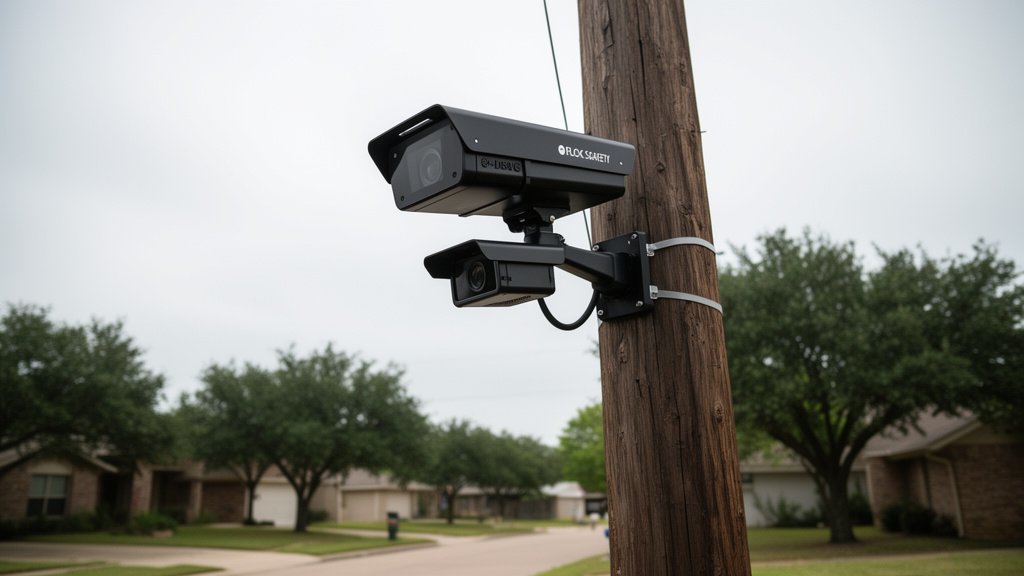
The rapid expansion of Flock Safety’s automated license plate reader (ALPR) technology across Texas has transformed the state’s suburban and urban landscape into a sophisticated, interconnected surveillance network. What began as a boutique solution for high-end gated communities has metastasized into a standard tool for municipal law enforcement, promising a proactive approach to crime prevention through machine learning. However, as these solar-powered sentinels proliferate on utility poles from Dallas to suburban hill country, they have simultaneously ignited a fierce debate regarding data privacy, potential “mission creep,” and the long-term implications of persistent, warrantless mass surveillance.
The Technology Behind the Lens
Unlike traditional surveillance cameras that rely on human observation, Flock Safety’s technology utilizes high-definition lenses integrated with artificial intelligence. The system does not merely record video; it processes images in real-time to identify vehicle characteristics—make, model, color, and license plate number—even in low-light conditions. This metadata is cross-referenced instantly against “hot lists,” which include databases of stolen vehicles, missing persons (via Amber or Silver alerts), and vehicles associated with known criminal warrants.
For law enforcement agencies, the selling point is efficiency. A single detective can now receive an alert the moment a suspect’s vehicle enters their jurisdiction. This capability has been credited by proponents with solving violent crimes, retail thefts, and recovery of stolen property with unprecedented speed. Yet, the same technical capability that empowers police also creates a massive, searchable digital trail of the movements of ordinary, law-abiding citizens, a reality that has privacy advocates on high alert.
Security vs. Civil Liberties: The Core Tension
The primary friction point surrounding the surge of Flock cameras involves the default data retention and sharing policies. Most Flock systems store data for 30 days by default. While proponents argue that this duration is necessary for investigations, the American Civil Liberties Union (ACLU) and other privacy watchdogs contend that such persistent monitoring of public movement constitutes an overreach. The concern is that if the state can track an individual’s path across multiple municipalities, the fundamental expectation of privacy in public spaces is effectively eroded.
Furthermore, the “hot list” databases are not exclusive to the local police department that installed the camera. They often interface with state and national databases, meaning that a camera in a small Texas suburb may be communicating data to law enforcement agencies hundreds of miles away, or even across state lines. This creates an invisible, collaborative surveillance web that operates with minimal public oversight or legislative debate regarding the scope of data access.
Mission Creep and the Data Sharing Web
Perhaps the most contentious aspect of the Texas rollout is the risk of “mission creep.” Originally sold to departments for the purpose of finding stolen cars and identifying suspects in major violent crimes, critics argue that the threshold for usage is increasingly lowering. In some jurisdictions, these cameras are being utilized for low-level traffic infractions or to track non-violent individuals, shifting the technology from a crime-solving tool to an instrument of general social control.
Legislative pushback is gaining momentum. While Texas law has historically favored law enforcement tools, there is growing bipartisan interest in bills that would restrict how long private companies like Flock can store data and limit the sharing of that data with third-party agencies. This legislative movement aims to codify protections that ensure the convenience of automated policing does not supersede the constitutional protections of Texas residents.
Future Predictions and Economic Impacts
Looking ahead, the economic model of Flock Safety—a subscription-based “Police-as-a-Service” model—is likely to face increased scrutiny. As cities weigh the costs of subscription fees against the return on investment in crime reduction, we expect a shift toward more robust contract transparency. Furthermore, as the technology advances, we can anticipate a move toward more granular predictive analytics, potentially leading to a “pre-crime” monitoring environment. The next two years will be defining for Texas; the state is poised to become a battleground for the future of digital privacy, as residents, city councils, and the legislature decide whether the safety benefits of an always-on surveillance state are worth the cost to personal anonymity.