

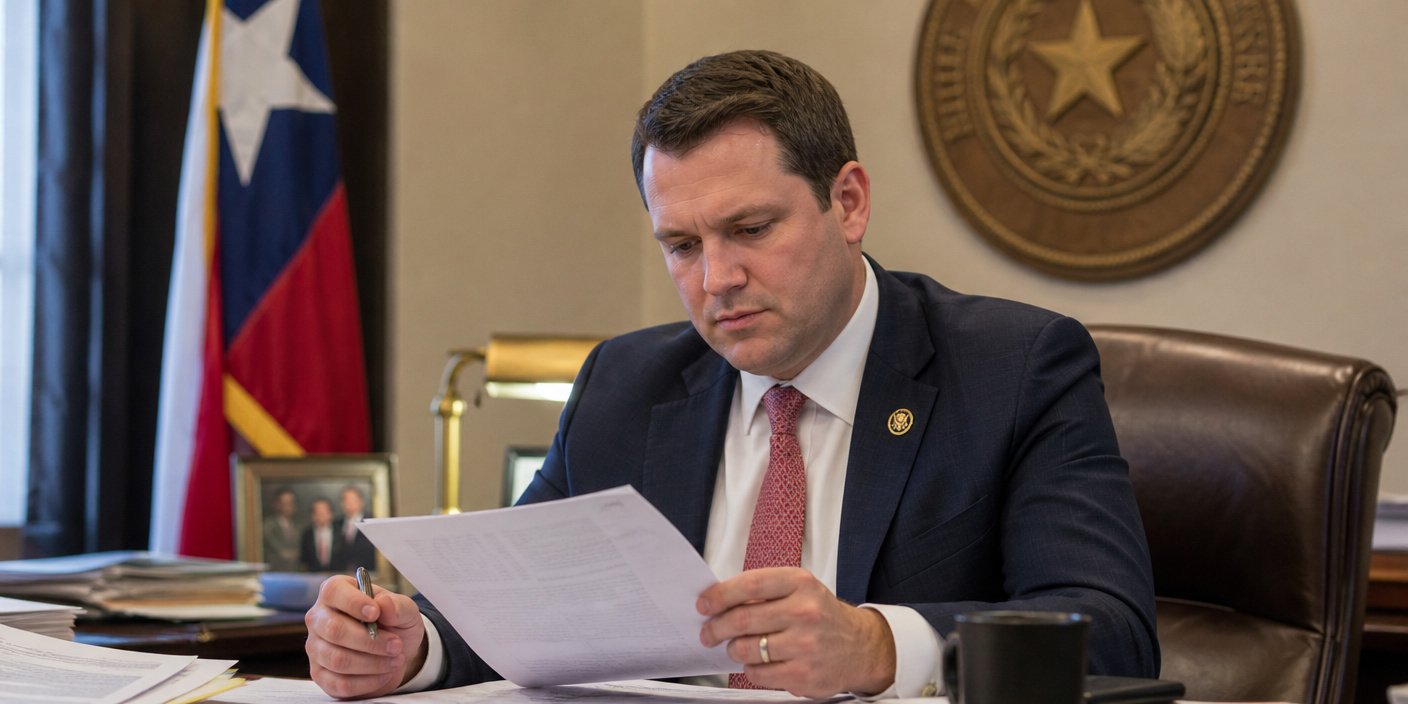
Texas State Representative Jared Patterson has ignited a firestorm of debate regarding the state’s academic calendar, characterizing the practice of starting public school classes in August as “one of the dumbest things” the state does. Patterson, a Republican representing the Frisco area, argues that the current systemic reliance on mid-to-late August start dates is an antiquated practice that fails to account for the harsh realities of modern Texas—specifically the extreme heat, the mounting economic strain on school districts due to cooling costs, and the physical safety of student athletes training during the hottest weeks of the year.
The Legislative Root: House Bill 2610
The fundamental tension driving this issue is House Bill 2610 (HB 2610), which was passed by the Texas Legislature in 2015. This legislation shifted the requirement for school districts from a mandatory 180-day school year to a “minutes-based” requirement. Schools are now required to provide 75,600 minutes of instruction annually. While this gave school districts unprecedented local control over their calendars, it also incentivized them to start earlier to build in more “flex days” for holidays, teacher development, and potential weather-related closures throughout the year.
Critics like Patterson argue that this flexibility has been weaponized against the fiscal and physical well-being of the state. By compressing the school year into a schedule that begins in mid-August, districts are inadvertently forcing students, teachers, and staff to be on campuses during the peak of the Texas summer, when the electricity grid is under maximum strain and outdoor temperatures frequently crest triple digits.
The Economic Burden of Cooling Schools
One of the most compelling arguments Patterson has leveled against the current scheduling involves the financial impact on school districts. As Texas experiences increasingly severe summers, the cost of climate control for massive public school facilities has skyrocketed. In August, air conditioning systems are running at maximum capacity to cool buildings that have often sat dormant or at low capacity for much of the summer.
For suburban and rural districts operating on tight budgets, this surge in energy consumption creates a significant budgetary line item that arguably could be mitigated by pushing the start date into September. By aligning the academic calendar more closely with the waning heat of the season, districts could potentially save thousands, if not millions, of dollars in annual utility costs—funds that could be redirected toward instructional resources, teacher salaries, or facility maintenance. However, districts face the counter-argument that moving the start date would necessitate extending the school year later into June, which poses its own challenges regarding teacher contracts and summer facility usage.
Athlete Safety and the ‘Football’ Dilemma
Perhaps the most volatile aspect of the August start-date debate is the impact on high school sports, particularly football. In Texas, high school football is a cultural cornerstone, and pre-season practices traditionally begin in August. When the school year officially kicks off in mid-August, students are subjected to a rigorous daily schedule of intense physical activity during what climatologists consider the hottest, most dangerous part of the year.
Heat-related illness and exhaustion are not merely theoretical risks; they are persistent dangers. Patterson and other proponents of the September start date argue that shifting the calendar would provide a necessary buffer, allowing training schedules to exist outside of the most hazardous heat windows. While the University Interscholastic League (UIL) has implemented rigorous heat safety protocols for student athletes, skeptics maintain that the only foolproof mitigation strategy is to reduce exposure during the peak heat, a feat only achievable through scheduling reform.
The Future of the Texas Academic Calendar
As the debate continues, the fundamental challenge remains the clash between legislative mandates and local control. While Rep. Patterson has been vocal in his opposition to the August start, changing the status quo would require significant legislative maneuvering to alter or clarify the interpretation of HB 2610.
Ultimately, the conversation reflects a broader evolution in Texas politics: the need to adapt 20th-century institutional models to 21st-century environmental realities. Whether the state moves toward a September start date or maintains the flexibility of the current minutes-based system, the discussion highlights a growing awareness that how we structure the school year is as much an economic and health issue as it is an educational one.
FAQ: People Also Ask
1. Why do Texas schools currently start in August?
Most Texas districts start in mid-August to satisfy the state mandate of 75,600 minutes of instruction per year. Starting early allows districts to build in more holidays, teacher in-service days, and “bad weather” makeup days while still concluding the semester before winter break.
2. Is there legislation currently pending to change the start date?
While Representative Jared Patterson has publicly criticized the current start date, any official change to the law would require a legislative session where HB 2610 or similar statutes regarding instructional minutes are amended. As of now, the power remains largely with local school boards to set their own start dates within state guidelines.
3. How does this affect student athletes?
August is historically the hottest month in Texas. Starting school in mid-August increases the risk of heat exhaustion and heat stroke for student athletes practicing for fall sports, necessitating strict UIL heat safety protocols, which some lawmakers argue should be bolstered by a later school start date.
4. Would a September start date actually save schools money?
Proponents argue that by reducing the need to run heavy air conditioning systems during the peak heat of August, schools could see significant reductions in their monthly electricity bills. However, opponents note that extending the school year into late June could also carry its own increased cooling and operational costs.