
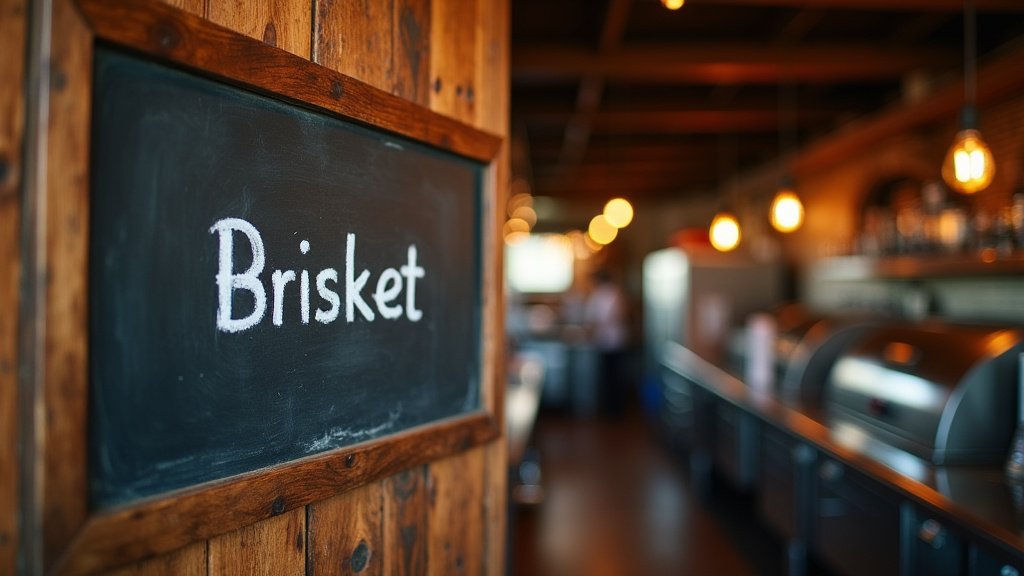
In a move that has sent shockwaves through the Texas culinary landscape, Butter’s BBQ in Sinton, Texas—a destination recognized for its authentic pit-smoked offerings—has made the difficult decision to remove brisket from its menu. This strategic withdrawal is not merely a change in offerings; it serves as a glaring indicator of the economic volatility currently battering independent, family-run restaurants. When a premier smokehouse in the heart of Texas—the spiritual home of brisket—declares it can no longer sustainably serve its flagship item, the entire industry is forced to take notice.
Key Highlights
- Economic Tipping Point: Butter’s BBQ, a staple in the Sinton community, cited that beef procurement costs ballooned to represent a staggering 70% of its total grocery budget.
- Sustainability Struggle: The decision reflects a broader, systemic challenge where rising wholesale beef prices have made the margins on traditional brisket unsustainable for small-scale operators.
- Market Signals: This move highlights the disconnect between current cattle commodity markets and the price sensitivity of the local dining public.
- Operational Pivot: The restaurant is effectively prioritizing operational solvency and menu flexibility over the tradition of serving, at a loss, a high-cost commodity.
The Anatomy of an Economic Pivot
The decision by Butter’s BBQ to strike brisket from the menu is a complex case study in small business risk management. For decades, brisket has been the primary benchmark for any Texas smokehouse—the “gold standard” by which quality is measured. Yet, the economics behind that slice of smoked meat have shifted violently.
When a restaurant reaches the point where a single product consumes 70% of the grocery budget, the business model essentially becomes a hostage to that commodity. If the owner continues to sell the item, they are either forced to charge prices that alienate their local customer base or swallow the costs, leading to an eventual liquidity crisis. By removing brisket, Butter’s BBQ is engaging in a defensive maneuver, preserving the integrity of the business rather than continuing to chase an unsustainable market trend.
The Cattle Market and the “Brisket Tax”
To understand why this is happening, one must look at the supply chain. The U.S. beef industry has been facing a convergence of challenges, including ongoing drought conditions in cattle-producing regions that have reduced herd sizes and increased feed costs. When the supply of cattle tightens, wholesale prices spike. Brisket, being a primary cut, is often the first to see these volatility spikes. For small, independent smokehouses that lack the massive buying power of large chain restaurants, these price fluctuations are not absorbable. They hit the P&L statement directly, leaving owners with few options other than radical menu adjustments.
The Consumer Dilemma and Brand Identity
Texas BBQ is built on a foundation of ritual and expectation. The consumer expects the “holy trinity”—brisket, sausage, and ribs. Removing the centerpiece risks brand dilution and customer pushback. However, the alternative—price gauging—carries a different risk. In a small town like Sinton, pricing is highly sensitive. The management at Butter’s BBQ had to weigh the immediate disappointment of customers against the long-term reality of potential bankruptcy. This is the new, harsh reality for many “mom and pop” establishments; the traditional model of brisket-centric dining is currently under threat from macroeconomic pressures that have little to do with the quality of the cooking and everything to do with the cost of raw goods.
The Future of Craft BBQ
Looking forward, this event is likely a harbinger for the sector. We may see a broader diversification in Texas BBQ menus. As beef remains volatile, operators are increasingly turning toward “nose-to-tail” butchery and more efficient protein utilization, such as smoked pork, house-made sausages, and poultry, which offer more predictable margins. The “Brisket Era” of Texas BBQ is not ending, but it is undergoing a painful evolution. Establishments that survive this inflationary cycle will likely be those that have mastered the art of price flexibility, diversified their protein sourcing, and educated their customers on why the price of local dining is changing.
FAQ: People Also Ask
Q: Why is brisket specifically so expensive right now?
A: Brisket prices are driven by a combination of reduced cattle herd sizes, increased demand for high-quality beef, and supply chain bottlenecks. Because brisket is a specific cut with finite availability per carcass, it is prone to extreme price volatility compared to other meats.
Q: Will other smokehouses follow suit?
A: While it is unlikely that major city hubs with high tourist traffic will remove brisket, many small-town and independent smokehouses are re-evaluating their menu architecture. Expect to see more “market pricing” or limited runs of brisket rather than all-day availability as a strategy to mitigate risk.
Q: Is this the end of traditional Texas BBQ?
A: No. It is an adaptation. The tradition of the pit remains, but the economic engine behind it is shifting. BBQ chefs are becoming more adept at “creative resourcefulness,” moving toward secondary cuts and alternative proteins that honor the craft without breaking the business model.
Q: What should consumers expect when visiting BBQ spots in Texas?
A: Consumers should prepare for higher price points and potential menu limitations. It is becoming common for restaurants to list brisket as a “limited quantity” item, encouraging patrons to arrive early or settle for other excellent smoked meats that offer better value-to-cost ratios.